Timeline: Five Ordeals Against All Odds
The timeline of a disaster is often measured in minutes or hours. For these survivors, the event was just the beginning of a protracted struggle that tested the limits of human endurance.
Tsutomu Yamaguchi: August 6 & 9, 1945
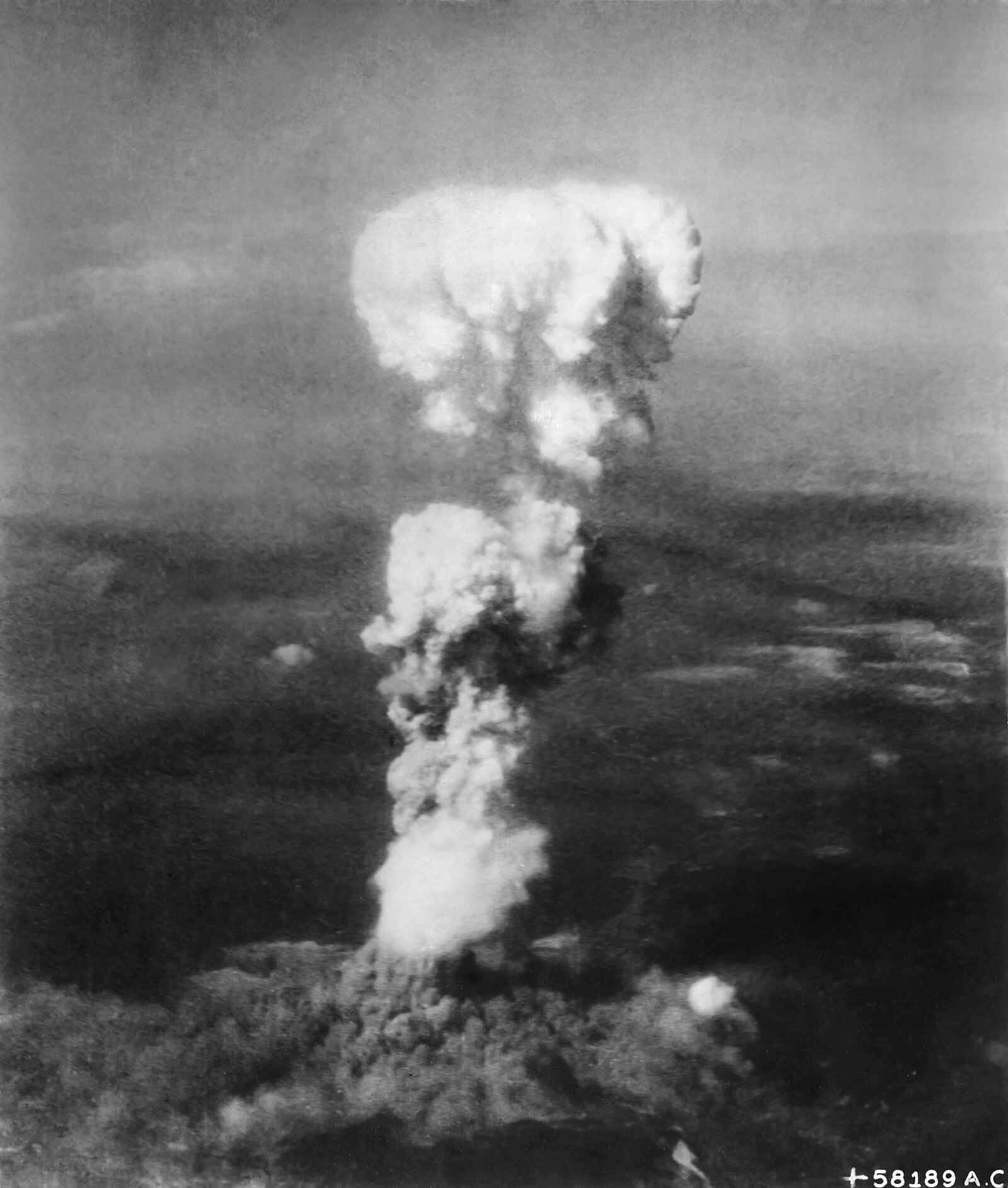
On the morning of August 6, 1945, 29-year-old naval engineer Tsutomu Yamaguchi was in Hiroshima on a business trip. At approximately 8:15 AM, he was walking to his company’s shipyard when the B-29 bomber Enola Gay dropped the “Little Boy” atomic bomb. The device detonated about 3 kilometers from his position. He was thrown to the ground, suffering a ruptured eardrum and severe burns to the upper left side of his body. Despite his injuries, he made his way to an air-raid shelter and, the next day, navigated a devastated city to board a train back to his hometown: Nagasaki.
He arrived in Nagasaki on August 8 and reported to his workplace on August 9 to describe the destruction he had witnessed. At 11:02 AM, while he was in his office with his supervisor, the second atomic bomb, “Fat Man,” was detonated over the city. His office was approximately 3 kilometers from that hypocenter as well. This time, the reinforced concrete of the building shielded him from the worst of the blast. He survived a second nuclear attack in three days, suffering only minor additional injuries.
Juliane Koepcke: December 24, 1971
On Christmas Eve, 1971, 17-year-old Juliane Koepcke and her mother boarded LANSA Flight 508 in Lima, Peru. The Lockheed L-188 Electra flew into a severe thunderstorm over the Amazon. Violent turbulence and a lightning strike are believed to have led to a catastrophic structural failure of the right wing. The aircraft disintegrated at an altitude of about 3,200 meters (10,500 feet).
Koepcke, still strapped into her row of seats, fell from the sky. The seat row, spinning like a sycamore seed, may have slowed her descent. She landed in the dense jungle canopy, which broke her fall. She awoke the next morning with a broken collarbone, a deep gash on her leg, and a swollen eye. As the daughter of two renowned zoologists, she possessed basic jungle survival skills. For 11 days, she followed a small stream, knowing it would eventually lead to a larger river and civilization. Battling insect bites and infection, she eventually found a small camp and was rescued by local lumbermen.
Vesna Vulović: January 26, 1972
Vesna Vulović was a 22-year-old flight attendant on JAT Yugoslav Airlines Flight 367. Official reports state that a bomb in a briefcase exploded in the forward baggage compartment as the plane flew over Czechoslovakia. The aircraft broke apart at an altitude of 10,160 meters (33,330 feet). Vulović was reportedly pinned inside a section of the fuselage by a food cart, which protected her from being sucked out during the explosive decompression.
This fuselage section fell onto a snowy, forested mountainside near the village of Srbská Kamenice. A local villager, a former World War II medic, found her in the wreckage and administered first aid until rescuers arrived. She was in a coma for weeks and suffered a fractured skull, two broken legs, and three broken vertebrae, which left her temporarily paralyzed from the waist down. She eventually made a near-full recovery and became a national hero in Yugoslavia.
Roy Sullivan: 1942–1977
U.S. Park Ranger Roy Sullivan’s multi-decade ordeal with lightning was a series of distinct, terrifying events. His first documented strike occurred in 1942 while he was in a fire lookout tower. The seventh and final official strike happened in 1977 while he was fishing. Over 35 years, he was struck in various situations: while driving his truck (the metal body protected him, but the strike blew out the windows), while in a ranger station, and multiple times while outdoors on patrol.
Each event was a unique meteorological incident, but together they formed a pattern that made him famous. The strikes left him with numerous burns, loss of hearing in one ear, and significant psychological trauma. His story is a powerful, if extreme, reminder that some natural hazards can strike the same place—or person—more than once.
Aron Ralston: April 26, 2003
On April 26, 2003, experienced mountaineer Aron Ralston was canyoneering alone in Bluejohn Canyon, Utah. While descending a narrow slot, a suspended 800-pound (360 kg) boulder shifted, crushing and trapping his right hand and forearm against the canyon wall. He was completely immobilized and had not told anyone his specific plans.
For five days, he survived on a small amount of water and two burritos. He tried chipping away at the rock and rigging a pulley system with his climbing gear, but nothing worked. Facing certain death from dehydration, on the fifth day he made the agonizing decision to amputate his own arm using the dull multi-tool he had with him. After the hour-long procedure, he rappelled 65 feet down a cliff face and hiked several miles before he was found by a family on a hike, who alerted rescue services.