Infrastructure & Environmental Effects Today
The Chernobyl Exclusion Zone is a landscape defined by abandonment and paradox. It is a place where monumental human structures decay while nature flourishes in the absence of human interference. Understanding what Chernobyl is like now requires looking at both the crumbling infrastructure and the resilient ecosystem that has grown up around it.
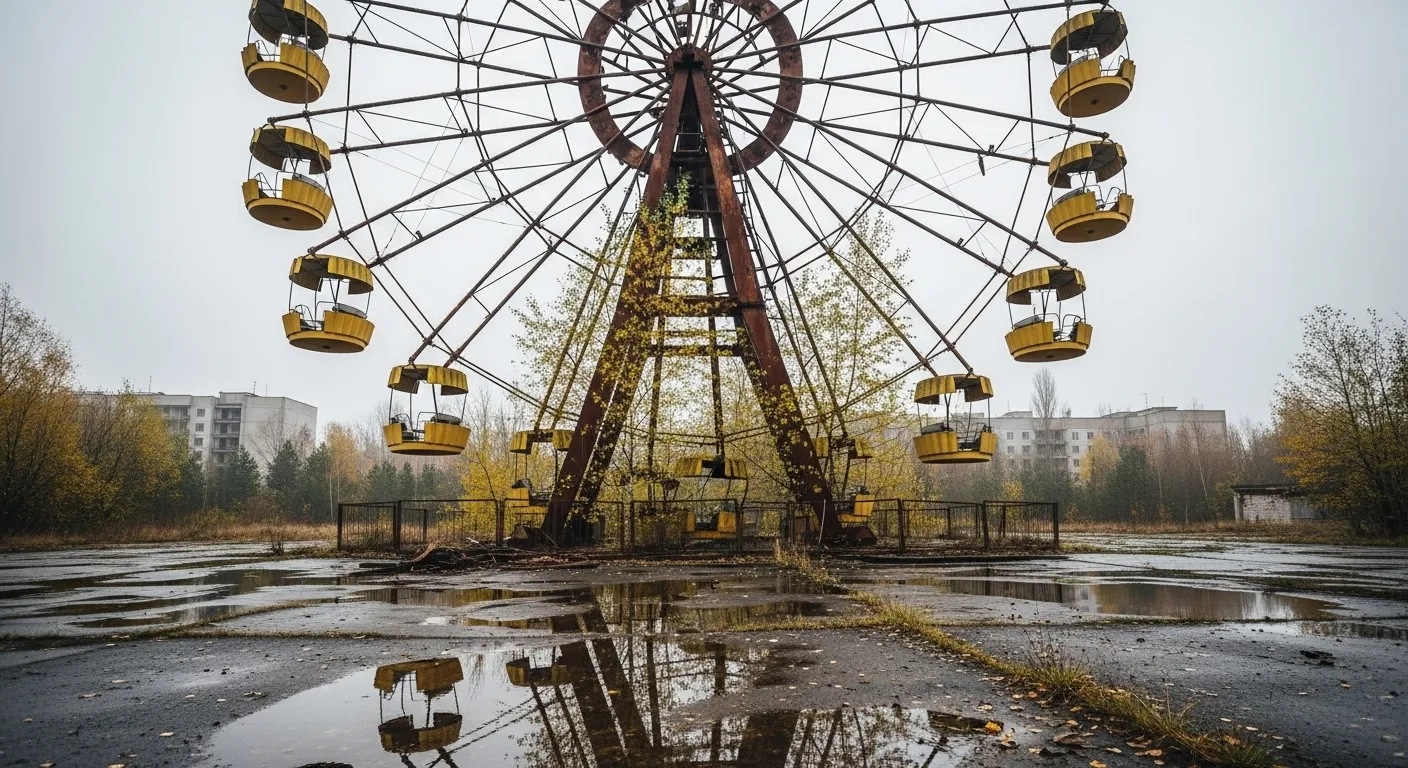
The most iconic symbol of the Zone is the ghost city of Pripyat. Once a model Soviet city housing 50,000 plant workers and their families, it is now one of the world’s most famous abandoned places. Apartment buildings stand with windows shattered, schools are littered with decaying books and gas masks, and a now-famous amusement park, set to open just days after the disaster, sits rusting in silence. The stark imagery from Pripyat is what many people visualize when searching for *photos from inside the Chernobyl exclusion zone*. Nature is steadily reclaiming the city, with trees growing through floors and on the roofs of buildings.
At the heart of the Zone lies the Chernobyl plant itself. The most critical piece of infrastructure is the New Safe Confinement (NSC), a testament to modern engineering and international cooperation. A worked mini-example of recovery, the NSC was designed to address the failings of the original Sarcophagus. The first structure, built hastily in 1986, was not a permanent solution; it was structurally unsound and not fully sealed. The NSC, completed in 2016, is an enormous arch—taller than the Statue of Liberty and wide enough to span a football stadium—that was built nearby and then slid over the old Sarcophagus. Its purpose is twofold: to prevent any further release of radioactive dust and to allow for the safe, remote-controlled dismantling of the destroyed reactor and its fuel-containing materials over the next 100 years.
One of the most dramatic environmental effects occurred in a nearby pine forest, which received the highest doses of fallout. The radiation was so intense that it killed the trees, which turned a ghostly ginger-brown color, earning it the name the “Red Forest.” In the initial cleanup, the dead trees were bulldozed and buried in trenches as radioactive waste. Today, the area is regenerating with more radiation-tolerant deciduous trees like birch and aspen, showing a clear ecological succession.
Perhaps the most surprising development inside the Exclusion Zone is the resurgence of wildlife. With humans gone, the pressures of farming, logging, and hunting disappeared overnight. This has allowed animal populations to thrive. The Zone has become a de facto nature reserve, home to elk, roe deer, wild boar, and a burgeoning population of wolves. Most remarkably, it has become a successful breeding ground for the endangered Przewalski’s horse, a wild horse species introduced to the Zone in the 1990s. The presence of these animals is a powerful symbol of nature’s resilience.
However, this is not a pristine wilderness. The animals, soil, and plants still contain radioactive isotopes. Scientists are actively studying the long-term effects of chronic low-dose radiation on the genetics and health of these wildlife populations. The Chernobyl Exclusion Zone is therefore a unique and invaluable, if tragic, laboratory for understanding the long-tail impacts of radiation on an entire ecosystem.