Timeline
The final voyage of the HMHS Britannic was its sixth mission into the Mediterranean to retrieve wounded soldiers. The ship’s journey from Southampton, England, to Mudros, Greece, was uneventful until its final morning. The timeline of its sinking is a stark illustration of how quickly a state-of-the-art vessel can be lost when its defenses are breached.
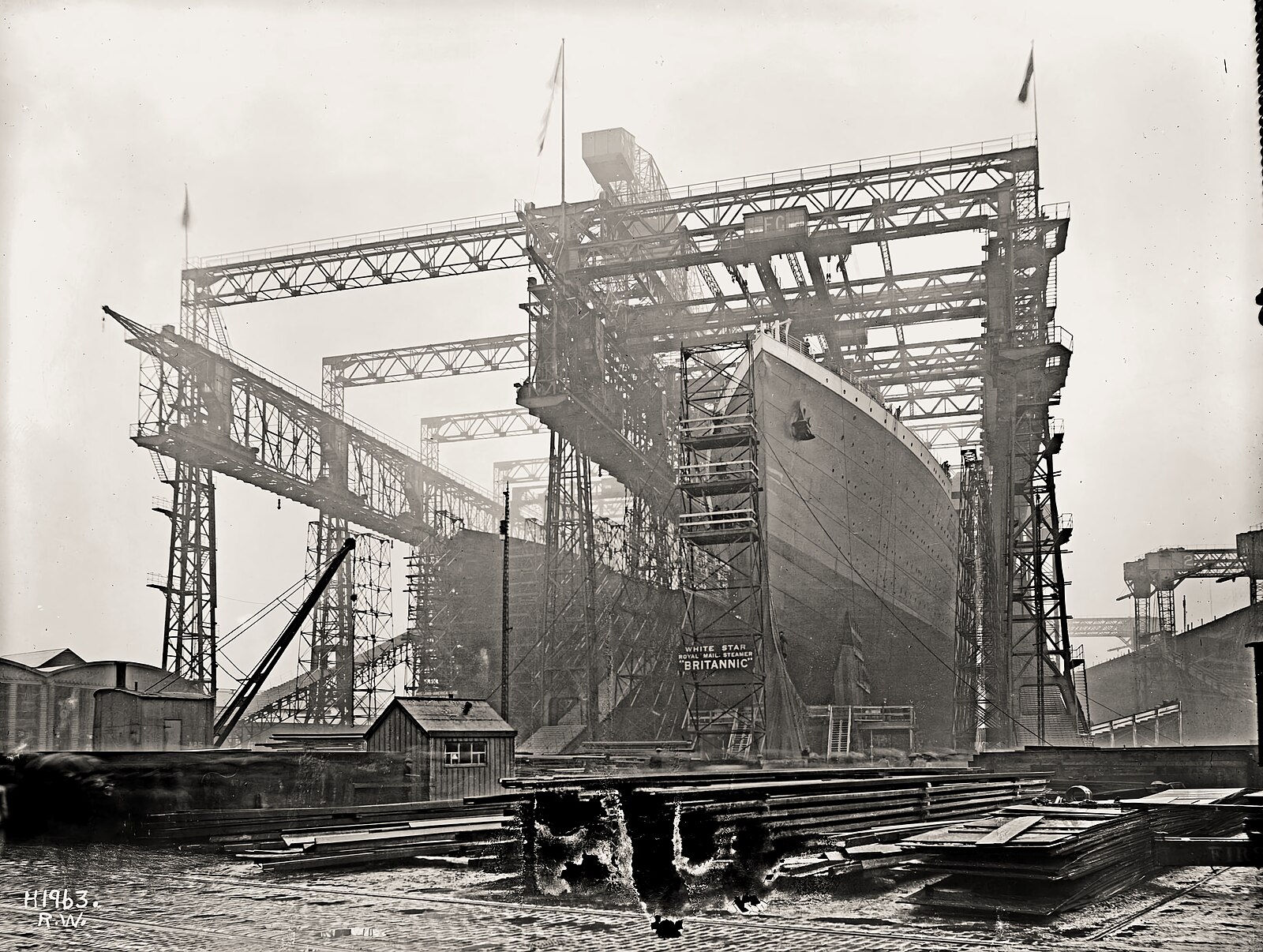
The Britannic was formally requisitioned by the British Admiralty on November 13, 1915, while it was still being fitted out at the Harland and Wolff shipyard. Its luxurious fittings were removed, and it was converted into a hospital ship with over 3,300 beds. It was painted white with a broad green stripe and large red crosses, markings that were supposed to grant it protection under the Hague Convention. It was commissioned into service on December 23, 1915.
On November 12, 1916, the Britannic departed Southampton for its sixth and final voyage. On board were 1,065 people, a combination of crew, Royal Army Medical Corps staff, and nurses. The ship was under the command of Captain Charles A. Bartlett, a respected White Star Line commodore.
The critical events unfolded with startling speed on the morning of November 21, 1916.
At approximately 8:12 AM local time, while navigating the Kea Channel between the Greek islands of Kea and Makronisos, a sudden, powerful explosion shook the vessel. Survivors described it as a muffled bang that made the entire 48,000-ton ship shudder. The cause was a single mine, one of several laid by the German U-boat U-73 weeks earlier.
Within moments, Captain Bartlett was informed of catastrophic damage. The forward four compartments were flooding rapidly, and the bulkhead separating boiler room six from boiler room five was reported to be damaged and bulging. Bartlett immediately gave the order to close the ship’s watertight doors and sent out a distress signal. He also made a crucial decision: he would attempt to beach the Britannic on the nearby coast of Kea, which was roughly three miles away.
This decision, while logical, may have sealed the ship’s fate. As Bartlett ordered the engines ahead to propel the vessel toward land, the forward motion increased the pressure of water flowing into the damaged bow, accelerating the flooding. The ship developed a pronounced list to starboard, which worsened by the minute.
By around 8:35 AM, the list was so severe that launching lifeboats from the port side became impossible. Lifeboats on the starboard side began to be lowered, some without a direct command from the bridge, as officers on deck recognized the urgency. At approximately 9:00 AM, a horrifying event occurred. Two lifeboats, filled with people, were lowered into the water near the stern while the ship was still moving. They were drawn into the massive, partially submerged propellers, which were still turning. This tragic incident was the primary cause of the day’s fatalities.
Seeing the disaster, Captain Bartlett immediately ordered the engines stopped. This act saved more lives but ended any hope of reaching Kea. With power gone and the list increasing, the order to abandon ship was given. At 9:07 AM, just 55 minutes after the explosion, the HMHS Britannic capsized to starboard and sank beneath the waves. Its bow struck the seabed while its stern was still above water, before the rest of the massive hull settled on its side in approximately 400 feet of water.