Human Impact & Response
The human toll of these ten disasters is staggering, reflecting profound physical and emotional loss, as well as massive shifts in societal structures. Fatality ranges emphasize the sheer danger of water. The 1900 Galveston flood claimed an estimated 8,000 to 12,000 lives in a single night. The 1889 Johnstown Flood resulted in 2,209 confirmed deaths. More recent events, while featuring lower fatality rates due to advanced warnings and evacuations, still exact a heavy toll. Hurricane Katrina caused approximately 1,800 deaths, while Hurricane Harvey was responsible for roughly 100 direct and indirect fatalities.
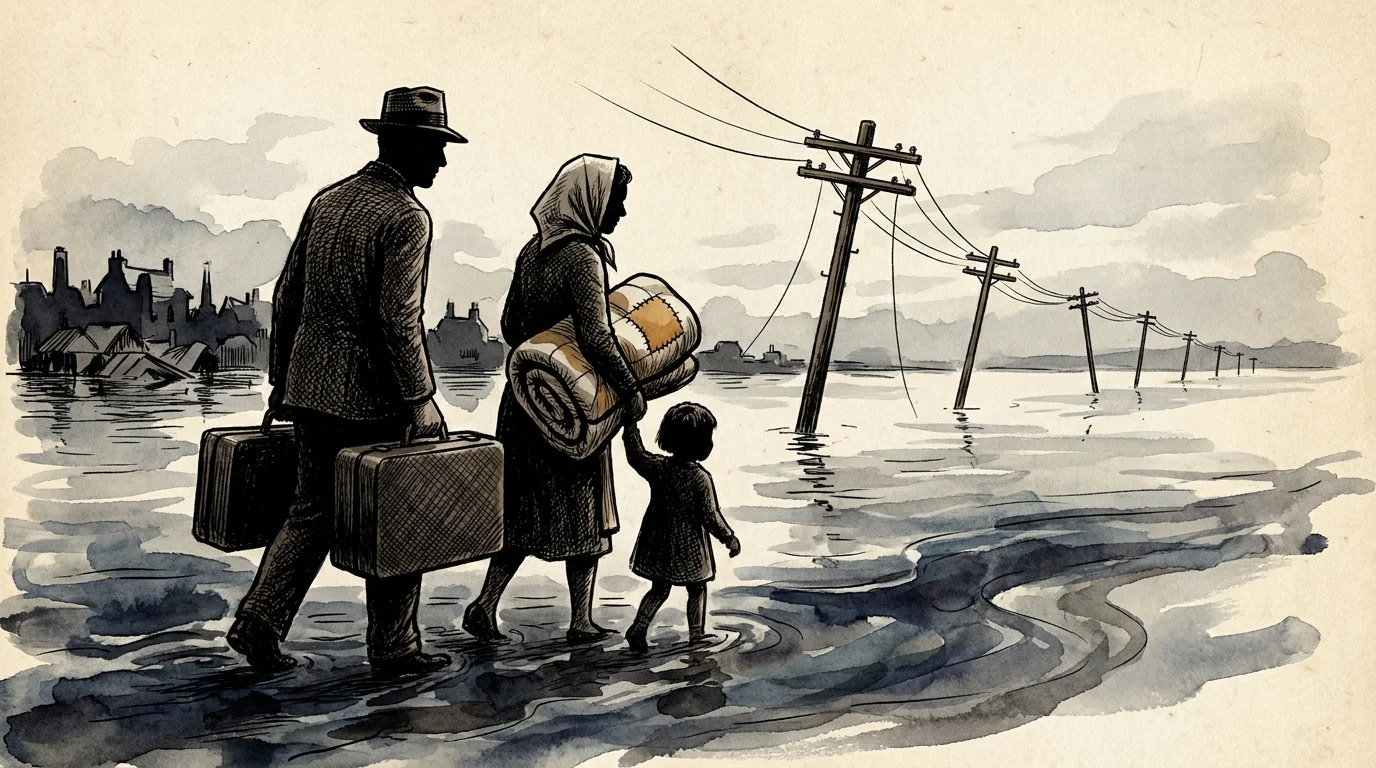
Beyond the immediate loss of life, displacements from historic floods reshape entire states. The 1927 Great Mississippi Flood displaced more than 700,000 individuals, many of whom were African American sharecroppers. The atrocious conditions in temporary refugee camps and the destruction of the agricultural economy accelerated the migration of these individuals to northern industrial cities. Similarly, the 1948 Vanport Flood displaced 18,000 people. Because Vanport was one of the few integrated cities in Oregon at the time, its destruction forced a sudden, challenging integration into nearby Portland, permanently altering the racial and economic demographics of the state.
Emergency management and response have radically transformed over these eras. During the 1927 and 1937 river floods, response was often localized, with the federal government hesitant to offer direct financial relief to citizens. Today, disaster response is a sophisticated, multi-tiered operation. Local authorities handle immediate water rescues, while federal agencies coordinate long-term recovery and financial assistance. You can see this massive operational shift in modern storm responses, where thousands of search-and-rescue personnel, military assets, and civilian volunteer groups like the “Cajun Navy” deploy actively into flooded zones to conduct humanitarian operations.
Public health crises frequently follow receding floodwaters. Submerged sanitation systems release raw sewage into neighborhoods, contaminating drinking water and creating breeding grounds for waterborne illnesses. The standing water left behind by the Great Flood of 1993 and Hurricane Katrina led to severe concerns regarding mold-induced respiratory illnesses and the spread of vector-borne diseases. Consequently, health organizations now play a critical role in post-flood recovery. Understanding the ongoing risks of contaminated floodwaters ensures you recognize the necessity of boiling water and avoiding skin contact with toxic sludge following a disaster.
Emergency guidance at the FEMA and hazard science at the USGS and NOAA/NWS.
Public health information at the CDC and the WHO. Environmental data via the EPA.