Infrastructure & Environmental Effects
The complete obliteration of a city fundamentally alters the natural environment and exposes catastrophic weaknesses in civil engineering. When you survey the physical aftermath of these extreme events, you quickly realize that robust building codes and resilient utility grids determine the survivability of a municipality. Extreme weather and severe seismic forces systematically target underlying structural vulnerabilities, tearing apart communities from the inside out.
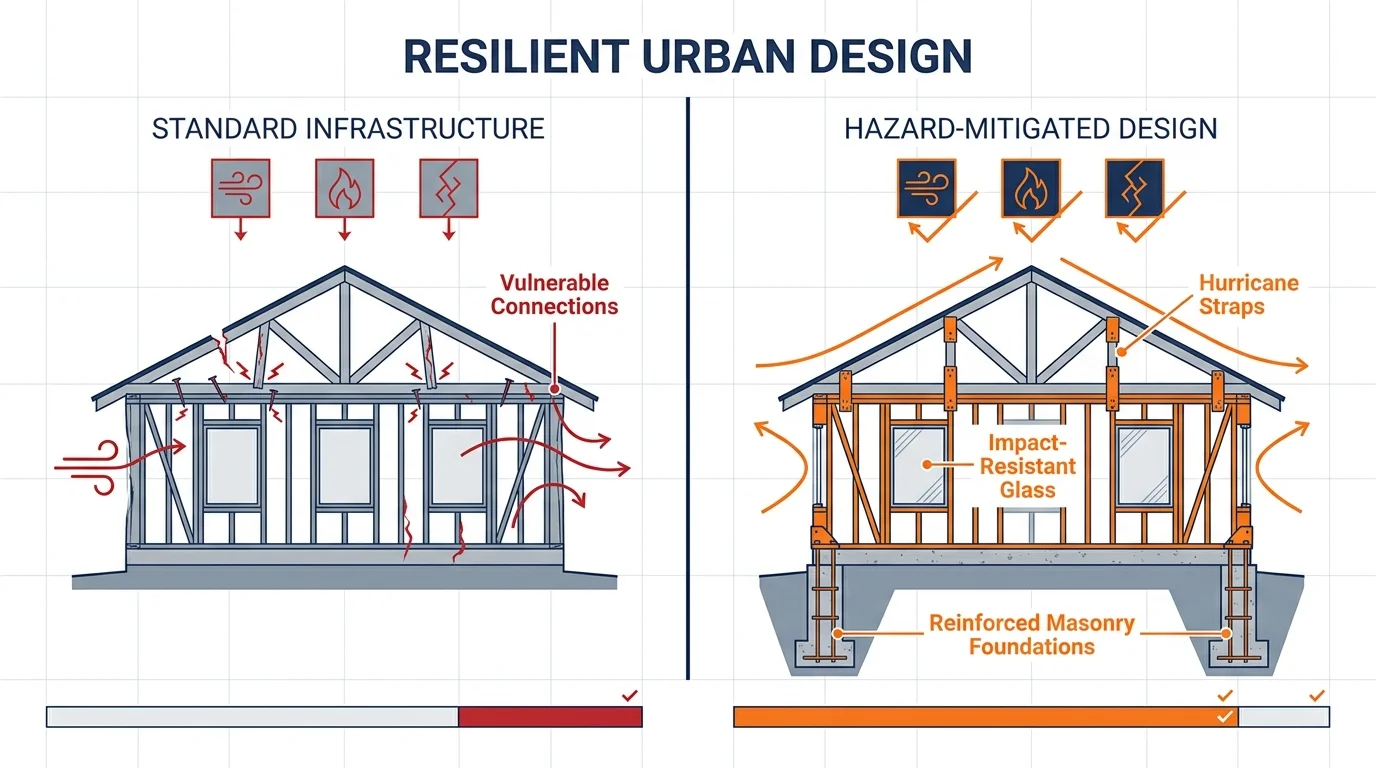
Consider the root cause analysis of infrastructure failures during intense high-wind events. In Homestead, Hurricane Andrew revealed that construction crews had improperly fastened roof trusses and substituted cheap building materials to drastically cut costs. When the intense wind field struck the subdivisions, the roofs peeled away, causing the unbraced exterior walls to collapse inward. Similarly, the catastrophic levee failures in New Orleans demonstrated a profound engineering oversight. The massive storm surge did not simply overtop the concrete floodwalls; the sheer weight of the ocean water shifted the underlying, unstable peat soil. This subterranean movement deflected the walls outward, undermining their deep foundations and unleashing devastating torrents of water directly into the city streets.
Massive destruction also creates severe environmental hazards that linger long after the initial event passes. When wind-driven wildfires consumed Paradise and Lahaina, the extreme environmental heat melted miles of plastic municipal water pipes. As the water system depressurized, the vacuum essentially inhaled toxic gases and volatile organic compounds like benzene, heavily contaminating the municipal drinking water supply for months. Furthermore, the rapid incineration of modern building materials leaves behind millions of tons of highly toxic ash, requiring specialized environmental remediation before displaced residents can safely return to their lots. Understanding exactly how critical infrastructure fails under extreme pressure helps you advocate for stronger municipal building standards and better environmental protections in your own community.