Lessons & Reforms
Every catastrophic disaster forces society to reevaluate its relationship with nature. The cities that survived near-total destruction did not simply rebuild exactly what they lost; they implemented sweeping, structural reforms to heavily mitigate future hazards. When you examine cities rebuilt after devastating environmental losses, you discover profound, lasting advancements in structural engineering and public safety policy.
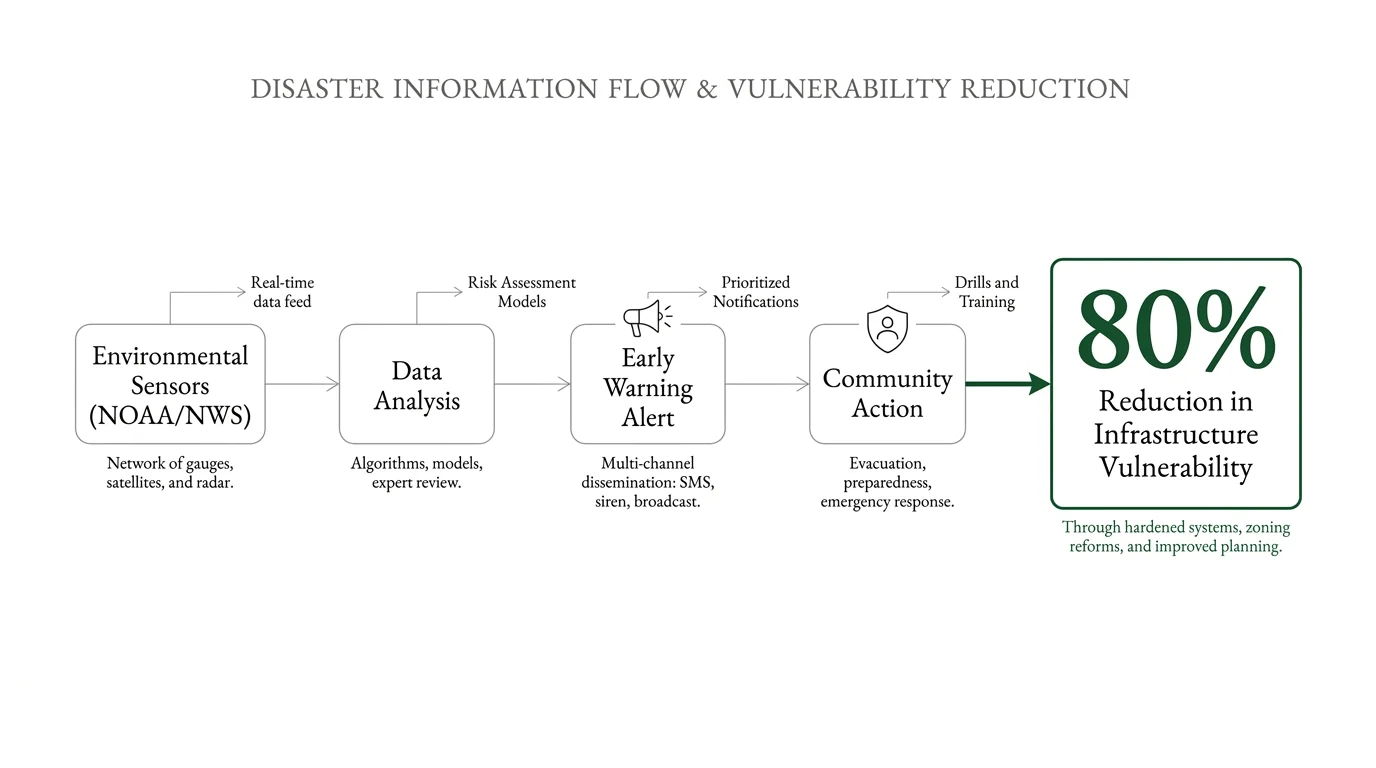
After the devastating 1900 hurricane, Galveston engineers literally raised the elevation of the entire city using dredged ocean sand and constructed a massive, curved concrete seawall to block future storm surges. Following the complete destruction of Homestead, the state implemented the Florida Building Code, mandating stringent wind-load resistance and impact-rated materials that now serve as a national benchmark for coastal construction. The twin tsunamis in Hilo spurred the creation of the Pacific Tsunami Warning Center, ensuring that deep-ocean buoys detect seismic sea waves early enough to trigger vital coastal alarms across the globe.
In the Midwest, the catastrophic tornadoes in Greensburg and Joplin fundamentally shifted the paradigm of urban planning. Greensburg municipal leaders passed strict ordinances requiring all new public buildings to achieve top-tier LEED certification, transforming a shattered, traditional farming town into an international model for green energy and sustainability. Meanwhile, Joplin mandated heavily reinforced saferooms in public schools and integrated advanced, redundant emergency alert systems into the community infrastructure.
You can apply these historical lessons to protect your own household from severe threats. By actively supporting robust building codes and investing in localized hazard mitigation, you create a stronger, more resilient living environment. Stay highly informed by utilizing dedicated federal resources to understand your unique exposure to severe environmental forces.
Emergency guidance at the FEMA and hazard science at the USGS and NOAA/NWS.
Public health information at the CDC and the WHO. Environmental data via the EPA.
Transport and workplace investigations via the NTSB and OSHA. Risk reduction resources at the UNDRR.
Informational purposes only; not emergency advice. Conditions, guidance, and policies change—verify with official agencies and local authorities.