
Infrastructure & Environmental Effects
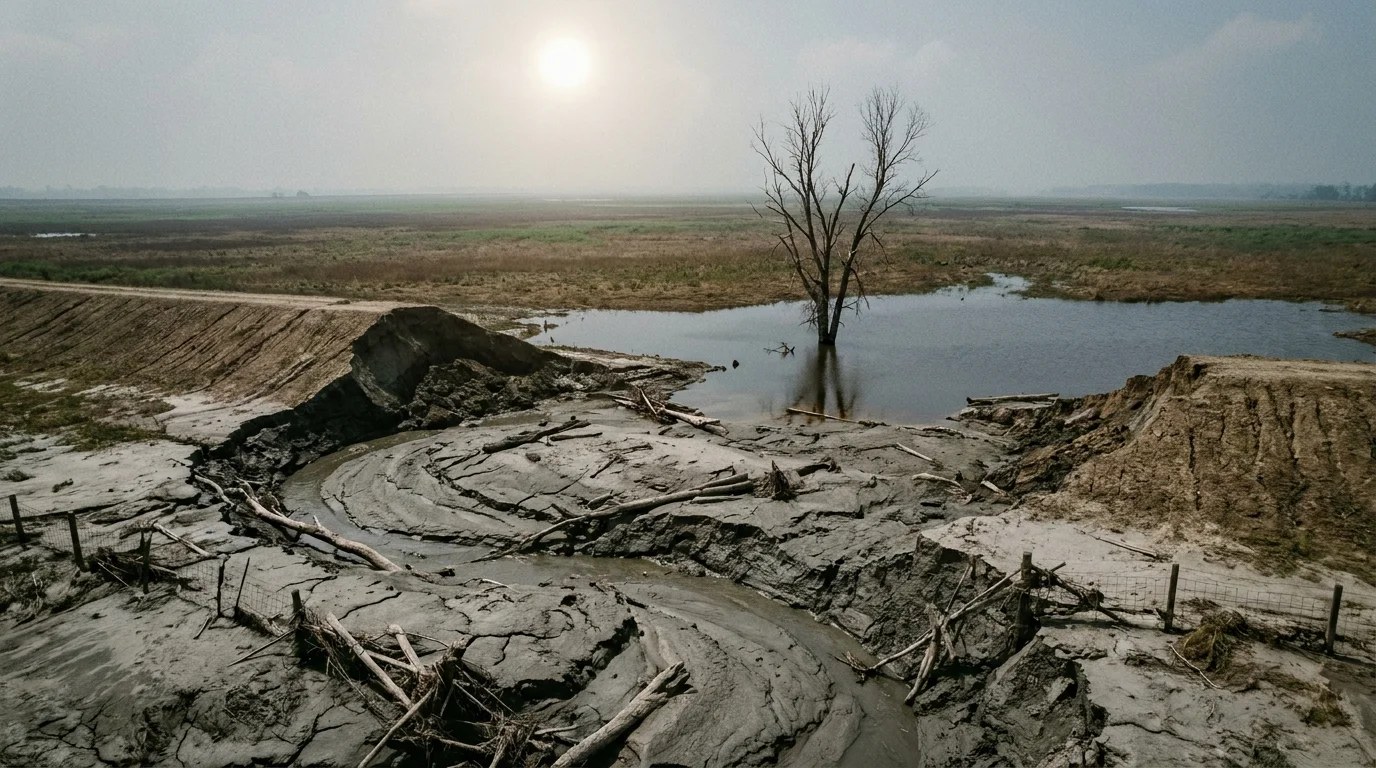
The deadliest weather disasters exact an unimaginable toll on the built environment and local ecosystems. High-velocity winds systematically dismantle structures, while moving water exerts tremendous hydraulic pressure against foundations, bridges, and roadways. When evaluating catastrophic storms, you must consider the systemic failure of protective infrastructure.
To understand the devastating consequences of engineered infrastructure failure, analyze the Banqiao Dam collapse during Typhoon Nina in 1975. Engineers originally designed the earthen dam on the Ru River to withstand a 1-in-1,000-year flood event, which meant it could theoretically handle up to 12 inches of daily rainfall. However, when Typhoon Nina stalled over the region, the atmospheric system dumped 41.7 inches of rain in just 24 hours—more than the region typically receives in an entire year. The dam faced a 1-in-2,000-year event. Debris blocked the sluice gates, preventing emergency water release. At roughly 1:00 AM on August 8, the dam breached. The collapse unleashed 600 million cubic meters of water, sending a 33-foot-high, 6-mile-wide wave down the valley at 30 miles per hour. This hydraulic battering ram erased entire towns from the map instantly and triggered a cascading failure of 61 additional downstream dams. This event vividly illustrates how exceeding the design limits of protective infrastructure exponentially multiplies a weather disaster’s lethality.
Beyond the destruction of buildings and transport networks, severe weather events inflict massive environmental damage. Cyclonic storm surges push millions of gallons of saltwater deep into terrestrial ecosystems. Following Cyclone Nargis in 2008, the saltwater intrusion severely salinized the fertile soil of the Irrawaddy Delta. This environmental consequence decimated the region’s agricultural capacity, transforming the primary food-producing region of Myanmar into barren, salt-crusted plains for several harvest cycles. The surge also ripped apart mature mangrove forests along the coast. Mangroves naturally act as a friction barrier against incoming waves; their destruction left the coastline far more vulnerable to future, smaller storms.
Recovery and remediation steps demand immense resources. Engineers must reconstruct entire power grids, water purification plants, and sanitation networks from scratch. Heavy equipment operators spend months clearing millions of tons of debris from waterways to restore navigability and prevent localized flooding from blocked drainage systems. The long-term environmental remediation often requires extensive soil flushing to remove saltwater deposits, allowing agricultural sectors to eventually resume production and stabilize the local food supply.