Lessons & Reforms
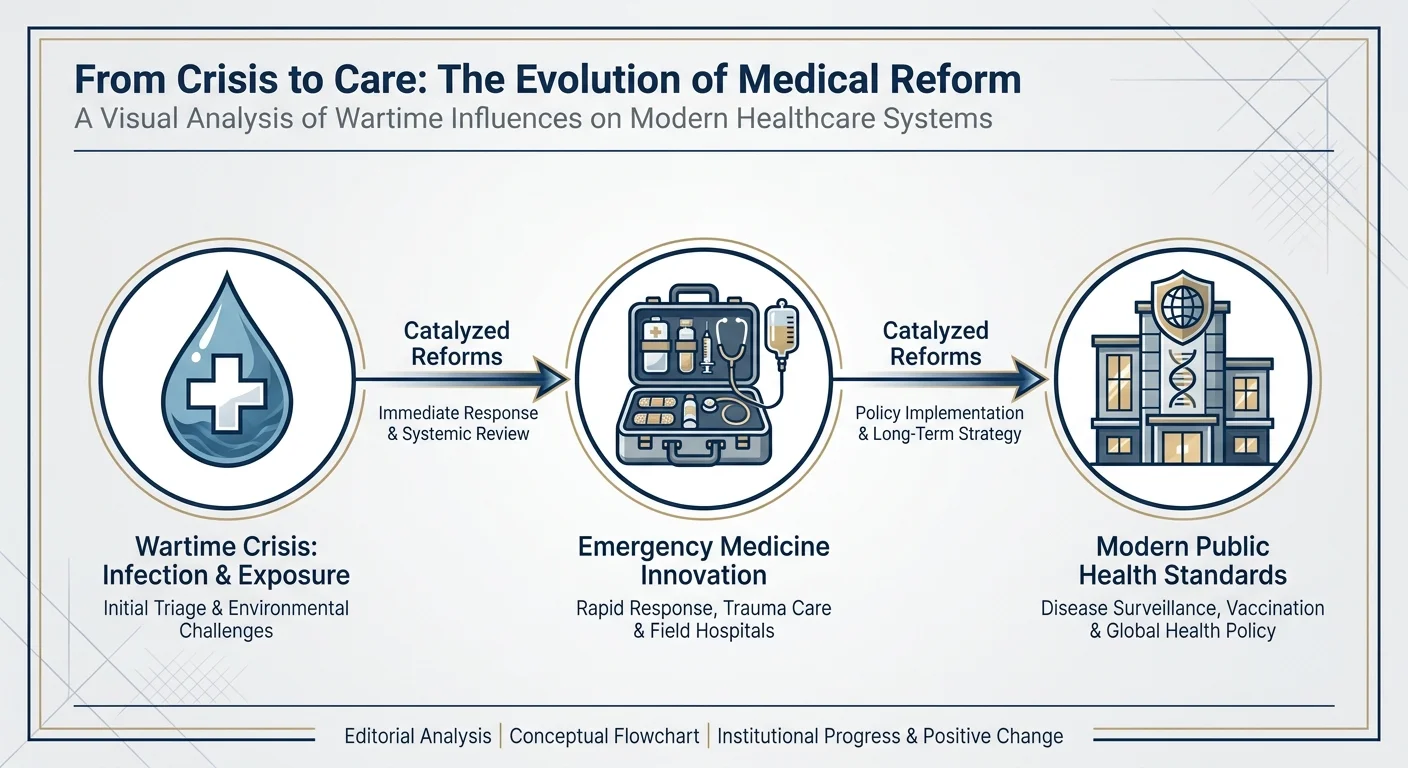
The unprecedented suffering of troops during World War II forced radical changes in military structure, medicine, and social policy. The sheer volume of casualties resulting from preventable environmental and psychological factors triggered massive investigations and systemic overhauls. These intense pressures forged numerous policies and technological advancements that continue to protect military personnel and civilians today.
One of the most consequential medical reforms involved the mass production of antibiotics. Consider the development of penicillin as a specific, powerful example. In 1941, the global supply of penicillin barely sufficed to treat a single patient. Understanding that wound infections caused massive mortality rates, the government partnered with agricultural and pharmaceutical researchers to utilize deep-tank fermentation techniques. By the time allied forces landed in Normandy in 1944, manufacturers produced enough penicillin to treat millions of casualties. This single logistical and scientific triumph reduced the mortality rate of severe bacterial pneumonias and combat wound infections from 18 percent in World War I to less than 1 percent by the end of World War II.
Furthermore, the military recognized the necessity of proper psychological screening and aftercare. The immense loss of manpower to combat fatigue proved that raw courage could not prevent the biological breakdown of the brain under extreme stress. This led to fundamental regulation changes, including the creation of rotation schedules to pull units off the frontline before they collapsed. To handle the aftermath of the war, the United States government enacted the Servicemen’s Readjustment Act of 1944, commonly known as the GI Bill. This monumental policy change provided veterans with funds for college education, unemployment insurance, and housing loans, directly addressing the economic and social integration challenges that plagued veterans of previous conflicts.
To understand the evolution of disaster response, you can look at how modern agencies operate compared to World War II. Today, contemporary disaster planning incorporates emergency guidance at the FEMA and hazard science at the USGS and NOAA/NWS. During the 1940s, military meteorologists lacked these advanced forecasting tools, leading to catastrophic weather exposures. Similarly, modern society relies on public health information at the CDC and the WHO, whereas wartime physicians often fought endemic diseases in a complete epidemiological vacuum. Environmental data via the EPA now helps mitigate the exact types of toxic battlefield exposures soldiers previously endured. Furthermore, transport and workplace investigations via the NTSB and OSHA utilize root cause analysis frameworks initially developed to prevent massive wartime logistical accidents. Globally, risk reduction resources at the UNDRR parallel the international humanitarian structures established to manage the war’s unprecedented civilian and military displacement.
Disclaimer: This historical analysis is for informational purposes only and does not constitute medical or emergency advice. Conditions, medical guidance, and institutional policies change constantly. Always verify current protocols with official public health agencies and local emergency authorities.