Infrastructure & Environmental Effects
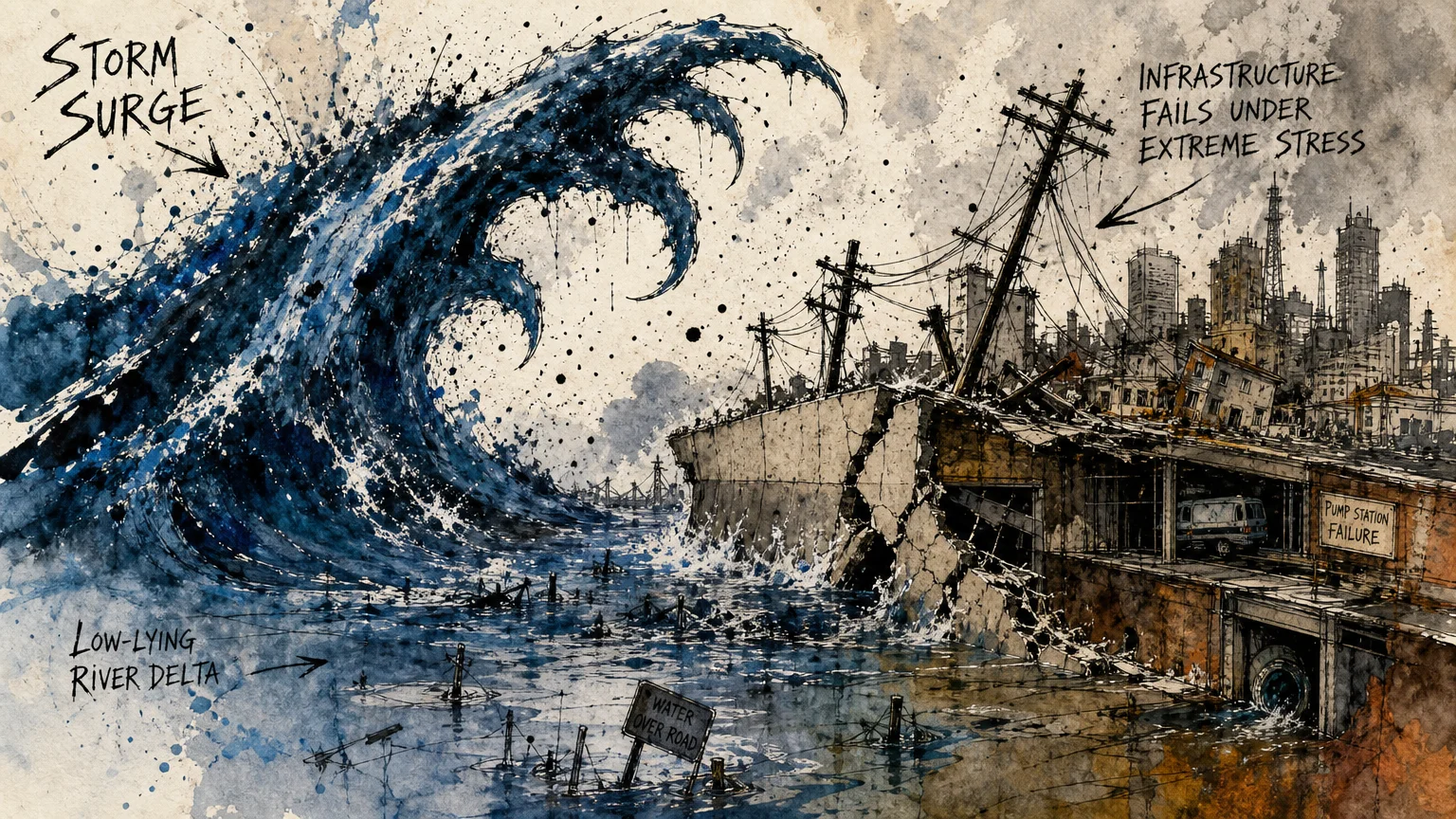
The built environment frequently crumbles under the sustained assault of a major tropical cyclone. When you assess infrastructure damage, you see a cascading failure of the systems that sustain modern urban life. Transportation networks suffer catastrophic disruption. Storm surges easily undermine the foundations of coastal highways, while extreme winds flip freight trains and destroy airport terminals. The loss of functional ports and bridges immediately chokes off supply chains, making it nearly impossible to deliver heavy earth-moving equipment and emergency supplies to the hardest-hit regions.
Electrical grids remain uniquely vulnerable to cyclonic winds. Utility poles snap under the intense wind load, and falling trees sever miles of transmission lines. This loss of electrical power triggers a massive secondary collapse across other critical sectors. Without electricity, municipal water pumps fail, cellular communication towers go dark, and hospitals lose their ability to operate life-saving medical equipment. Restoring this intricate web of infrastructure often requires billions of dollars and takes months, if not years, to fully complete.
You can see a definitive, worked mini-example of catastrophic infrastructure failure by examining Hurricane Katrina. The engineering failure of the New Orleans levee system illustrates the danger of relying on outdated defensive structures. Engineers originally designed the floodwalls to withstand a fast-moving Category 3 storm. However, when the massive volume of Katrina’s storm surge funneled into the Industrial Canal, the hydrostatic pressure simply pushed the concrete walls aside, allowing millions of gallons of water to inundate neighborhoods that sat well below sea level. This specific failure forced structural engineers worldwide to radically rethink urban flood defense systems.
The environmental devastation left by tropical storms is equally profound. Storm surges forcefully push millions of gallons of saltwater into fragile freshwater ecosystems. This severe saltwater intrusion kills coastal forests, destroys fragile coral reefs, and ruins highly productive agricultural soil. Following Cyclone Aila and Cyclone Nargis, coastal farmers discovered that the residual salt left by the evaporated floodwaters rendered their rice paddies completely barren for several planting seasons. Furthermore, powerful cyclonic winds routinely strip mangrove forests of their canopy. Because healthy mangroves act as nature’s primary shock absorber against tidal surges, their destruction leaves coastal communities drastically more vulnerable to the very next storm that strikes the region.