
Causes & Mechanisms
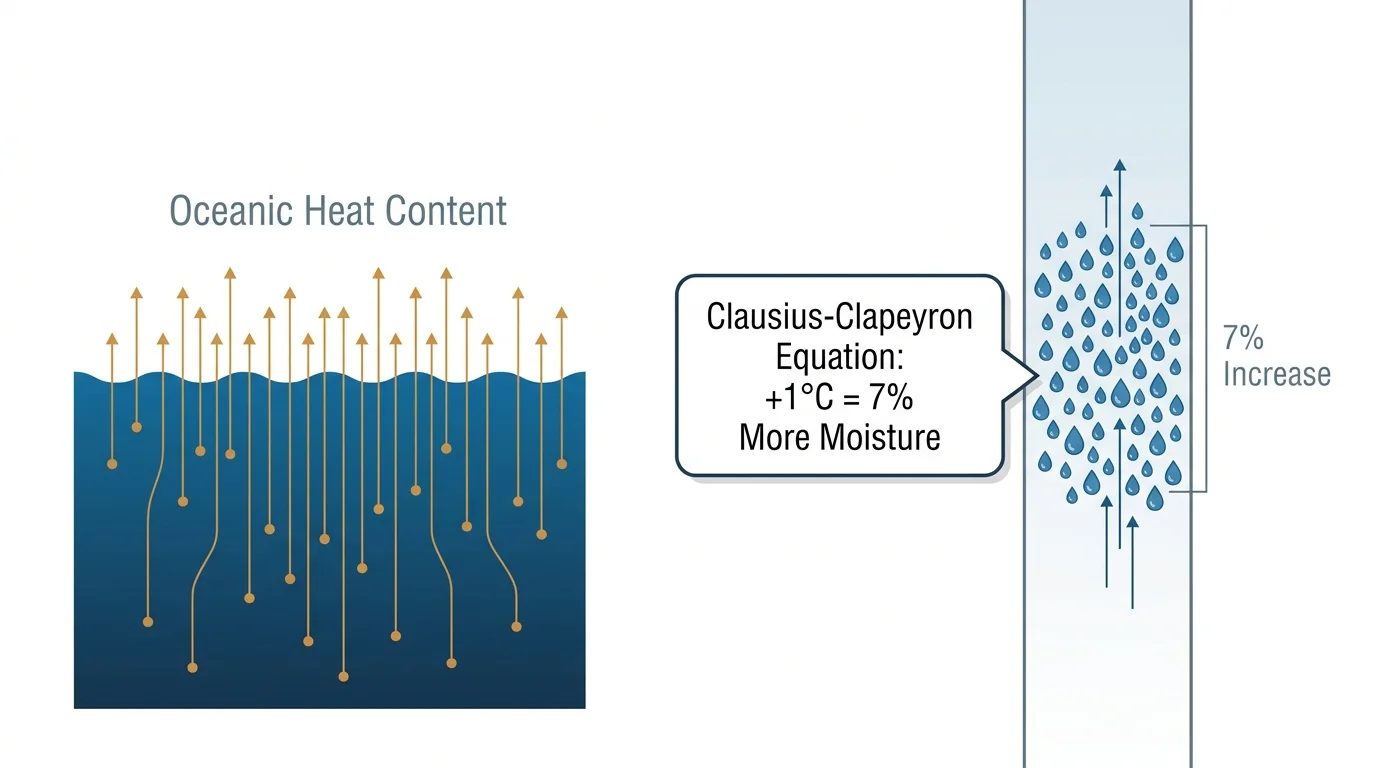
To effectively prepare for disaster predictions 2030, you must first understand the fundamental physical mechanisms driving these events. The increase in climate-driven disasters is largely dictated by thermodynamics. The oceans absorb the vast majority of the excess heat trapped by greenhouse gases, resulting in unprecedented oceanic heat content. When a tropical depression moves over these superheated waters, it absorbs massive amounts of thermal energy and moisture. This process fuels rapid intensification, transforming minor storms into catastrophic hurricanes in a matter of hours, giving coastal residents significantly less time to evacuate.
You can see the mechanics of extreme precipitation through the lens of the Clausius-Clapeyron equation, a foundational principle in atmospheric physics. This law dictates that for every 1 degree Celsius increase in atmospheric temperature, the air can hold approximately seven percent more moisture. By 2030, with projected temperature anomalies, this translates into localized storms carrying over ten percent more water weight than historical baselines. When these saturated weather systems stall over a city, they unleash rainfall rates exceeding four inches per hour. This sheer volume of water instantly overwhelms municipal drainage networks built in the twentieth century, providing a clear mathematical explanation for why you will witness more explosive and unexpected flash flooding.
Geological threats operate on entirely different mechanical principles but require equal attention. Consider the hazard science behind seismic locking. The Cascadia Subduction Zone, stretching along the Pacific Northwest coast, serves as a prime example of impending geological risk. Tectonic plates continuously push against one another, but friction prevents them from sliding smoothly. This creates a slip deficit—a massive accumulation of strain energy over centuries. When discussing this threat, geologists measure magnitude vs. intensity to assess potential damage. Magnitude refers to the total energy released at the fault line deep underground, while intensity measures the localized, violent shaking you actually feel on the surface.
When studying coastal inundation, understanding the mechanics of a storm surge is vital. A storm surge is an abnormal rise of seawater generated by an approaching storm, measured over and above the predicted astronomical tide. High-velocity winds physically push massive walls of water onto the shore. As sea levels inch higher approaching 2030, the baseline for these surges rises, meaning even a moderate storm can push water much further inland than before. By performing a root cause analysis on past infrastructure failures during these surges, engineers have discovered that the combination of prolonged saltwater exposure and intense wave action degrades concrete foundations far faster than wind alone.
Finally, emergency modelers differentiate between primary vs. secondary impacts to fully map out future natural disasters. Primary impacts involve the immediate physical destruction caused by the event—the wind tearing off roofs or the ground rupturing under a highway. Secondary impacts encompass the cascading systemic failures that follow, such as prolonged electrical grid blackouts, the subsequent contamination of municipal water supplies, and the rapid spread of disease. Understanding these secondary mechanisms is crucial, as they often account for the majority of human suffering and economic loss in the weeks following a major disaster.