
Causes & Mechanisms
Understanding extreme weather requires distinguishing between primary and secondary impacts. Primary impacts refer to the immediate physical forces generated by the weather system, such as the sheer kinetic energy of hurricane-force winds dismantling a building or torrential rainfall flooding a valley. Secondary impacts encompass the subsequent, often more lethal consequences that follow the initial strike. These include mass starvation due to destroyed agricultural infrastructure, waterborne disease outbreaks from contaminated drinking water, and the catastrophic failure of engineered structures like dams and levees.
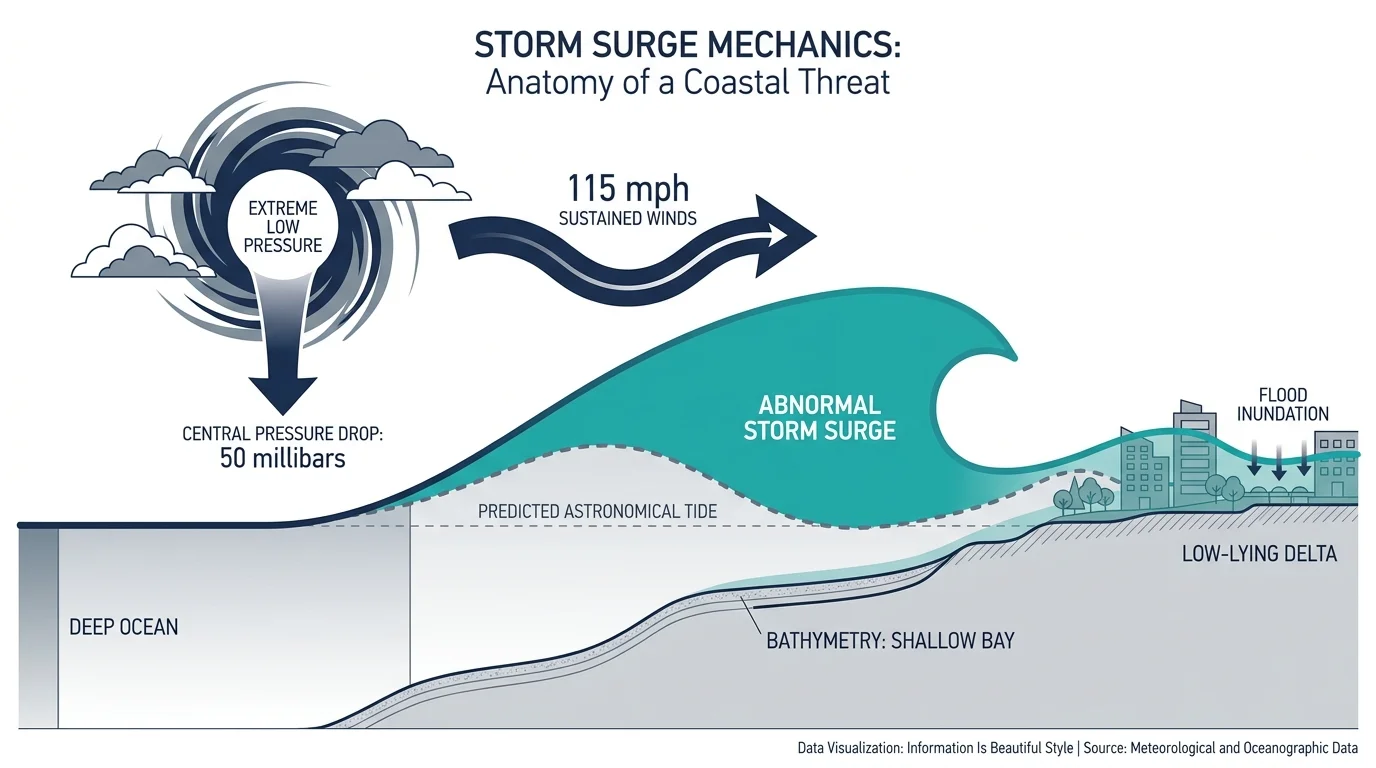
In tropical cyclones, the most destructive mechanism is the storm surge. We define a storm surge as the abnormal rise in seawater level generated by a storm, measured over and above the predicted astronomical tide. Two main factors drive a storm surge: the extreme low atmospheric pressure of the storm, which allows the ocean surface to bulge upward, and the relentless force of intense winds pushing massive volumes of water toward the shore. The shape of the coastline heavily dictates the severity of this surge.
Consider the precise mechanism behind the 1970 Bhola Cyclone to understand how bathymetry—the underwater depth of ocean floors—amplifies disaster. As the cyclone moved north through the Bay of Bengal, it experienced a central pressure drop of roughly 50 millibars. Combined with sustained winds of 115 miles per hour, the storm pushed an immense volume of water toward the Ganges Delta. Because the northern Bay of Bengal is extremely shallow and tapers into a narrow funnel shape, the moving water had nowhere to go but up and inland. This geographical funneling transformed a standard tropical cyclone into a 33-foot-high wall of water that swept over heavily populated islands, demonstrating exactly how regional topography converts severe weather into a mass-casualty disaster.
River floods operate on a different timeline and scale but utilize equally devastating mechanisms. Massive inundations often result from a combination of prolonged seasonal precipitation and sudden anomalous weather events, such as a stalling front or a series of typhoons. Furthermore, human intervention often worsens flood mechanisms. When communities build levees to contain a river, the constrained water moves faster and deposits sediment directly onto the riverbed rather than spreading it across floodplains. Over decades, this raises the riverbed higher than the surrounding land. When a levee eventually breaches under the strain of extreme rainfall, the river pours downward into the populated plains with explosive, devastating force.
It is also crucial to differentiate between magnitude and intensity when discussing these mechanisms. Magnitude measures the objective physical size and energy release of a storm, while intensity measures the localized severity of its effects on the ground. A storm of moderate magnitude can yield catastrophic intensity if it strikes an ill-prepared, densely populated delta, highlighting why analyzing historical weather disaster history is heavily dependent on understanding human settlement patterns.