Infrastructure & Environmental Effects
When an extreme hazard strikes an urban environment, the physical and environmental degradation reaches an absolute scale. Buildings collapse, transportation networks sever, and critical lifelines such as power, water, and sewage fail completely. Examining the infrastructure damage and subsequent remediation provides concrete examples of how cities physically evolve post-disaster.
The Great Chicago Fire consumed over 17,000 structures, leaving an area four miles long and nearly a mile wide in ashes. The environmental fallout included heavy smoke pollution and contaminated waterways. However, the destruction of the central business district cleared the way for revolutionary architectural changes. Engineers discarded highly flammable wooden frames in favor of terra cotta, brick, and steel, ultimately giving rise to the fireproof designs of the modern skyscraper.
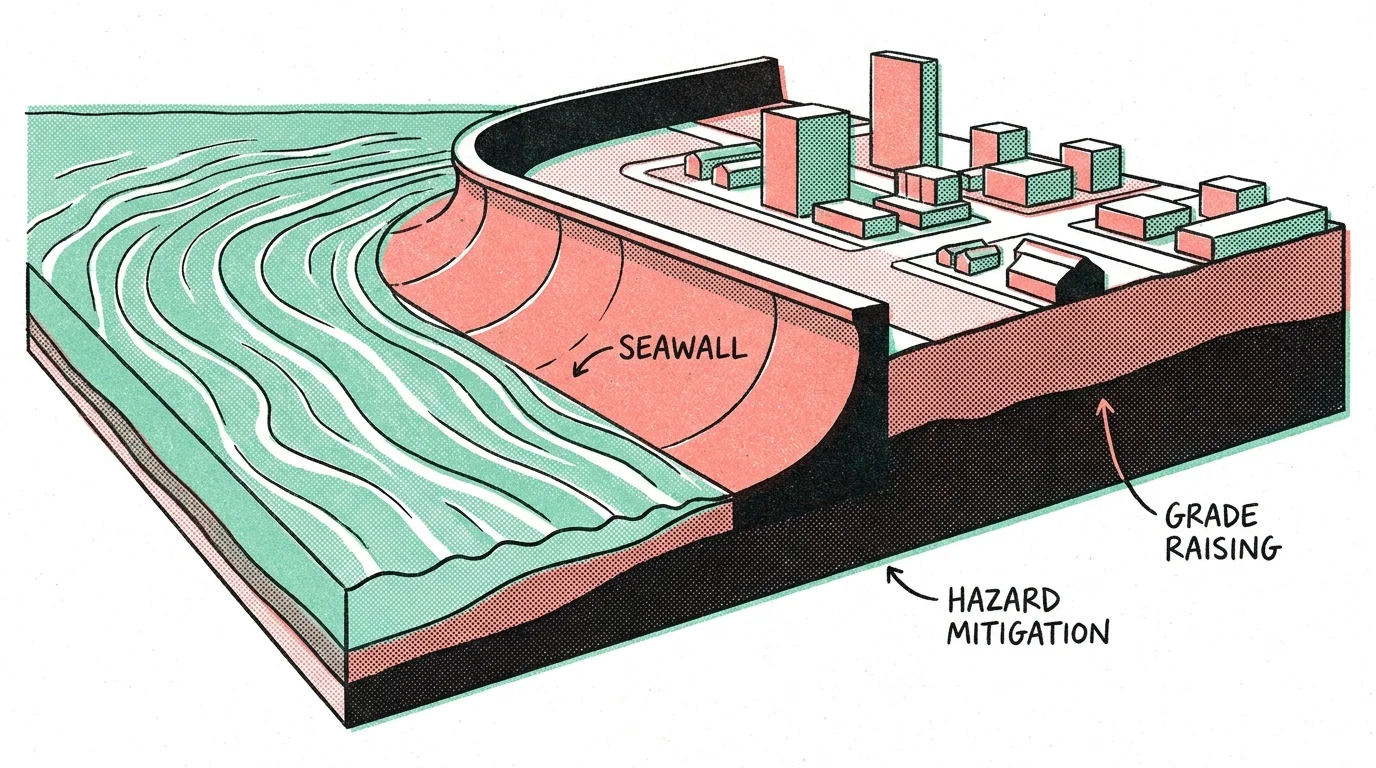
In Galveston, the entire island’s infrastructure suffered total inundation. Rather than simply rebuilding houses on vulnerable ground, city engineers executed an unprecedented remediation step. The city raised its physical elevation by pumping a thick slurry of sand and water from the Gulf of Mexico into the residential neighborhoods. Engineers lifted over 500 city blocks, jacking up existing houses, churches, and commercial buildings by as much as 17 feet. Simultaneously, they constructed a massive 10-mile seawall to block future storm surges. This monumental feat of civil engineering physically separated the ocean from the urban environment, providing a concrete example of adapting geography to protect infrastructure.
Hurricane Andrew’s impact on Homestead highlighted a massive failure in residential engineering. The storm’s extreme winds systematically dismantled thousands of homes, exposing the widespread use of substandard building materials and poor construction practices. Roofs peeled away seamlessly, causing catastrophic structural collapse. The environmental effects were equally severe, with immense volumes of construction debris clogging local waterways and severely damaging the fragile ecosystem of the nearby Everglades. The recovery necessitated massive debris removal operations and a complete overhaul of how residential structures anchor to their foundations.
The 1964 Anchorage earthquake severely tested the structural limits of concrete and steel. The megathrust earthquake’s prolonged shaking caused massive landslides, dropping entire neighborhoods into newly formed ground depressions. Underground utilities snapped, leaving the city without water or power in freezing temperatures. Post-disaster geological surveys identified unstable clay layers beneath the city. In response, local authorities designated high-risk landslide zones as public parks and strictly prohibited heavy commercial construction in geologically unstable areas.
Greensburg provides another remarkable example of infrastructure transformation. After the tornado leveled the town, officials established a recovery plan mandating that all new city-owned buildings meet Leadership in Energy and Environmental Design Platinum standards. The town constructed a local wind farm that produces more electricity than the community consumes, turning a disaster site into a model of renewable energy and sustainable infrastructure. By utilizing geothermal heating and maximizing natural light in architectural designs, Greensburg dramatically reduced its long-term energy consumption and environmental footprint.
Following Katrina, New Orleans faced massive environmental contamination. Stagnant floodwaters mixed with raw sewage, petroleum products, and heavy metals, creating a toxic sludge that coated the city once the waters receded. Remediation required extensive environmental testing and targeted soil removal. The city’s primary infrastructure upgrade involved a 14.5 billion dollar investment by the federal government to construct the Hurricane and Storm Damage Risk Reduction System. This vast network features improved levees, reinforced floodwalls, and massive pump stations specifically designed to withstand a 100-year storm event.