Case Studies in Tragic History
The following case studies explore seven distinct events. Each is examined through the lens of official reports and established facts, focusing on the contributing factors and the safety principles they illuminate.
James Dean (September 30, 1955)
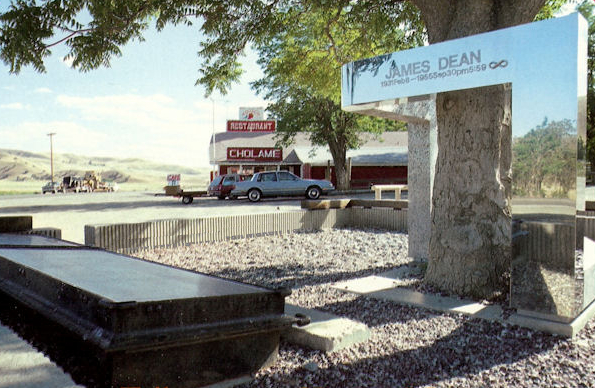
The death of actor James Dean is one of the most iconic and studied car crashes in history. At just 24 years old, Dean was the embodiment of youthful rebellion and a rising star in Hollywood. He was also a passionate amateur race car driver.
On the afternoon of his death, Dean was driving his new, lightweight Porsche 550 Spyder—a vehicle known for its racing pedigree and spartan lack of safety features—to a race in Salinas, California. At approximately 5:45 PM, near Cholame, he was traveling west on Route 466. At the intersection with Route 41, a 1950 Ford Tudor, driven by 23-year-old student Donald Turnupseed, was traveling east and made a left turn, crossing into Dean’s lane. The two vehicles collided nearly head-on.
The James Dean car crash details from the subsequent investigation highlight a confluence of factors. The primary cause was the failure of the other driver to yield the right-of-way. However, Dean’s speed, while debated, was likely a significant contributor to the crash’s severity. The low profile and silver color of the Porsche may have also made it difficult to see against the fading afternoon light and the color of the road. From a vehicle standpoint, the Porsche 550 Spyder offered virtually no crash protection. Its lightweight, aluminum body was designed for performance, not impact absorption, and it lacked even basic safety features like seatbelts, which were not standard at the time.
The immense kinetic energy of the impact was catastrophic for the small sports car. Dean suffered fatal injuries in the crash. His passenger, mechanic Rolf Wütherich, was thrown from the vehicle and survived with serious injuries. The driver of the Ford sustained only minor injuries, a stark illustration of the role vehicle mass plays in collision outcomes.
Jayne Mansfield (June 29, 1967)
Actress Jayne Mansfield’s fatal accident brought national attention to a specific and gruesome type of collision: the tractor-trailer underride. In the early morning hours, Mansfield, her lawyer, her driver, and her three young children were traveling in a 1966 Buick Electra in Louisiana. They were behind a tractor-trailer that had slowed down due to a truck ahead spraying for mosquitos.
The Buick collided with the rear of the semi-trailer at a significant speed. Because the trailer bed was high off the ground, the chassis of the Buick slid underneath it. The force of the impact sheared off the top of the passenger car, instantly killing the three adults in the front seat. Miraculously, the three children asleep in the back seat survived with minor injuries.
This crash is a powerful example of how specific crash dynamics can produce uniquely devastating outcomes. The underride negated any of the Buick’s built-in frontal crash protection, like its engine block and frame, as the point of impact was at the level of the windshield. The investigation and the public nature of the tragedy led directly to a major regulatory change. The National Highway Traffic Safety Administration (NHTSA) eventually mandated the installation of strong steel bars on the rear of all large truck trailers. These bars, known as Rear Underride Protection Systems, are designed to prevent a passenger vehicle from sliding underneath the trailer in a rear-end collision. They are colloquially and officially known as “Mansfield bars.”
Grace Kelly (September 13, 1982)
The death of Grace Kelly, the American actress who became Princess of Monaco, highlights the critical role of driver health. While driving her 11-year-old Rover P6 3500 on a winding, mountainous road in Monaco, with her daughter Princess Stéphanie as a passenger, she suddenly lost control of the vehicle. The car veered off the road and plunged over 100 feet down a steep embankment.
Initial speculation centered on mechanical failure or driver error. However, the official investigation concluded that the most probable cause was a medical event. Doctors who treated her determined that Princess Grace had suffered a minor stroke, which caused her to become disoriented and lose control of the car. She suffered a second, more severe stroke and brain hemorrhage from the crash itself and died the following day without regaining consciousness. Her daughter survived with a fractured vertebra.
This case underscores a critical human factor that is often overlooked: sudden medical incapacitation. While less common than impairment from alcohol or distraction, events like strokes, heart attacks, or seizures at the wheel can have catastrophic consequences. The incident serves as a reminder of the importance of monitoring one’s health and understanding the risks associated with driving with certain medical conditions.
Princess Diana (August 31, 1997)
The death of Diana, Princess of Wales, was a global event that prompted intense scrutiny of multiple factors, from media ethics to vehicle safety. The crash occurred in the Pont de l’Alma tunnel in Paris, France, shortly after midnight. The Mercedes-Benz S280 in which she was a passenger was traveling at high speed, reportedly attempting to evade pursuing paparazzi photographers on motorcycles.
The driver, Henri Paul, lost control of the vehicle and collided with a concrete pillar in the tunnel. The impact was immense. Paul and Diana’s companion, Dodi Fayed, were killed instantly. Diana was critically injured and died later in the hospital. The sole survivor was Fayed’s bodyguard, Trevor Rees-Jones, who was seated in the front passenger seat and was the only one of the four occupants wearing a seatbelt.
The 18-month French judicial investigation concluded that the crash was caused by the driver, who was operating the vehicle at high speed while under the influence of alcohol and prescription drugs. His blood alcohol content (BAC) was found to be more than three times the legal limit in France. The pursuit by paparazzi was deemed a contributing factor, creating a high-pressure environment that encouraged reckless driving. From a safety perspective, the case is a stark lesson in the life-saving efficacy of seatbelts. Experts who analyzed the crash dynamics widely agree that Diana and Fayed almost certainly would have survived, albeit with serious injuries, had they been properly restrained.
Public health information at the CDC and the WHO. Environmental data via the EPA.
Lisa “Left Eye” Lopes (April 25, 2002)
Lisa Lopes, a member of the successful music group TLC, died in a rollover accident in Honduras. The crash illustrates the dangers of combining speed with the specific vehicle dynamics of an SUV, particularly on unfamiliar roads. Lopes was driving a rented Mitsubishi Montero Sport with seven other passengers.
According to reports and a video camera that was recording from inside the vehicle at the time, Lopes swerved to avoid a slow-moving truck in her lane. After passing the truck, she appeared to overcorrect her steering. This action, combined with the vehicle’s speed and its high center of gravity, initiated a rollover. The SUV left the roadway and rolled several times. Lopes, who was not wearing a seatbelt, was ejected from the vehicle and sustained fatal head and chest injuries. The other passengers, many of whom were wearing seatbelts, survived.
This incident is a textbook example of a loss-of-control rollover. Sport Utility Vehicles (SUVs) inherently have a higher center of gravity than sedans, making them more susceptible to tipping or rolling during abrupt steering maneuvers. This risk is amplified at higher speeds. The tragic outcome for Lopes, contrasted with the survival of her belted passengers, serves as another powerful reminder of the importance of seatbelt use, especially in vehicles prone to rollovers.
Ryan Dunn (June 20, 2011)
The death of Ryan Dunn, a star of the *Jackass* television and movie franchise, was a tragic but clear-cut case of the deadly combination of extreme speed and severe alcohol impairment. In the early morning hours, Dunn was driving his 2007 Porsche 911 GT3 in West Goshen Township, Pennsylvania, with his friend Zachary Hartwell as a passenger.
The vehicle left the roadway at an extremely high rate of speed, traveled more than 100 feet through a wooded area, struck a tree, and burst into flames. Both Dunn and Hartwell were killed by the combined forces of the impact and the subsequent fire. The police accident reconstruction report estimated the car’s speed at the point of impact was between 132 and 140 miles per hour in a 55 mph zone. A subsequent toxicology report found that Dunn’s BAC was 0.196%, more than double the state’s legal limit of 0.08%.
There are no complex mechanical or environmental factors to analyze in this crash. It stands as an unambiguous and devastating illustration of the consequences of two of the most dangerous human factors in driving. The immense kinetic energy generated at that speed made the crash completely unsurvivable, regardless of the Porsche’s advanced engineering.
Paul Walker (November 30, 2013)
The death of Paul Walker, star of the *Fast & Furious* film series, was deeply ironic and shocking to the public. Walker was a passenger in a 2005 Porsche Carrera GT driven by his friend and business partner, Roger Rodas. They were leaving a charity event in Santa Clarita, California.
On a wide, relatively straight street with a posted speed limit of 45 mph, Rodas lost control of the high-performance supercar. The car spun, struck a curb, and slammed into a light pole and several trees before catching fire. Both men were killed. The official investigation by the Los Angeles County Sheriff’s Department and the California Highway Patrol addressed the central question of how did Paul Walker die by ruling out any mechanical failure of the vehicle. The sole cause was determined to be unsafe speed for the road conditions.
The investigation estimated the car’s speed to be between 80 and 93 mph. At that speed, the driver lost control. The Porsche Carrera GT is a notoriously difficult car to drive, renowned for its raw power and lack of modern driver aids like Electronic Stability Control (ESC). This vehicle factor, while not a “failure,” meant there was no electronic safety net to help the driver recover from the loss of traction. The subsequent wrongful death lawsuits filed by the families against Porsche alleged design defects, but the company maintained that the vehicle was safe if driven properly and that the crash was the result of reckless driving.