
Infrastructure & Environmental Effects
The disasters these individuals survived also caused significant damage to infrastructure and the environment, ranging from the complete annihilation of cities to localized, but critical, failures.
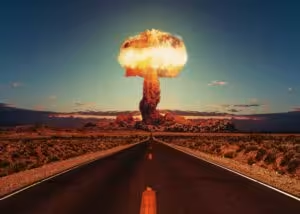
The atomic bombings of Hiroshima and Nagasaki represent an apex of infrastructural destruction. In Hiroshima, over 90 percent of the city’s buildings were either destroyed or severely damaged by the blast and subsequent firestorms. Roads, bridges, electrical grids, and water systems were obliterated, grinding the city to a halt. The environmental effects were equally severe, with long-lasting radioactive contamination of soil and water. The recovery involved a massive, decades-long effort to clear rubble, decontaminate areas, and completely rebuild the urban landscape. Agencies like the EPA now study such events to understand long-term environmental remediation.
The aviation accidents involving Koepcke and Vulović resulted in the total loss of infrastructure—the aircraft themselves. The wreckage was scattered over many square kilometers of remote terrain, in both the Amazon rainforest and the forests of Czechoslovakia. Wreckage recovery is a key part of an accident investigation, overseen by bodies like the NTSB in the United States. Environmentally, the impact was relatively localized, consisting of the debris field and spilled fuel. The primary challenge was accessing these remote sites for investigation and recovery without causing further environmental disturbance.
Roy Sullivan’s encounters with lightning had minor infrastructural effects, such as damage to the lookout towers he occupied or the truck he was driving. Lightning is a significant cause of wildfires, which have major environmental consequences, and it can also damage power grids and communication infrastructure. His personal story is a microcosm of a larger, persistent hazard that causes billions of dollars in damage annually.
Aron Ralston’s incident did not cause infrastructural damage, but it was defined by its environmental setting. The slot canyons of Utah are a unique and hazardous environment. They are prone to flash floods and rockfalls, and their remote, rugged nature makes them difficult to navigate and even more difficult for rescue teams to access. His survival depended on his ability to understand and ultimately escape that specific environment. His story underscores how natural features, while beautiful, can themselves constitute a significant hazard to human life.