Infrastructure & Environmental Effects
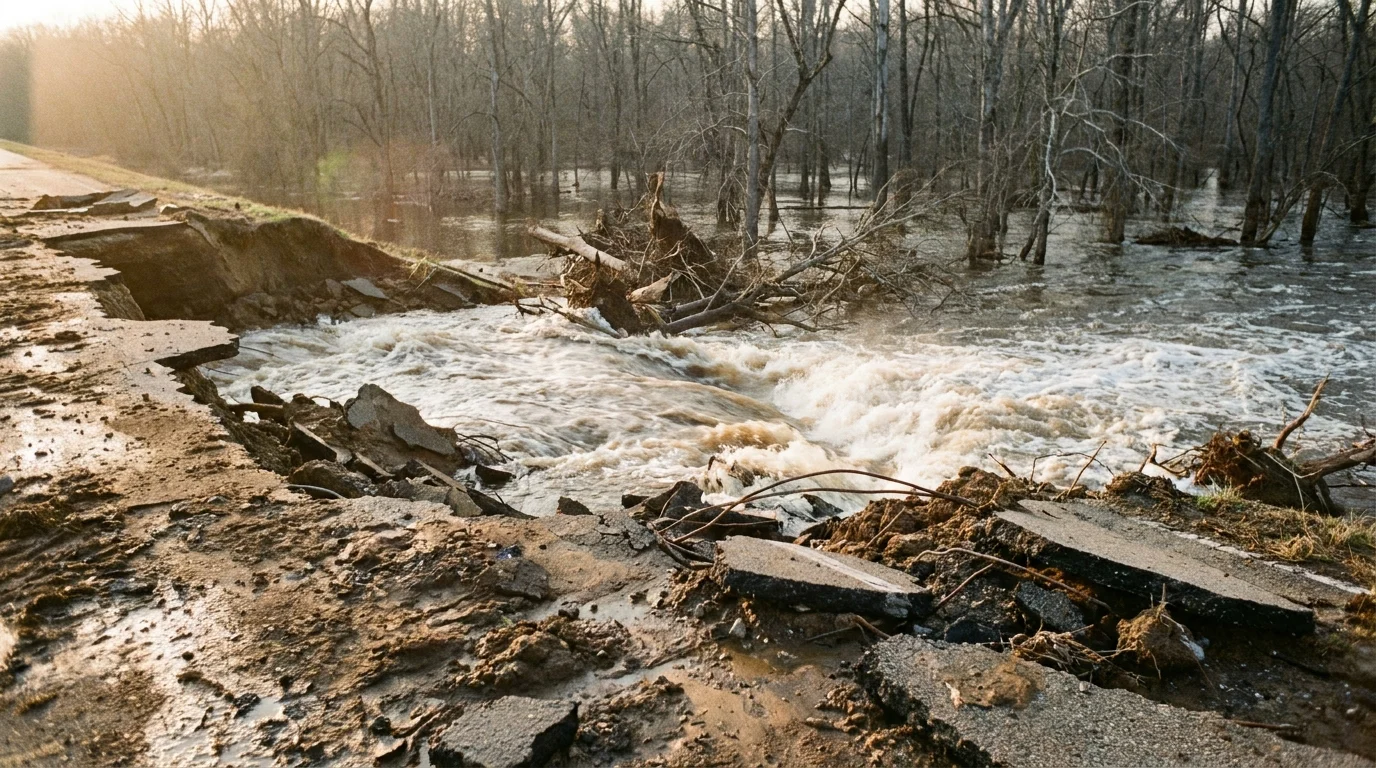
The destructive physical force of these historic floods shattered infrastructure and left enduring environmental scars. Flowing water exerts incredible lateral pressure against stationary objects; when mixed with debris like trees, vehicles, and torn-off roofs, it acts as a battering ram. During the 1889 Johnstown disaster, the debris field caught fire at the local stone bridge, compounding the tragedy with a massive inferno over the floodwaters. In 1972, the Rapid City floodwaters picked up automobiles and hurled them through commercial buildings, effectively destroying the city’s commercial infrastructure in a matter of hours.
Prolonged regional floods inflict a different type of infrastructural trauma. During the Great Flood of 1993, the extended inundation submerged numerous water treatment plants, leaving hundreds of thousands of people without safe tap water for weeks. Transportation networks across the Midwest were entirely paralyzed. Commercial navigation on the Mississippi River ceased completely for two months, resulting in billions of dollars in lost economic productivity. The high waters also breached hundreds of agricultural levees, scouring away vital topsoil and depositing thick layers of sterile sand across highly productive farmland, significantly altering the agricultural yield of the region for years.
Urban floods present catastrophic environmental consequences due to the high density of industrial sites. Hurricane Katrina caused multiple major oil spills along the Louisiana coast when storage tanks were ruptured by the storm surge, releasing millions of gallons of petroleum products into the surrounding marshlands and residential communities. Hurricane Harvey brought similar environmental devastation to Texas. The intense rainfall flooded dozens of chemical plants and toxic Superfund sites around the Houston area. These toxic releases contaminated local ecosystems, requiring extensive remediation steps to remove heavy metals and volatile organic compounds from residential soils once the waters retreated.
The failure of the levees in New Orleans during Katrina stands as one of the most significant engineering disasters in American history. The floodwalls protecting the city were designed inadequately and maintained poorly, succumbing to the pressure of the storm surge long before the waters reached the structures’ top edges. The collapse of these vital flood defenses resulted in an infrastructure paralysis so severe that power, water, and telecommunications networks remained offline for months. Recognizing these vulnerabilities helps engineers and city planners design better redundancy into modern power grids and transport networks, prioritizing elevated electrical substations and reinforced bridge abutments.
Transport and workplace investigations via the NTSB and OSHA. Risk reduction resources at the UNDRR.