Causes & Mechanisms
Understanding exactly how toxins breach your drinking water requires a close look at hydrogeology and chemical engineering. Groundwater contamination typically occurs when surface pollutants percolate through porous soil layers, eventually reaching the aquifers that supply municipal wells. For example, agricultural runoff saturates the soil with nitrogen-rich fertilizers. When heavy rains wash over these fields, the water carries dissolved nitrates downward. Once these nitrates breach the water table, they spread through the aquifer in concentrated plumes. Municipalities relying on these compromised aquifers pump the contaminated water directly into treatment facilities that frequently lack the expensive reverse osmosis or ion-exchange technology required to strip nitrates from the supply.
Industrial chemicals infiltrate water systems through a similar mechanism, but they present unique molecular challenges. PFAS compounds feature an exceptionally strong carbon-fluorine bond, making them highly resistant to natural degradation. When manufacturers discharge PFAS wastewater into rivers or local soils, these chemicals move freely through the environment without breaking down. Because standard municipal water treatment plants rely on coagulation, sedimentation, and basic filtration, PFAS molecules slip right through the process. To remove forever chemicals, municipalities must install highly advanced granular activated carbon filtration systems or high-pressure reverse osmosis membranes, both of which require massive capital investments.
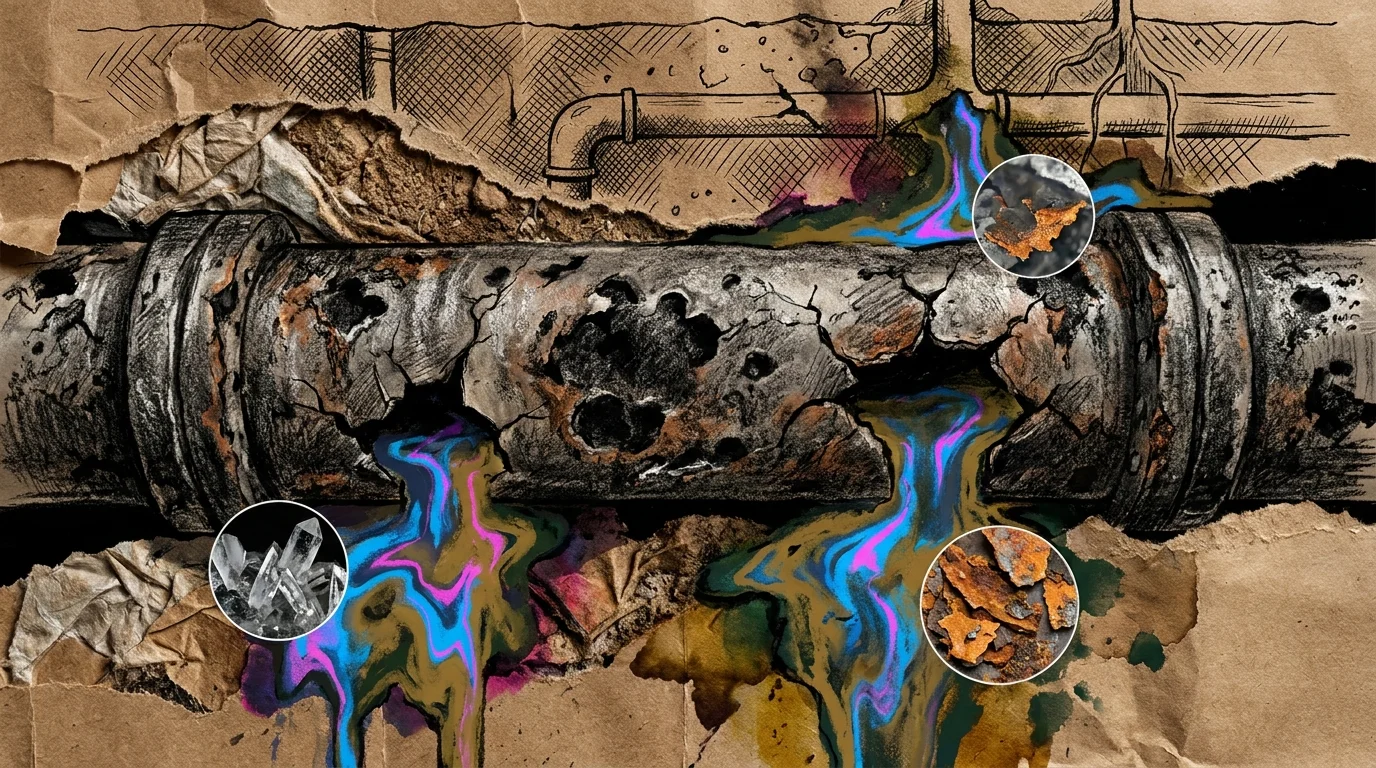
Lead contamination relies on an entirely different mechanism known as chemical leaching. Unlike agricultural or industrial pollutants that contaminate the source water, lead enters your drinking water during the final miles of delivery. Millions of homes connect to municipal water mains via lead service lines. When water chemistry fluctuates, it triggers galvanic corrosion inside these pipes. To prevent this, engineers utilize a specific mitigation strategy called corrosion control.
Consider a working municipal water system utilizing chloramine as a primary disinfectant. Under optimal conditions, engineers inject orthophosphate into the water supply before it leaves the treatment plant. This chemical additive reacts with the lead interior of the service pipes, forming a protective, insoluble mineral scale that acts as a physical barrier between the raw lead and the flowing water. If a municipality attempts to cut costs or switches water sources without adjusting the pH and maintaining that orthophosphate dosage, the protective mineral scale dissolves. Within just a few weeks of this chemical failure, highly corrosive water strips lead particles directly into the drinking supply—a precise sequence of engineering failures that caused the catastrophic, system-wide poisoning in Flint, Michigan. By understanding this mechanism, you can see why regular water testing at your specific tap remains crucial; the water leaving the treatment plant might test clean, but the pipe leading to your sink can poison the supply.