Timeline
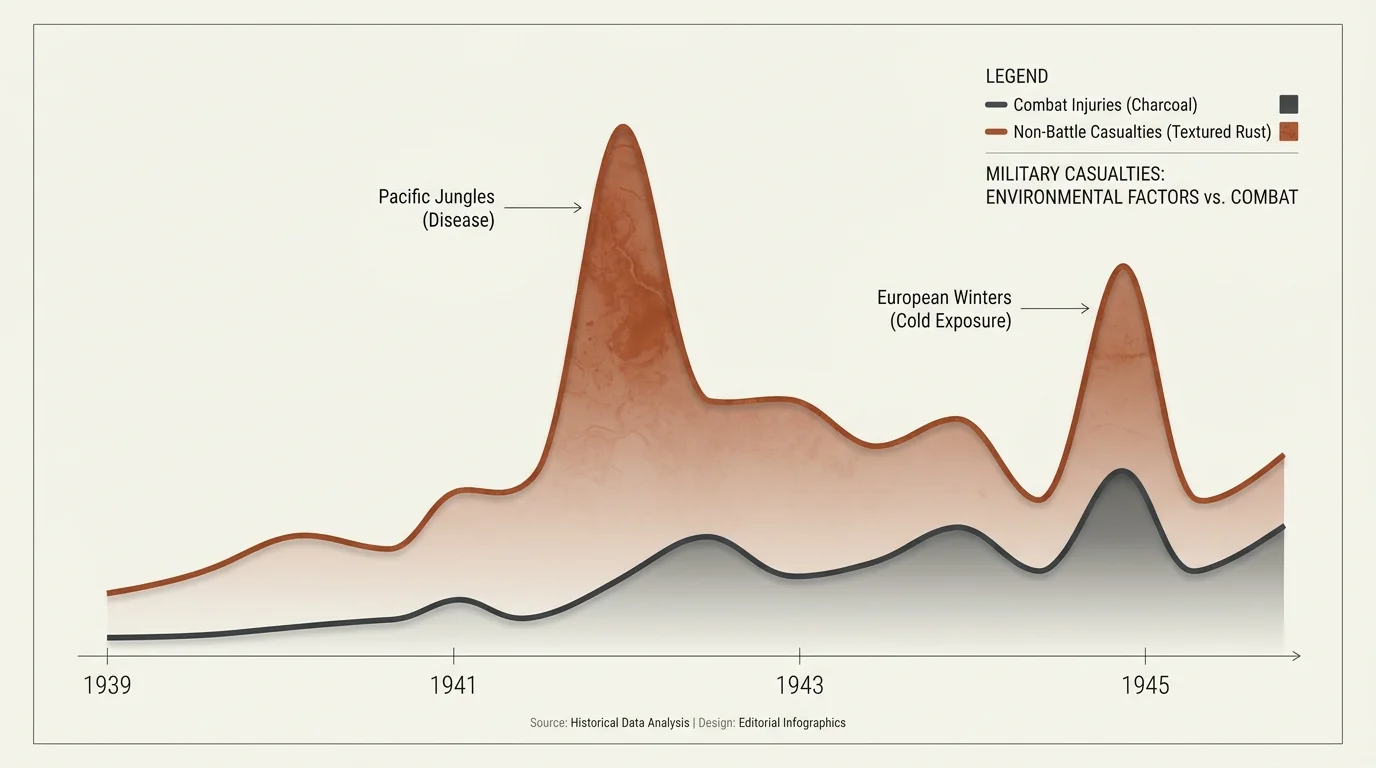
The progression of World War II introduced new and terrifying hazards as the tactical nature of the fighting evolved. The timeline of the conflict reveals a shift from fast-moving, mechanized assaults to grueling, static warfare where soldiers found themselves trapped in increasingly lethal environments. This chronological shift brought about the next three unspeakable conditions.
As the initial mobility of the war slowed into bitter territorial disputes, the concept of the battlefield transformed. Troops no longer moved rapidly across open terrain; instead, they dug deep into the earth to survive. This shift forced millions of men to inhabit the ground they fought over for weeks on end, creating isolated ecosystems of suffering.
4. Protracted Subterranean and Foxhole Warfare: As the Allies advanced through Italy and eventually into the dense hedgerows of Normandy, rapid movement halted. Soldiers endured weeks living in small, hand-dug foxholes. You must imagine living in a shallow dirt pit, unable to stand or walk during daylight hours due to the constant threat of sniper fire. Soldiers ate, slept, and eliminated waste in these confined, flooded spaces. The sheer physical toll of immobility caused profound muscle atrophy and severe joint pain. Rain and rising groundwater frequently flooded these positions, leaving troops submerged in freezing mud. The psychological strain of remaining pinned in a single, subterranean location for weeks dismantled the morale of even the most experienced veterans.
5. Relentless Acoustic Trauma and Artillery Bombardment: Throughout the conflict, particularly during major engagements like the Battle of Kursk or the island-hopping campaigns in the Pacific, artillery barrages reached unprecedented intensities. The mechanical evolution of heavy weaponry meant that soldiers endured barrages involving thousands of shells per hour. The physical mechanism of a high-explosive detonation creates a massive overpressure wave that travels faster than the speed of sound. When this shockwave impacts the human body, it causes profound acoustic trauma, permanently damaging the tympanic membranes in the ears. More insidiously, the concussive force violently jostles the brain within the skull, causing mild to severe traumatic brain injuries. Soldiers trapped under these barrages suffered from intense disorientation, chronic headaches, and severe neurological symptoms that contemporary medicine dismissed merely as immediate combat stress.
6. Catastrophic Logistical Accidents and Friendly Fire: The fog of war and the reliance on rudimentary communication technology led to horrific systemic failures. Before the invention of precision guidance systems and digital transponders, coordinating aircraft, artillery, and advancing infantry required fragile analog communication lines. You can trace numerous tragic incidents to simple navigational errors or misread smoke signals. During Operation Cobra in 1944, heavy bombers accidentally released thousands of tons of high explosives directly onto friendly infantry positions due to shifting winds and misidentified target markers. Furthermore, the sheer industrial effort required to transport volatile munitions resulted in massive accidental explosions at staging areas and ports. Soldiers lived with the constant, terrifying reality that a simple human error in logistics or communication could instantly annihilate their unit without a single enemy soldier present.