Causes & Mechanisms
Understanding the sheer misery troops faced requires an analysis of the root causes and biological mechanisms at play. The hazard science behind these conditions explains why modern militaries and emergency organizations prioritize environmental protection and public health infrastructure. During the conflict, the collision of human physiology with unforgiving natural elements generated catastrophic casualty rates. We identify the first three major hardships here, rooted deeply in medical and environmental failures.
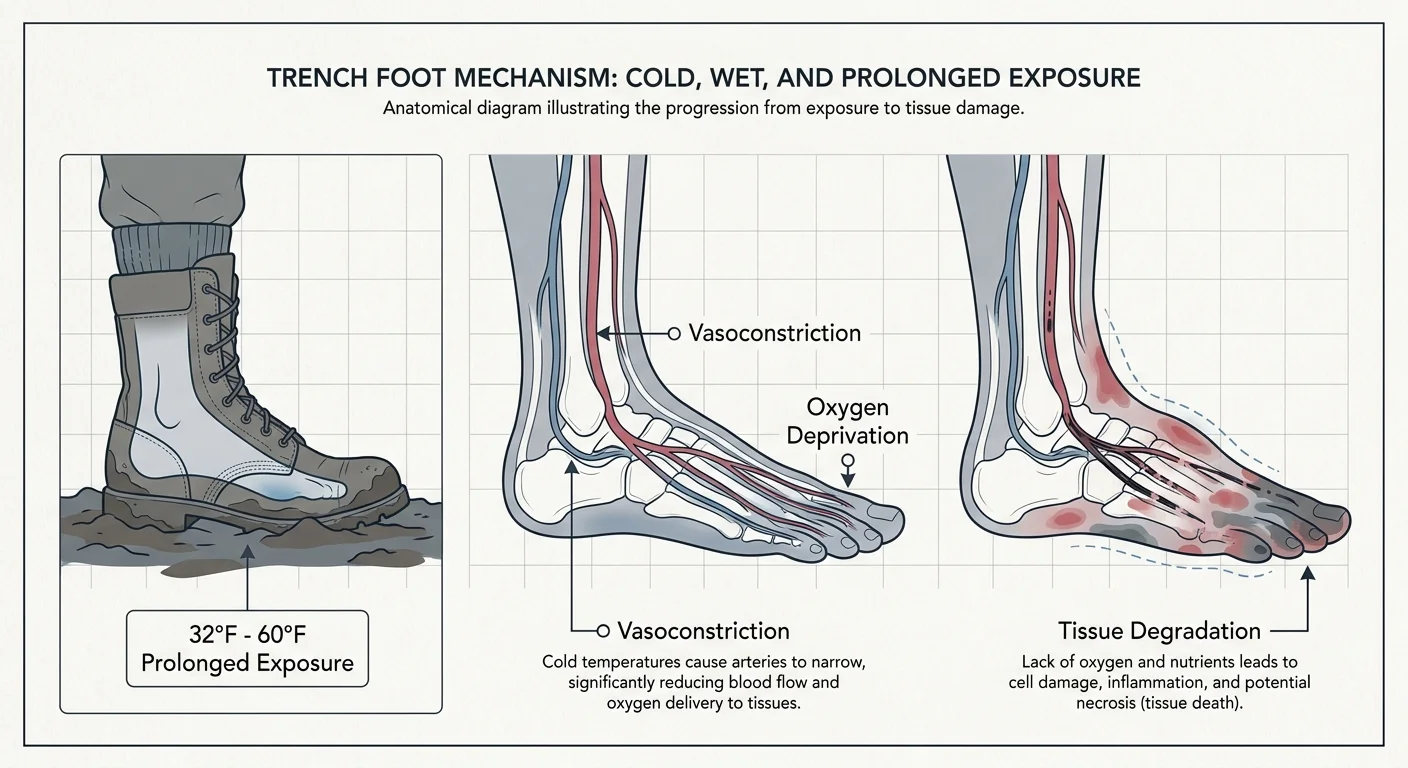
1. Debilitating Cold Injuries and Trench Foot: You might assume that artillery posed the greatest threat during winter campaigns, but prolonged cold exposure devastated unit readiness. Trench foot occurs when the extremities remain submerged in cold water or mud at temperatures between 32 and 60 degrees Fahrenheit for extended periods. When this happens, the human vascular system automatically constricts peripheral blood vessels to preserve core body heat. This prolonged vasoconstriction starves the foot tissues of vital oxygen and nutrients. As a result, the tissues begin to die, leading to painful swelling, nerve damage, and severe necrosis. During the winter of 1944 in the European Theater, particularly around the Ardennes, the United States Army recorded tens of thousands of cold injury casualties. Commanders eventually realized that logistics dictated survival, mandating strict daily sock changes and issuing better waterproof footwear. This single tactical adjustment demonstrates how basic root cause analysis and preventative logistics can save thousands of limbs from amputation.
2. Endemic Vector-Borne Diseases: In the South Pacific and North African campaigns, microscopic pathogens claimed more combat effectiveness than enemy bullets. Soldiers endured horrific outbreaks of malaria, dengue fever, and dysentery. Malaria, caused by the Plasmodium parasite and transmitted via the Anopheles mosquito, invades the human liver and destroys red blood cells, causing extreme cyclical fevers, severe anemia, and neurological damage. By 1943, malaria accounted for the vast majority of hospital admissions in several Pacific units. Preventative measures remained primitive; troops relied on Atabrine, a synthetic antimalarial drug that caused the skin to turn yellow and induced severe nausea, leading many soldiers to refuse their doses. Simultaneously, the destruction of sanitation infrastructure caused rampant outbreaks of bacterial dysentery. Consuming contaminated surface water led to severe intestinal infections, rapidly causing fatal dehydration and rendering entire battalions incapable of fighting.
3. Chronic Malnutrition and Caloric Deficits: The logistical mechanism of feeding an army across hostile oceans invariably resulted in profound nutritional failures. Soldiers subsisted on early iterations of combat rations, primarily the C-ration and K-ration. While these canned and packaged meals provided basic caloric energy, they lacked essential, bioavailable vitamins. Troops engaged in heavy, continuous physical exertion burned upwards of 4,000 calories a day, yet supply lines often delivered far less. Furthermore, the prolonged reliance on processed meats and hard biscuits resulted in dangerous vitamin deficiencies. Medical officers documented early stages of scurvy due to a lack of Vitamin C, as well as severe weight loss and weakened immune responses. This persistent malnutrition compromised the soldiers’ ability to heal from minor wounds, turning simple cuts into severe, systemic bacterial infections.