Understanding the most dangerous viruses in the world arms you with the knowledge to navigate modern public health threats. Viral diseases transcend borders, utilizing microscopic mechanisms to disrupt human physiology and global societies. When you examine pathogens like Ebola, Rabies, or SARS-CoV-2, you discover a complex interplay between zoonotic spillover, genetic mutation, and human vulnerability. These infectious virus outbreaks demand rapid medical responses and robust preparedness strategies to prevent catastrophic loss of life. By analyzing mortality rates, transmission vectors, and historical impact, you gain a clearer picture of the world health threats that shape epidemiology today. Recognizing how these deadliest viruses operate helps communities build resilience and implement effective safeguards against future biological emergencies.

Overview
Evaluating the danger of a virus requires analyzing multiple epidemiological metrics. Public health professionals do not measure a threat solely by the number of fatalities. Instead, they examine the case fatality rate—the percentage of infected individuals who die from the disease—and the basic reproduction number, known as R0. The R0 indicates how many secondary infections a single infected person will cause in a fully susceptible population. A virus with a high case fatality rate but a low R0 might kill a high percentage of its hosts but struggle to spread widely. Conversely, a highly transmissible virus with a lower mortality rate can overwhelm global healthcare systems and cause a massive absolute number of deaths.
When you look at historical and modern pathogens, you see that the deadliest viruses combine efficient transmission mechanisms with severe clinical outcomes. Some of these pathogens hide in animal reservoirs, waiting for the precise environmental conditions to jump into human populations. Others have circulated among humans for centuries, mutating just enough to evade acquired immunity. To understand the full scope of these world health threats, you must examine the ten viruses that have demonstrated the highest capacity for destruction, starting with a pathogen that reshaped human history.
1. Smallpox (Variola Virus)
Smallpox stands as one of the most dangerous viruses ever to afflict humanity, serving as the ultimate historical baseline for viral devastation. Caused by the Variola virus, this disease ravaged global populations for millennia. The pathogen transmitted primarily through prolonged face-to-face contact, traveling on expelled respiratory droplets. Once inhaled, the virus replicated in the respiratory tract before spreading to the lymph nodes and eventually causing a severe systemic infection. Patients developed a distinct, deeply embedded rash that evolved into fluid-filled pustules covering the entire body.
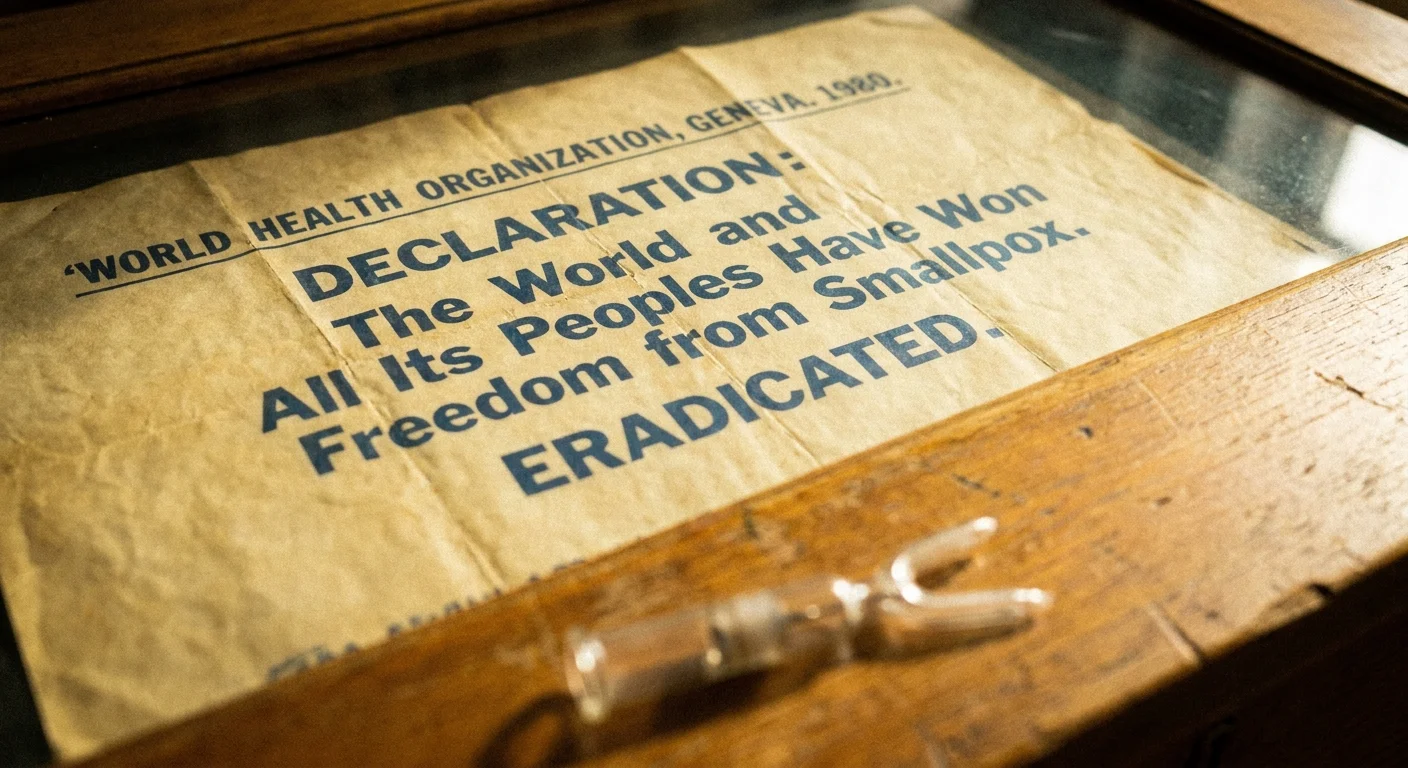
The case fatality rate for Variola major, the most common and severe form of the virus, hovered around 30 percent. Those who survived often suffered from permanent scarring and, in some cases, blindness. During the 20th century alone, epidemiologists estimate that smallpox killed 300 million people worldwide. The virus possessed no animal reservoir, meaning it only survived by passing from human to human. This specific biological limitation ultimately allowed global health organizations to mount a massive, coordinated vaccination and containment campaign. In 1980, the World Health Assembly officially declared smallpox eradicated, marking the first and only time human intervention completely wiped out an infectious disease.