
Causes & Mechanisms
To understand why so many drivers operate vehicles without a financial safety net, you must perform a root cause analysis—the systemic process of identifying the fundamental reason a problem occurs, rather than just treating its symptoms. While a small percentage of people drive uninsured due to sheer negligence or a deliberate disregard for the law, the overwhelming majority do so because of severe economic distress. The cost of vehicle ownership, particularly auto insurance, has outpaced wage growth in many parts of the country. For a household living paycheck to paycheck, a sudden surge in state insurance rates can transform a legally required policy into an unaffordable luxury. When forced to choose between purchasing groceries, paying rent, or maintaining auto insurance, a significant number of individuals will inevitably drop their coverage, hoping they can avoid accidents and traffic stops.
This affordability crisis is heavily influenced by the legal framework governing accidents in your specific state. The United States generally operates under two primary mechanisms for auto insurance: tort systems and no-fault systems. In a traditional tort system, the driver who causes the accident bears the legal and financial responsibility for all resulting damages. If someone hits you, their liability insurance pays for your car repairs and medical bills. In a no-fault state, every driver is required to carry personal injury protection coverage, and your own insurance pays for your medical expenses regardless of who caused the crash, though property damage may still rely on a fault-based determination. No-fault systems were originally designed to reduce court bottlenecks by eliminating the need to prove fault for minor injuries; however, they frequently require higher mandatory coverage limits, which inherently drives up the base cost of a policy.
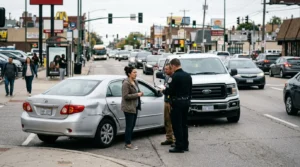
Consider a concrete example of how this mechanism fails in a high-cost environment. Imagine a driver living in Michigan, a state that historically mandated unlimited personal injury protection benefits, leading to some of the highest premiums in the nation. If a minimum wage worker faces an annual premium of three thousand dollars, that cost consumes an unsustainable percentage of their take-home pay. The worker ultimately cancels the policy. A month later, this uninsured individual rear-ends your vehicle, causing ten thousand dollars in structural damage and twenty thousand dollars in medical expenses. Because the at-fault driver has no liability coverage and no personal assets to seize in a lawsuit, your own uninsured motorist coverage must bridge the gap. Your insurance company writes a thirty-thousand-dollar check to make you whole.
After your insurer pays out this large sum, the company attempts a process known as subrogation—the legal mechanism by which an insurer seeks to recover the money it paid out by pursuing the at-fault party. In the vast majority of uninsured driver cases, subrogation yields nothing because the uninsured individual lacks the assets or income to satisfy a judgment. The insurance company must write off the thirty thousand dollars as a total loss. To maintain adequate cash reserves and remain solvent, the insurance company’s actuaries recalculate the risk profile for your specific zip code. They distribute that thirty-thousand-dollar loss across the entire risk pool, resulting in a marginal premium increase for every insured driver in the area. You can think of a localized crash as having a specific intensity for the individuals involved, while the subsequent systemic rise in premiums represents the overall magnitude of the uninsured driving crisis across the state.
Furthermore, insurers increasingly rely on complex algorithms and credit-based insurance scores to calculate premiums. Statistical data demonstrates a correlation between poor credit history and a higher likelihood of filing claims. Consequently, drivers with low credit scores often face drastically higher insurance rates, even if they have a flawless driving record. This pricing mechanism creates a punitive feedback loop. Individuals experiencing financial hardship suffer a drop in their credit score, which triggers a spike in their auto insurance premium, making the coverage entirely unaffordable. They drop the coverage to survive, join the ranks of the uninsured, and inadvertently raise the baseline risk for everyone else on the road.