
Lessons & Reforms
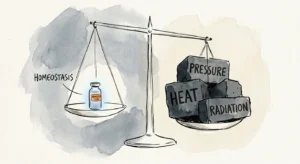
The tragic reality of extreme fatalities serves as the primary catalyst for modern safety engineering and policy reform. Every mass casualty event leaves behind a trail of forensic evidence that investigators analyze to prevent recurrence. By studying exactly how and why individuals perished in catastrophic environments, regulatory agencies mandate sweeping changes to industrial operations, building codes, and early warning systems.
The extreme explosive decompression of the Byford Dolphin diving bell revolutionized deep-sea commercial diving standards. Investigators determined that a single human error allowed the diving bell door to open while a massive pressure differential still existed. As a direct result, occupational safety agencies worldwide mandated the installation of fail-safe, interlocking clamp mechanisms on all pressurized diving systems. Modern saturation systems now possess physical safety blocks that mathematically prevent the opening of transfer doors until internal and external pressures equalize perfectly. This engineering reform completely eliminated the possibility of identical catastrophic rapid decompression accidents in the commercial diving industry.
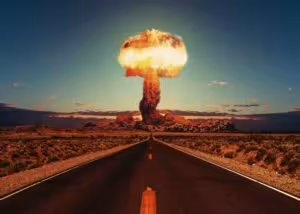
Similarly, the devastating physiological impacts of extreme radiation exposure led to a global overhaul of nuclear reactor design. Older reactor models relied heavily on active safety systems—pumps and generators that required continuous human intervention and external power to cool the reactor core. Modern nuclear facilities now incorporate passive cooling systems driven by fundamental physics, such as natural thermal convection and gravity-fed water reserves. These redundant fail-safes ensure that even during a total blackout, the reactor core remains submerged and stable, drastically reducing the risk of a massive radioactive breach and protecting civilian populations from acute exposure.
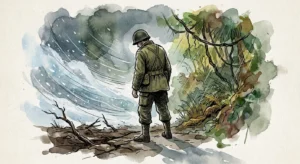
Meteorological and public health agencies apply the data gathered from heatwave and extreme weather fatalities to build highly resilient early warning systems. Upgraded Doppler radar networks and advanced predictive algorithms allow meteorologists to forecast life-threatening storm surges and extreme temperature spikes days in advance. Building codes now mandate stricter heating, ventilation, and air conditioning requirements in vulnerable residential zones to combat deadly indoor wet-bulb temperatures.
Transport and workplace investigations via the NTSB and OSHA. Risk reduction resources at the UNDRR.
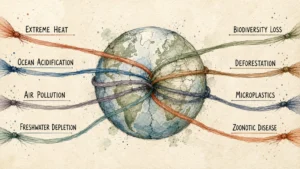
Community resilience relies heavily on continuous education and preparedness. Local authorities run frequent mass evacuation drills, ensuring that the public understands the specific emergency routes out of flood plains and volcanic hazard zones. While extreme environmental forces will always pose a threat, the steady implementation of scientific lessons ensures that communities remain far better protected today than in the past.