
Infrastructure & Environmental Effects
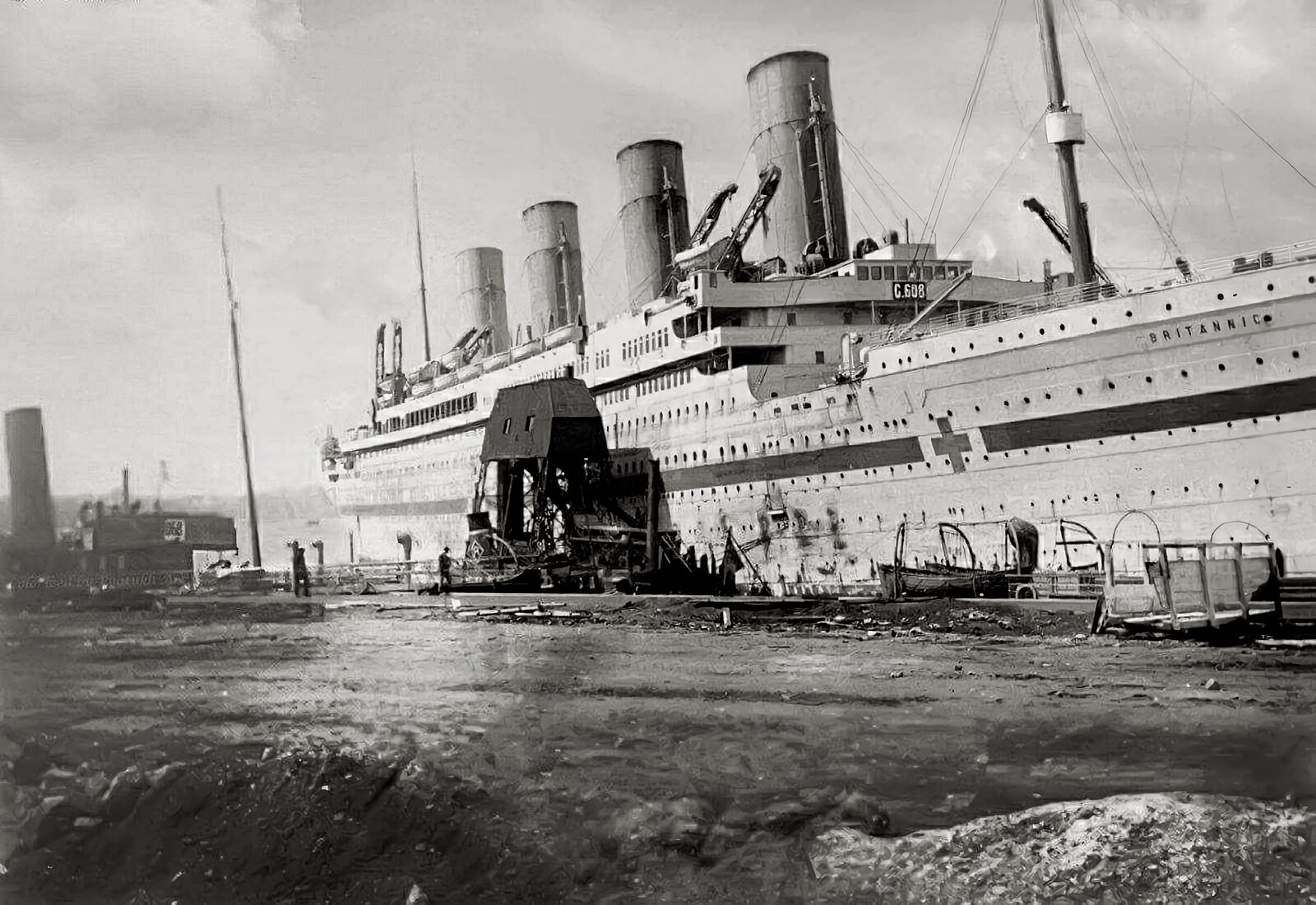
The most significant infrastructural loss in the sinking of the HMHS Britannic was the vessel itself. As the third ship in its class, it represented the pinnacle of early 20th-century shipbuilding, incorporating all the lessons learned from its predecessors. Its loss was a major blow to the White Star Line and the British merchant marine, even in the context of the immense shipping losses of World War I. The ship was insured for £1.9 million, a colossal sum at the time, representing a significant financial and material deficit for the war effort.
The wreck of the Britannic was discovered in 1975 by the legendary oceanographer Jacques Cousteau. It lies on its starboard side in approximately 400 feet (122 meters) of water, making it accessible to technical divers. Today, it is the largest intact passenger liner on the ocean floor. The relative shallowness of its resting place and the chemical properties of the Aegean Sea have preserved it in remarkable condition, especially when compared to its sister ship.
Mini-Example 2: Wreck Preservation Comparison. The RMS Titanic lies at a depth of 12,500 feet (3,800 meters), where it is subject to immense pressure, near-freezing temperatures, and strong deep-sea currents. It is being actively consumed by colonies of metal-eating bacteria, forming “rusticles” that are causing the hull to disintegrate. In contrast, the HMHS Britannic rests in warmer, shallower, and less oxygenated water. This environment is far less corrosive, and the ship’s hull remains largely intact, with much of its superstructure and even some of its glass portholes unbroken. This exceptional state of preservation makes the Britannic a unique historical artifact and a vital subject for forensic analysis into early 20th-century ship construction and failure.
Expeditions to the wreck have focused on investigating the damage to the bow to better understand the sinking. Divers have documented a large, gaping hole consistent with a mine explosion, but also deformation and bent hull plates that keep the debate over a secondary coal dust explosion alive. The wreck provides a physical laboratory for studying the exact failure modes that led to its loss.
The environmental impact of the sinking was minimal. As a coal-powered steamship, the Britannic carried no significant quantities of persistent liquid pollutants like the heavy fuel oil found on modern vessels. Any coal or lubricants aboard would have dispersed long ago without causing lasting ecological damage. The primary environmental legacy of the Britannic is the wreck itself, which now functions as an artificial reef, providing a habitat for marine life. It is protected by Greek and British law as a war grave and an archaeological site, restricting access to authorized research expeditions only.
Transport and workplace investigations via the NTSB and OSHA. Risk reduction resources at the UNDRR.