
Human Impact & Response
The human toll of these hostile environments fundamentally overwhelmed early military medical infrastructure. The human impact extended far beyond physical trauma, reaching deeply into the minds and long-term well-being of those deployed. As casualty rates soared, the military response had to evolve rapidly, leading to the identification and management of the next three profound challenges.
When you analyze the casualty reports from major engagements, you notice a distinct pattern: the human nervous system and basic physical integrity possess finite limits. The sheer duration of exposure to the threat of death caused catastrophic psychological collapses. Simultaneously, the treatment of physical trauma required barbaric improvisation at the front lines.
7. Profound Psychological Trauma and Combat Fatigue: One of the most misunderstood and severe conditions soldiers endured was psychiatric collapse, then termed combat fatigue or neuropsychiatric casualty. Unlike the concept of “shell shock” from previous conflicts, military psychiatrists during World War II recognized that combat fatigue was not necessarily a physical injury from artillery, but the inevitable breakdown of the human nervous system after prolonged exposure to mortal danger. Symptoms included severe tremors, mutism, hysterical paralysis, and profound dissociative states. The initial military response severely mishandled these cases, treating exhausted soldiers as discipline problems. However, an essential medical reform occurred with the implementation of the “PIE” principles: Proximity, Immediacy, and Expectancy. Psychiatrists began treating soldiers near the front lines immediately, with the explicit expectation of returning them to their units. This shift successfully stabilized a significant percentage of casualties, laying the groundwork for the modern clinical understanding of Post-Traumatic Stress Disorder (PTSD).
8. Barbaric Prisoner of War Conditions: For soldiers captured by hostile forces, the battlefield’s horrors paled in comparison to the conditions of internment camps. POWs endured systematic starvation, forced hard labor, and a complete absence of medical care. The Bataan Death March in the Philippines stands as a primary example, where captors forced thousands of surrendered, already malnourished troops to march over sixty miles in sweltering heat without water. Those who collapsed from exhaustion or dehydration were summarily executed. Inside the camps, severe overcrowding allowed infectious diseases like tuberculosis and cholera to decimate the imprisoned populations. The lack of basic sanitation and caloric intake meant that survival rates depended largely on immense physical resilience and clandestine mutual support networks among the prisoners.
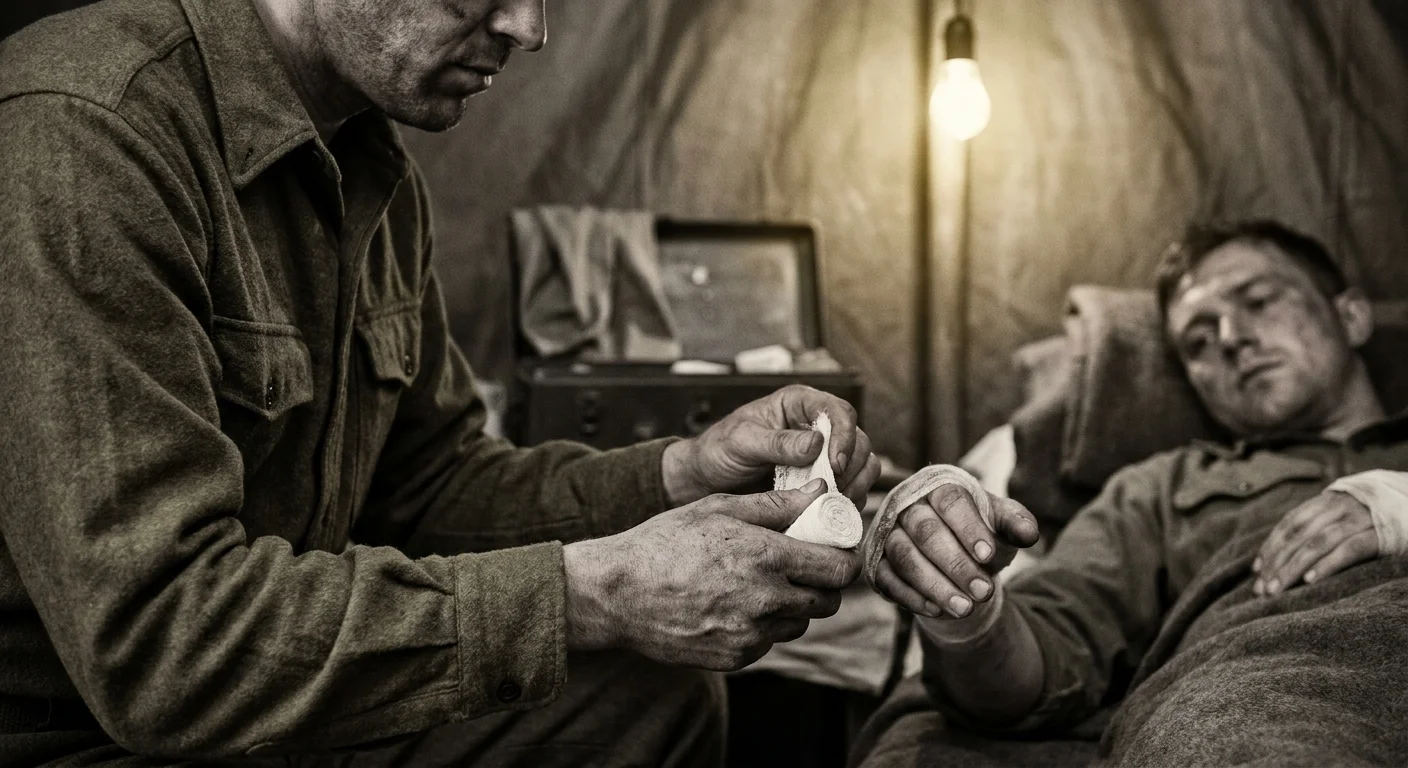
9. Brutal Battlefield Medical Triage: The reality of field medicine meant that soldiers endured horrific physical suffering while awaiting stabilization. Medics operated under intense fire, carrying limited supplies. Triage—the process of sorting patients based on the severity of their injuries—forced agonizing decisions. Medical personnel often lacked sufficient morphine or blood plasma to treat severe trauma adequately. Consequently, many soldiers underwent emergency surgical procedures, including amputations, with minimal anesthesia. Before the mass production of antibiotics, field surgeons relied heavily on sulfa powder, an early antimicrobial agent dusted directly into open wounds to inhibit bacterial growth. The chain of evacuation—from frontline aid stations to collecting companies, clearing stations, and eventually field hospitals—was agonizingly slow, forcing severely wounded individuals to endure brutal, jarring transport over ruined roads while fighting off massive systemic infections.















1 thought on “10 Unspeakable Things Soldiers Endured During World War II”
had the same stuff in Vietnam. Hot, Humid, Jungle, snakes, bugs, mosquitos carrying malaria, bad water and you’d have diahrea so bad that you eventually got med-e-vacced out to a field hospital. Booby traps ranging from spikes covered in feces, to snakes, to spiders. I often said, even if NOBODY was shooting at you, I can not imagine camping out for a year and “making it out of there” with no problems. I was there in 1968