Timeline
The timelines of these history-altering disasters reveal a common pattern: a period of normalcy, a sudden and violent rupture, and a long, arduous aftermath that redefines the future. These are not isolated moments but processes that unfold over hours, days, and even years.
In the Roman Empire, on August 24, 79 CE, life in the bustling cities of Pompeii and Herculaneum was tragically interrupted. For days, minor tremors had been felt, but they were common in the region and largely ignored. Around 1:00 PM, Mount Vesuvius erupted with astonishing force, ejecting a column of ash and pumice that climbed miles into the sky. For the next several hours, the sky darkened as volcanic debris rained down on Pompeii, gradually collapsing roofs and trapping residents. The first and deadliest pyroclastic surge occurred in the early hours of August 25, engulfing Herculaneum. Subsequent surges reached Pompeii, sealing the city and its inhabitants in a tomb of ash. Within about 24 hours, vibrant cities were erased from the map, not to be rediscovered for nearly 1,700 years.
Centuries later, on the morning of All Saints’ Day, November 1, 1755, the city of Lisbon, Portugal, was a center of global commerce and religious devotion. At approximately 9:40 AM, the ground began to shake violently. The first shock of the great earthquake lasted for several minutes, collapsing churches, homes, and palaces. Survivors who fled to the open space of the city’s waterfront for safety were met by a second horror. The sea receded, exposing the harbor floor, only to return about 40 minutes after the quake as a series of massive tsunami waves. The waves, some estimated to be 20 feet high, swept through the lower city. As if this were not enough, fires broke out across the ruins, sparked by kitchen hearths and candles in the collapsed churches. The fires raged for five days, completing the city’s destruction in a trifecta of earthquake, tsunami, and fire.
The nineteenth century brought its own catastrophic events. In April 1815, Mount Tambora in the Dutch East Indies (modern-day Indonesia) produced the largest volcanic eruption in recorded history. The eruption climaxed on April 10, with explosions heard over a thousand miles away. It ejected an enormous volume of sulfur dioxide into the stratosphere, forming an aerosol veil that circled the globe and reflected solar radiation. This led to the “Year Without a Summer” in 1816. While the initial eruption was a regional disaster, its secondary climatic effects were global and prolonged, triggering crop failures, famine, and disease outbreaks across the Northern Hemisphere for the next one to three years.
On September 8, 1900, the prosperous city of Galveston, Texas, faced its own reckoning. The U.S. Weather Bureau had received reports of a storm in the Gulf of Mexico, but the science of hurricane forecasting was in its infancy, and communication was poor. Warnings were issued, but few residents understood the true threat posed by the storm surge. The Category 4 hurricane made landfall that evening. By late afternoon, the waters began to rise, and by nightfall, a wall of water had swept over the island. Winds estimated at 140 miles per hour destroyed the bridges to the mainland, cutting the city off. For hours, the storm surge and wind-driven debris demolished thousands of buildings. By the morning of September 9, the storm had passed, revealing a city utterly destroyed.
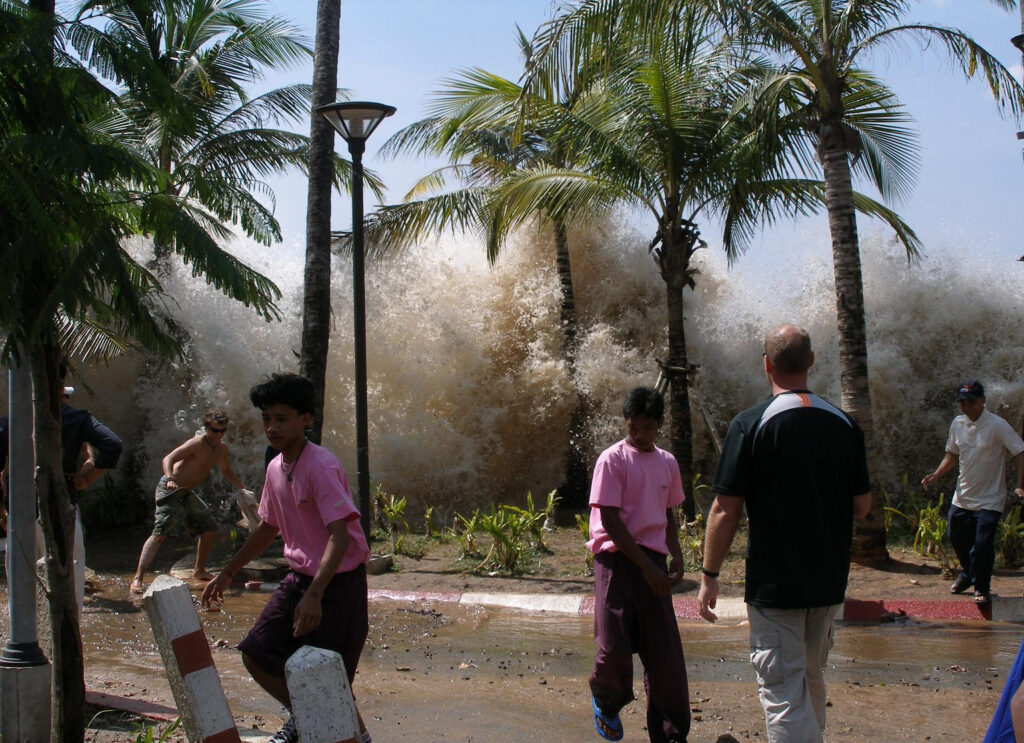
The modern era, despite its technological advancements, remains vulnerable. On December 26, 2004, at 7:59 AM local time, a massive undersea earthquake ruptured the seafloor off the coast of Sumatra, Indonesia. The quake was so powerful it caused the entire planet to vibrate. Within 30 minutes, the first tsunami waves struck the coast of Sumatra, causing unimaginable destruction. Without a tsunami warning system in the Indian Ocean, the waves continued their silent and rapid journey across the sea. Over the next seven hours, they crashed ashore in fourteen countries, from Thailand and Sri Lanka to as far away as Somalia on the east coast of Africa, catching coastal communities completely by surprise.