
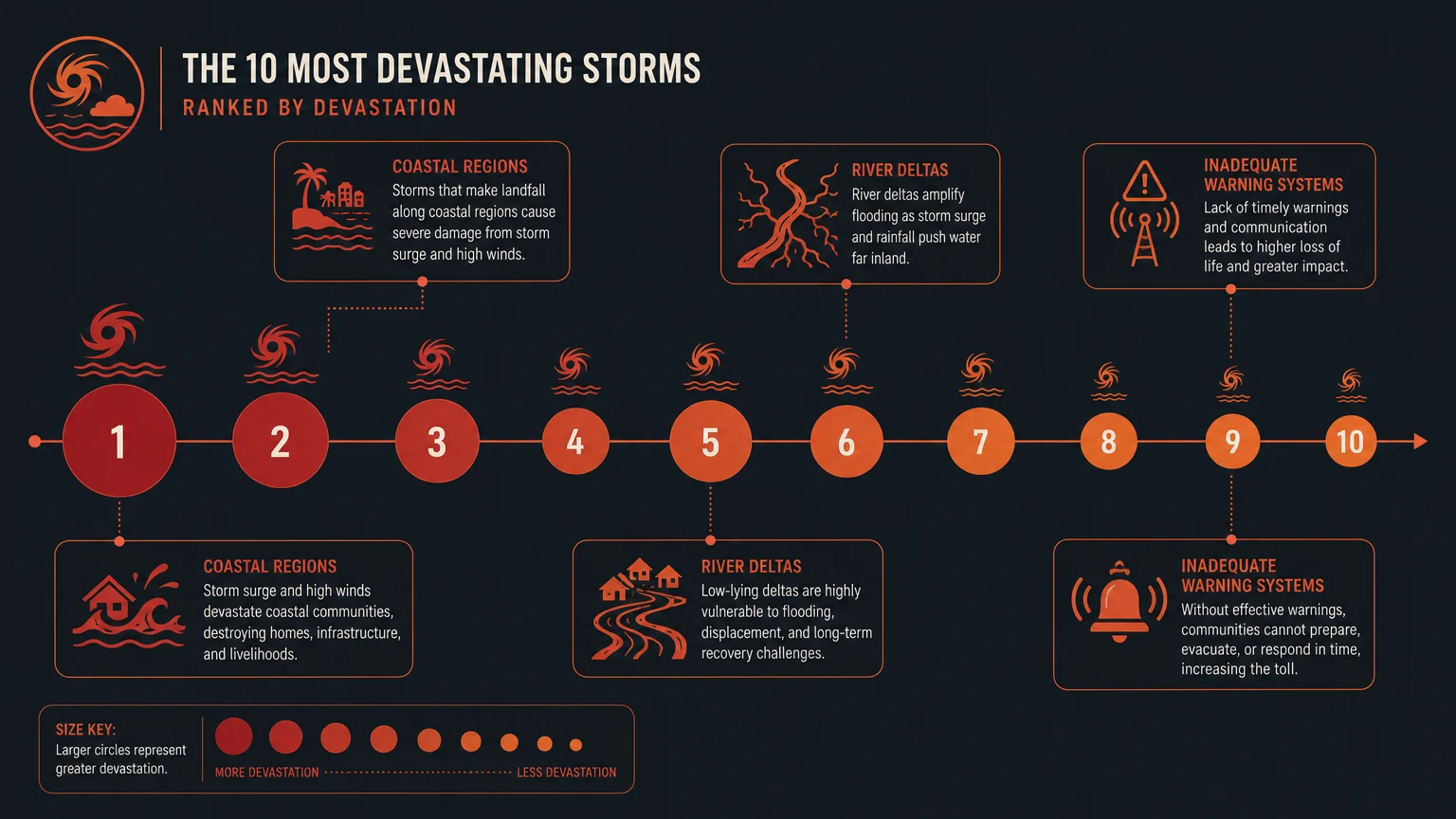
Timeline of the Ten Deadliest Storms
Tracing the chronology of the ten most devastating tropical storms reveals the evolution of human vulnerability and disaster response over the centuries. This historical sequence exposes the deadly consequences of communication failures, geographic disadvantages, and delayed emergency actions.
The Great Hurricane of 1780
Striking the Caribbean during the height of the American Revolution, the Great Hurricane of 1780 remains the deadliest Atlantic hurricane on record. The storm leveled Barbados, Martinique, and Sint Eustatius, ultimately killing an estimated 22,000 to 27,500 people. With wind speeds likely exceeding 200 miles per hour, the hurricane stripped bark directly from trees. You can see the geopolitical impact of this storm through the widespread destruction of the British and French naval fleets anchored in the region, which significantly disrupted military operations during the era.
The 1881 Haiphong Typhoon
In October 1881, a massive typhoon struck the Gulf of Tonkin, devastating the coastal city of Haiphong in what is now Vietnam. The unique geography of the gulf funneled the storm surge directly into the low-lying Red River Delta. The ensuing floodwaters drowned entire coastal settlements and destroyed crucial agricultural lands. Historical estimates place the death toll at approximately 300,000 people. The extreme loss of life underscored the sheer vulnerability of densely populated agricultural hubs located at sea level.
The 1900 Galveston Hurricane
The Galveston Hurricane struck the Texas coast on September 8, 1900, cementing its status as the deadliest natural disaster in United States history. At the time, Galveston stood as a booming, prosperous port city situated on a low-lying barrier island. The United States Weather Bureau tragically ignored warnings from Cuban meteorologists regarding the storm’s intensity. When the Category 4 hurricane made landfall, it pushed a 15-foot storm surge over an island that peaked at just 8 feet above sea level. The storm completely obliterated the city and killed between 8,000 and 12,000 residents in a matter of hours.
The 1970 Great Bhola Cyclone
The Bhola Cyclone remains the deadliest tropical storm ever recorded. Striking East Pakistan (now Bangladesh) on November 12, 1970, the cyclone perfectly aligned with the region’s high tide. The storm pushed an immense storm surge through the highly populated, funnel-shaped Ganges Delta. Entire islands vanished beneath the waves. The death toll reached an unfathomable 300,000 to 500,000 people. The sluggish relief response from the West Pakistani government deeply enraged the local population, directly catalyzing the Bangladesh Liberation War the following year.
The 1975 Typhoon Nina
Typhoon Nina demonstrates the catastrophic consequences of massive infrastructure failure during a tropical cyclone. In August 1975, the typhoon struck the Henan province of China. Instead of coastal storm surge, Nina unleashed an unprecedented volume of inland rain—dumping more than a year’s worth of precipitation in just 24 hours. This biblical deluge overwhelmed the Banqiao Dam. When the dam collapsed, it released a massive wall of water that cascaded downstream, destroying 62 additional dams in its path. The immediate flooding, combined with the ensuing famine and waterborne diseases, killed an estimated 229,000 people.
The 1991 Bangladesh Cyclone (Cyclone Gorky)
Two decades after the Bhola disaster, another monstrous cyclone struck the Chittagong region of Bangladesh in April 1991. Cyclone Gorky carried wind speeds of 155 miles per hour and drove a 6-meter storm surge inland. Despite improved early warning systems and the successful evacuation of over two million people, the sheer power of the storm surge caught hundreds of thousands of residents off guard. The cyclone killed roughly 138,000 people and left as many as 10 million residents homeless, wiping out entire coastal communities overnight.
The 1998 Hurricane Mitch
Unlike fast-moving storms, Hurricane Mitch unleashed its devastation through a prolonged, agonizing stall over Central America in October 1998. Rather than destroying coastal infrastructure with wind, Mitch dumped up to 75 inches of rain across Honduras and Nicaragua. The torrential downpours triggered massive mudslides and catastrophic river flooding that wiped entire mountain villages off the map. You can attribute the estimated 11,000 to 19,000 deaths almost entirely to inland flooding and landslides, proving that a storm’s forward speed significantly dictates its destructive capacity.
The 2005 Hurricane Katrina
Hurricane Katrina exposed critical flaws in modern urban infrastructure and emergency management. Striking the United States Gulf Coast in August 2005, Katrina drove a massive storm surge into the intricate system of lakes and canals surrounding New Orleans, Louisiana. The floodwalls and levees designed by the United States Army Corps of Engineers completely failed under the hydrostatic pressure. Water inundated 80 percent of the city. The storm killed over 1,800 people and caused roughly 125 billion dollars in damages, illustrating how severe engineering failures compound natural hazards.
The 2008 Cyclone Nargis
Cyclone Nargis devastated Myanmar in May 2008, serving as a grim reminder of how political isolation exacerbates natural disasters. The storm pushed a 12-foot wall of water nearly 25 miles inland across the heavily populated Irrawaddy Delta. The military government failed to provide adequate advance warnings to the coastal population and subsequently blocked international humanitarian aid for weeks. This delay in medical care, clean water, and food supplies caused the death toll to skyrocket to an estimated 138,000 victims.
The 2013 Typhoon Haiyan (Yolanda)
Typhoon Haiyan struck the Philippines in November 2013 with some of the highest sustained wind speeds ever recorded at landfall, reaching an astonishing 195 miles per hour. The central pressure plummeted, and the geography of San Pedro Bay acted like a massive scoop, propelling a 15-to-19-foot storm surge directly into the city of Tacloban. The surge crushed buildings, swept large cargo ships directly into downtown streets, and drowned thousands trapped inside evacuation centers. Haiyan claimed over 6,300 lives and displaced millions, forcing global meteorological agencies to reconsider the upper limits of tropical cyclone intensity.