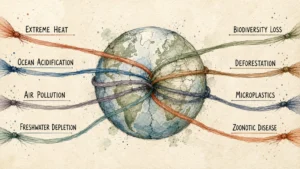

Human Impact & Response
The consequences of these eight environmental threats extend far beyond the natural world; they directly compromise public health, economic stability, and human safety. Emergency management professionals evaluate these disasters by distinguishing between primary and secondary impacts. Primary impacts involve the immediate physical harm caused by an event, while secondary impacts encompass the cascading health and societal crises that follow in the wake of environmental disruption.
Extreme heat currently ranks among the most deadly natural hazards. Unlike violent storms, heat waves act as silent killers. Prolonged exposure to elevated temperatures overwhelms the human body’s ability to thermoregulate. Individuals suffering from heat exhaustion experience heavy sweating, weakness, and nausea. If left untreated, this condition rapidly escalates to heatstroke, a life-threatening medical emergency where the body temperature surges, the sweating mechanism fails, and internal organs begin to shut down. Urban areas experience these effects most intensely due to the urban heat island effect, where vast stretches of asphalt and concrete absorb and radiate solar energy long into the night.
Pervasive air pollution exacts a massive toll on global public health. The inhalation of fine particulate matter exacerbates asthma, induces chronic obstructive pulmonary disease, and increases the risk of severe cardiovascular events, including heart attacks and strokes. Public health agencies document millions of premature deaths annually linked directly to degraded air quality. When severe wildfire smoke or industrial smog blankets a region, local emergency response systems frequently become overwhelmed by a surge in acute respiratory emergencies.
Freshwater depletion and agricultural failures driven by shifting climate patterns displace millions of people each year. As aquifers run dry and crop yields plummet, rural populations face catastrophic food and water insecurity. This slow-moving disaster forces vulnerable communities to migrate toward increasingly crowded urban centers, stretching municipal resources to their breaking points and creating complex humanitarian emergencies. Humanitarian operations in these regions focus heavily on securing clean water access, utilizing mobile desalination units, and distributing drought-resistant agricultural supplies.
The compounding effects of extreme weather events heavily impact emergency evacuation protocols. As storms become more intense due to atmospheric warming, the time available for authorities to issue warnings and execute mass evacuations shrinks. Emergency managers must coordinate complex logistics to move populations out of harm’s way, secure vulnerable medical facilities, and establish safe shelters that can withstand severe meteorological forces. The psychological toll on communities repeatedly subjected to evacuations and rebuilding efforts creates profound, long-term societal stress.
Furthermore, the threat of zoonotic disease emergence requires constant vigilance from the global public health sector. When an animal pathogen successfully infects a human host, the initial localized outbreak can spread globally within days due to modern aviation networks. Responding to these novel pathogens requires rapid genomic sequencing, the swift mobilization of medical countermeasures, and coordinated public health messaging to prevent widespread transmission and societal disruption.