Infrastructure & Environmental Effects
The science of survival is inextricably linked to the environment in which the ordeal takes place, both natural and built. The state of infrastructure can mean the difference between a temporary inconvenience and a life-threatening crisis.
In an urban disaster, the failure of critical infrastructure is a primary driver of survival challenges. An earthquake that ruptures water mains and natural gas lines simultaneously creates a dehydration and fire hazard. A hurricane that downs the power grid leaves a population without heating or air conditioning, exposing them to hypothermia or hyperthermia in their own homes. The collapse of transportation networks, such as bridges and roads, isolates communities and prevents the delivery of food, water, and medical aid, transforming a short-term survival scenario into a long-term one.
Building codes and engineering standards are, in effect, a form of preemptive survival science. Regulations requiring seismic retrofitting in earthquake-prone zones or elevated construction in floodplains are designed to prevent the initial disaster from creating a mass entrapment or exposure scenario. When these codes fail or are non-existent, the human toll rises dramatically.
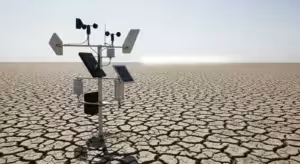
The natural environment itself presents a unique set of physiological challenges. Survival at high altitude, for example, is a battle against hypoxia due to the lower partial pressure of oxygen. The body can acclimatize over time, but a sudden ascent can lead to acute mountain sickness, which can progress to life-threatening conditions like high-altitude cerebral or pulmonary edema. In desert environments, the primary threat is hyperthermia and rapid dehydration due to high temperatures and low humidity.
The 2011 Tōhoku earthquake and tsunami in Japan provides a harrowing case study of how infrastructure failure and environmental conditions create a complex survival crisis. The initial magnitude 9.0 earthquake caused widespread damage, but the subsequent tsunami was catastrophic. It inundated coastal towns, destroying homes and infrastructure. Survivors were left exposed to the cold March weather, raising the immediate risk of hypothermia. The tsunami also crippled the Fukushima Daiichi Nuclear Power Plant, leading to a nuclear disaster that contaminated a vast area and complicated rescue and relief efforts. Furthermore, the destruction of roads and ports meant that even though supplies were available elsewhere in the country, reaching the hundreds of thousands of displaced people was a logistical nightmare. They faced shortages of clean water, food, and medicine for days and weeks, fighting a battle for survival long after the ground stopped shaking and the waters receded.
This event underscores that survival is not just an individual challenge but a systemic one, profoundly influenced by the resilience of our infrastructure and our ability to manage environmental hazards. Environmental data and regulations are often managed by bodies like the EPA.