Causes & Mechanisms
The Dust Bowl was the result of a disastrous convergence of environmental and human factors. The primary natural hazard was a severe and prolonged drought that began in the early 1930s. The Great Plains region is naturally susceptible to cyclical droughts, but the one that struck in this era was exceptional in its intensity and duration. Rainfall levels plummeted, leaving the soil parched and lifeless.
However, the drought alone did not create the Dust Bowl. The stage was set by decades of agricultural expansion. Following the Homestead Act of 1862, settlers moved into the Great Plains, a region previously covered by native prairie grasses. These grasses had deep root systems that held the fine, loamy soil in place, even during dry periods. But a wave of intensive farming, encouraged by a “rain follows the plow” theory and high wheat prices during World War I, led to the destruction of this natural anchor.
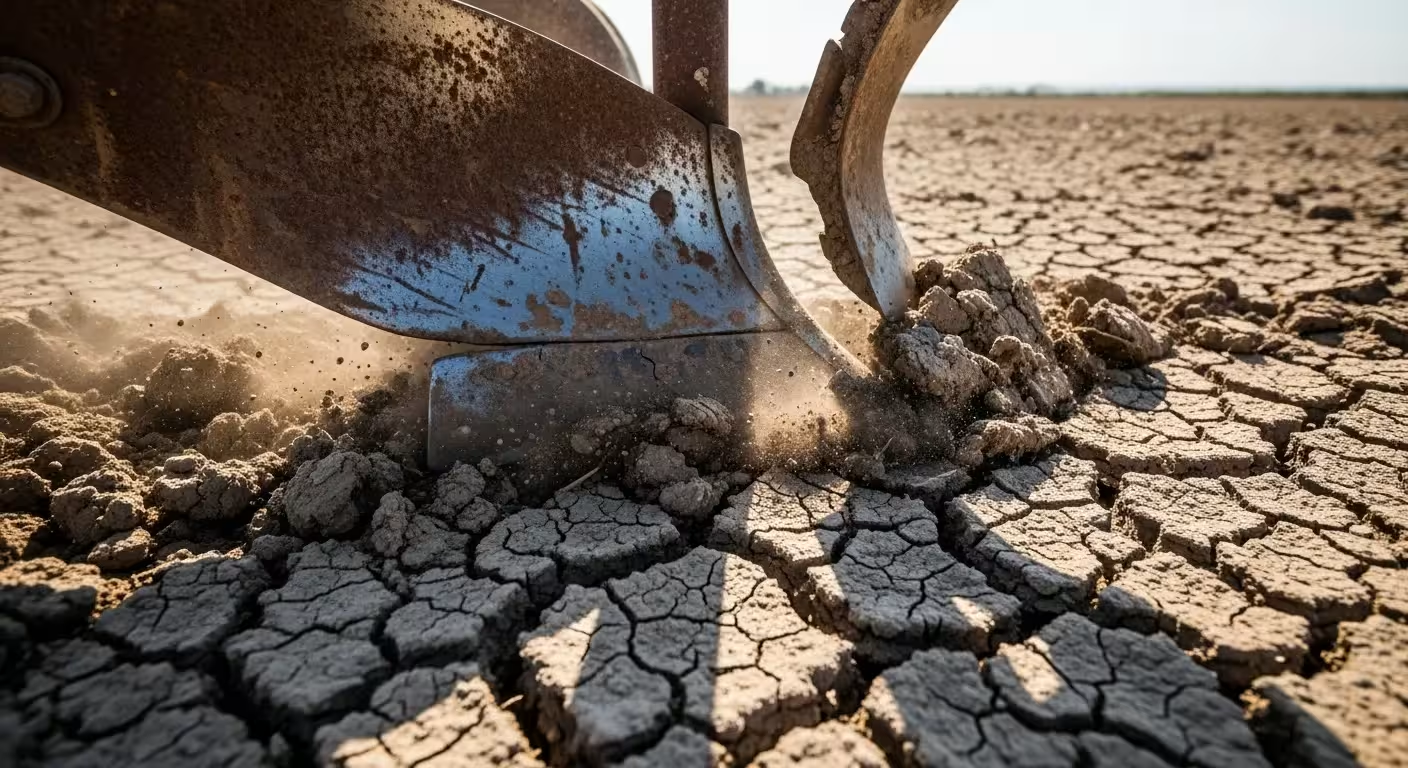
Farmers used new mechanized technology, like the steel plow and the combine harvester, to break up millions of acres of sod. This practice, known as dryland farming, was effective during wet years but became catastrophic when the rains stopped. The exposed, pulverized topsoil, with nothing to hold it down, became vulnerable to the region’s notoriously strong winds. When the drought of the 1930s arrived, the soil began to blow.
The storms themselves were a terrifying phenomenon. They were not ordinary dust storms but massive, rolling clouds of fine soil, often called “black blizzards” or “dusters.” These storms could travel for hundreds of miles, carrying away the very foundation of the region’s agricultural economy. One survivor from Kansas recalled the sky turning from blue to an ominous yellow-brown before a wall of blackness descended, blotting out the sun in the middle of the day. The fine dust was inescapable. It seeped through every crack in a house, covering furniture, food, and bedding with a layer of grit.
A first-hand account from a woman in Oklahoma illustrates the physical reality: “We couldn’t see our hands in front of our faces. We had to wet sheets and hang them over the windows and doors to try and keep the dust out, but it came in anyway. You’d wipe the table, and a minute later it would be covered again. We tasted it in our food, in the water. It was a constant presence.” This relentless intrusion was not just a nuisance; it was a psychological burden and a serious health hazard.