Timeline
The Dust Bowl was not a singular event with a clear start and end, but a creeping disaster that unfolded over a decade. Its major phases can be traced through a series of escalating environmental and social crises.
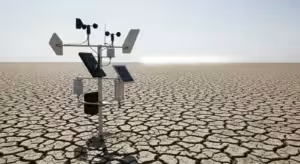
The early signs of trouble appeared in 1931. After years of adequate rainfall, a severe drought began to take hold across the Southern Plains. That year, the first major dust storms were reported, as the dry, unprotected soil began to lift from the fields of Texas, Oklahoma, and Kansas. Farmers, already struggling with falling crop prices due to the Great Depression, watched their livelihoods begin to blow away.
By 1932, the number of major dust storms was increasing. Fourteen were reported that year. In 1933, the number jumped to thirty-eight. A farmer from the Texas Panhandle remembered the growing sense of dread. “At first, we thought it was just a dry spell,” he said in an oral history project. “We’d seen dry spells before. But this was different. The land was angry. The wind never stopped.”
The year 1934 marked a devastating peak. The drought became the most severe in United States history, covering more than 75 percent of the country and severely affecting twenty-seven states. The great dust storms of May 1934 carried an estimated 350 million tons of soil from the Plains all the way to the East Coast. Dust fell like snow on Chicago, and ships 300 miles off the Atlantic coast were coated with a fine layer of prairie dirt. This event brought national attention to the crisis unfolding in the heartland.
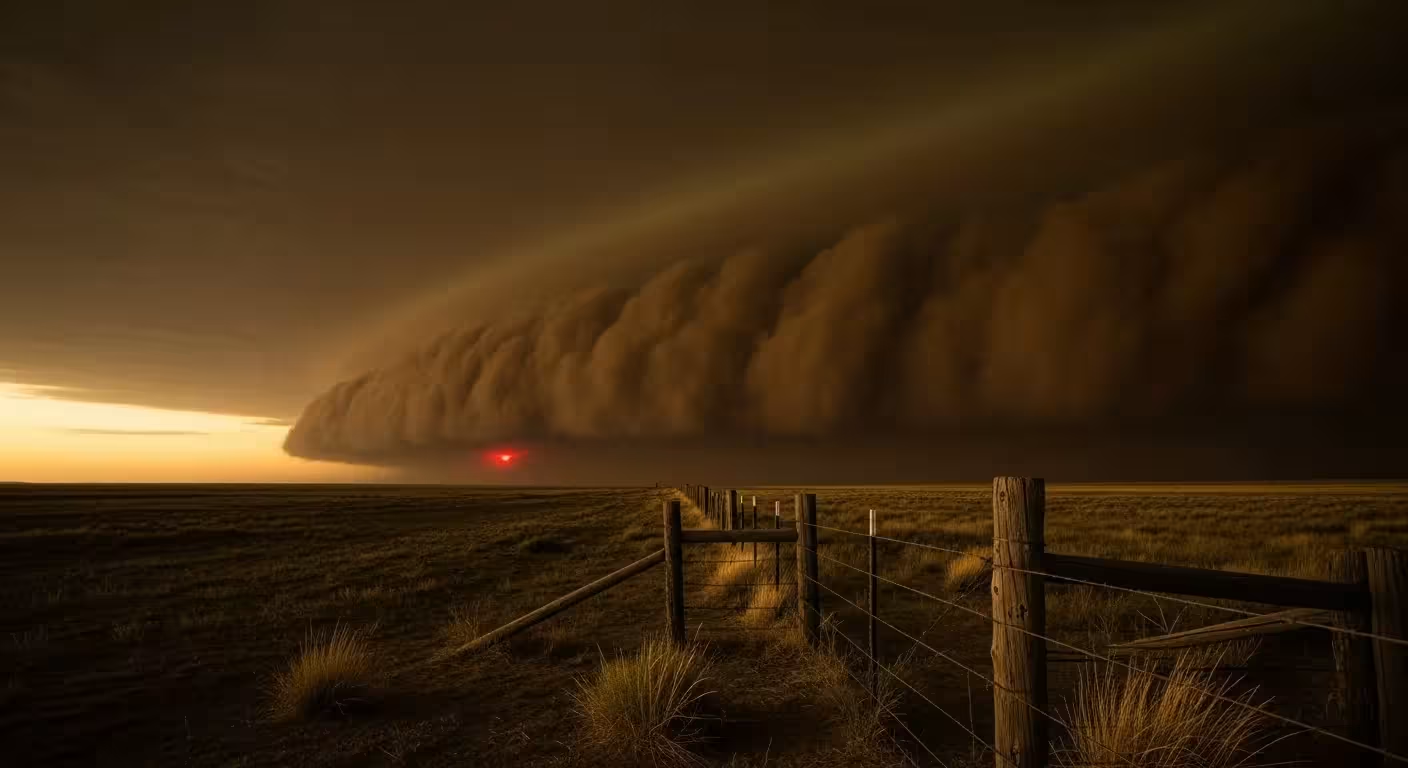
Perhaps the most infamous single day of the Dust Bowl was April 14, 1935, a day that became known as “Black Sunday.” A massive cold front moving down from the north collided with warm air, creating a colossal wall of dust and sand. The storm moved at speeds of up to 60 miles per hour, turning day into night in an instant. Associated Press reporter Robert Geiger, caught in the storm in Guymon, Oklahoma, coined the term “Dust Bowl” in his dispatch that day. A survivor who was a child at the time described the terror of Black Sunday: “We were outside playing. Suddenly, it got dark, and this huge black cloud was rolling toward us. We ran for the house. My mother was screaming for us to get inside. It was blacker than any night I’ve ever seen. We thought the world was ending.”
The federal government began to respond more robustly after 1935, with the establishment of the Soil Conservation Service. The government promoted new farming techniques and paid farmers to let some fields lie fallow. Though the drought and storms continued for several more years, these measures began to have an effect. The number of major storms gradually decreased after a peak in 1937 and 1938.
The end of the Dust Bowl came in the fall of 1939, when regular, soaking rains finally returned to the region. The grasses began to grow back, and the land, though scarred, started to heal. The decade of dust was over, but its impact would last for generations.