Infrastructure & Environmental Effects: Securing the Aircraft and Airport
An in-flight emergency triggers a coordinated response on the ground that involves significant airport and air traffic infrastructure. The goal is to safely accommodate the distressed aircraft while minimizing disruption to the broader national airspace system.
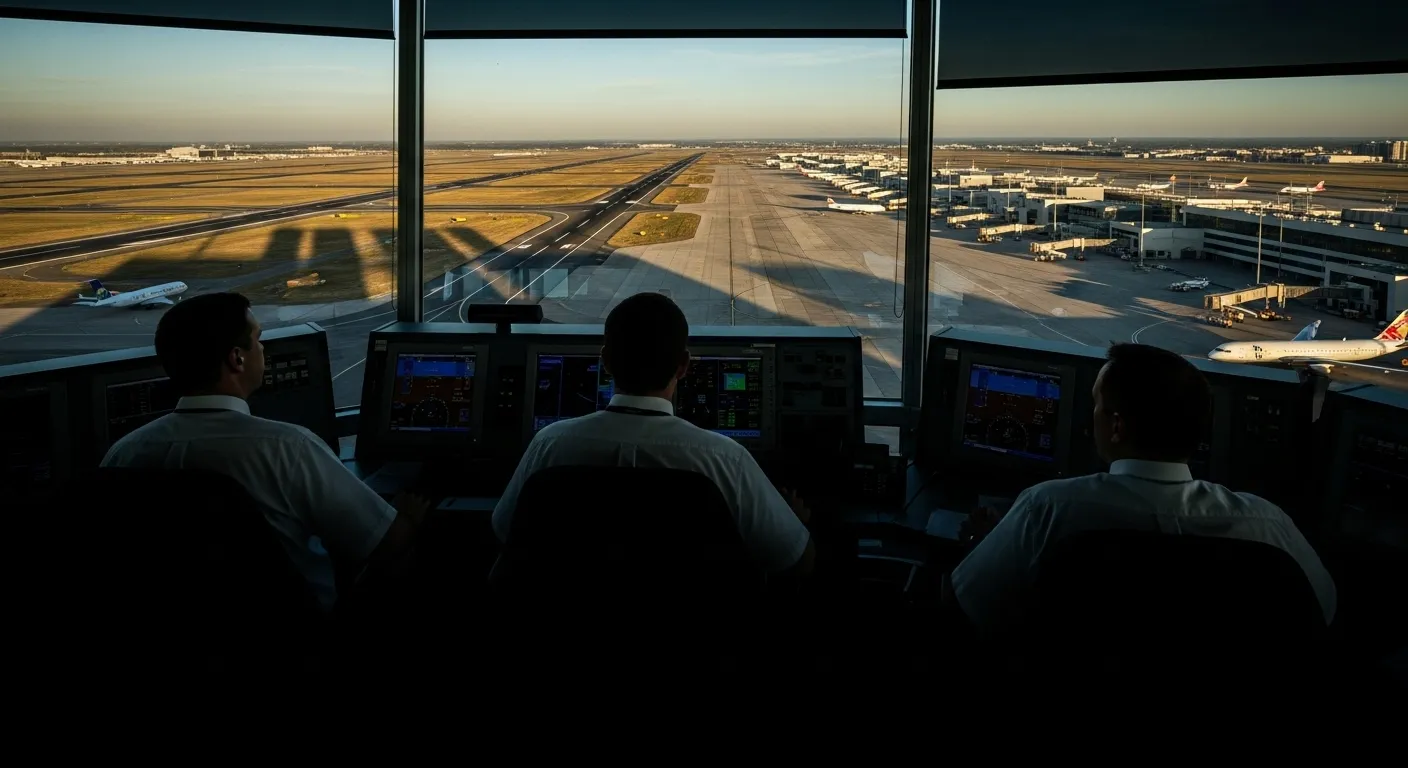
When a pilot declares an emergency, Air Traffic Control (ATC) immediately prioritizes the flight. Controllers clear conflicting traffic from its path, provide the most direct routing possible to a suitable airport, and coordinate with ground-based services. The chosen diversion airport must have a runway long enough for the aircraft type and weather conditions, and be equipped with adequate Airport Rescue and Firefighting (ARFF) services. The ARFF teams are put on standby, positioning their vehicles near the expected landing runway to respond instantly if a fire or other hazard occurs upon landing.
Once the aircraft has landed safely, it may need to be towed to a remote parking stand for inspection, especially if there are concerns about its structural integrity, brakes, or tires. This can cause temporary runway or taxiway closures, leading to delays and diversions for other flights. The airport’s operational management team works to reopen infrastructure as quickly as safety allows.
The aircraft itself becomes a focal point of investigation. It is secured and placed under the authority of investigators from the NTSB, the FAA, and the airline. Maintenance technicians and engineers will meticulously examine the aircraft to diagnose the technical fault. The cockpit voice recorder (CVR) and flight data recorder (FDR)—the “black boxes”—are recovered and sent for analysis. These recorders provide an invaluable, second-by-second account of the flight’s parameters and the crew’s actions, forming the backbone of any serious safety investigation.
Environmental effects are typically minimal but are considered. One procedure that sometimes concerns the public is fuel dumping. If an aircraft needs to land shortly after takeoff, it may be over its maximum landing weight. To reduce weight and landing stress, pilots may elect to jettison fuel. This is done at a high altitude where the fuel atomizes and evaporates long before reaching the ground, with negligible environmental impact. This procedure is only used when necessary for the safety of the flight.