Causes & Mechanisms
Understanding the Hindenburg disaster requires a clear grasp of both the physics of its operation and the specific conditions present on that fateful day. A methodical investigation, similar to a modern root cause analysis which seeks to identify the fundamental, underlying reason for a failure, reveals that the tragedy was not the result of a single error but a chain of contributing factors.
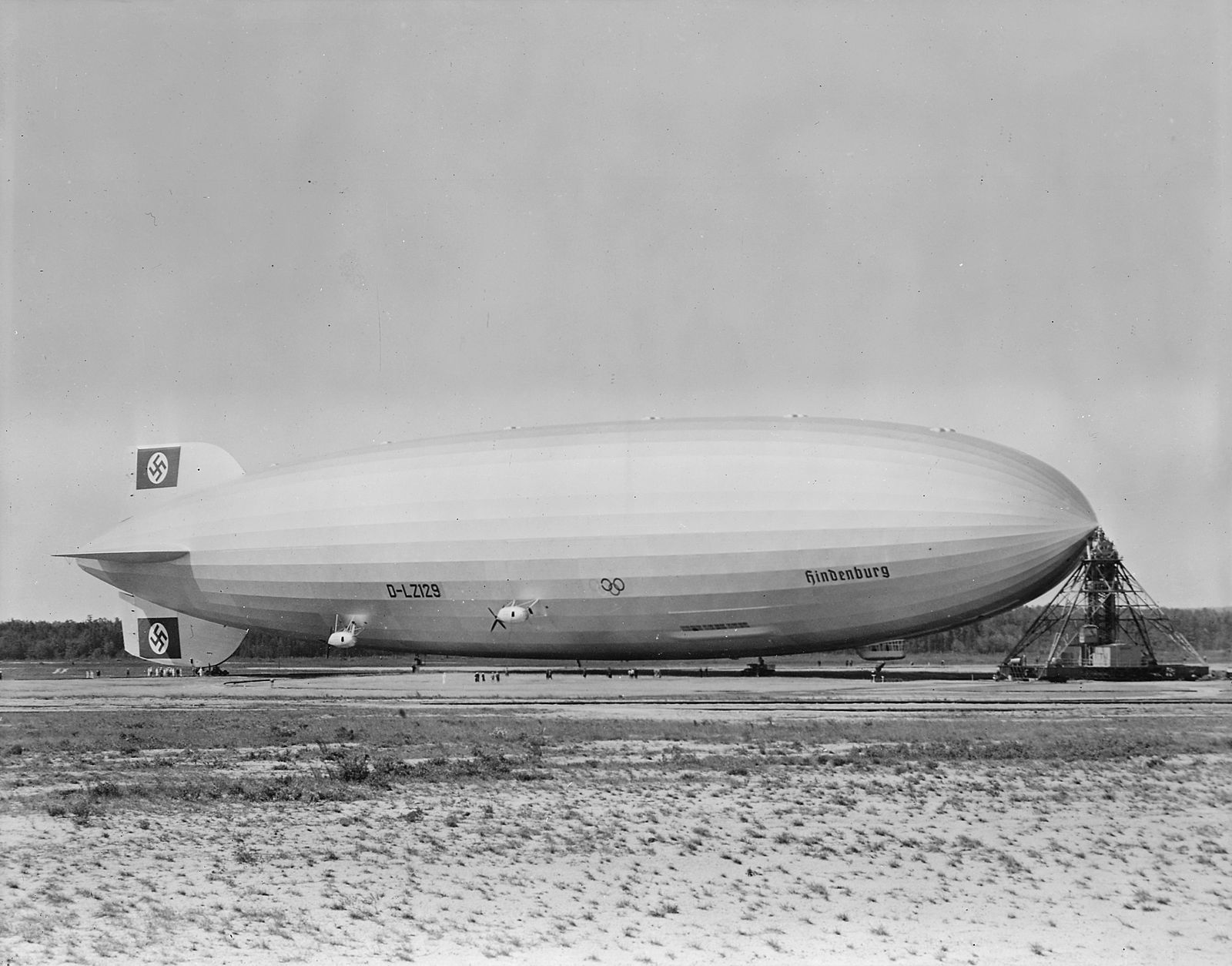
The primary hazard was the lifting gas itself: hydrogen. The Hindenburg contained over seven million cubic feet of hydrogen gas distributed among 16 large gas cells, or bags, made of gelatin-latexed cotton. Hydrogen is the lightest element, providing excellent lift, but it is also extremely flammable. It can ignite with very low energy, as little as 0.02 millijoules, and burns in air across a wide range of concentrations, from 4% to 75%. This meant that any leak mixing with atmospheric oxygen would create a highly combustible fuel source waiting for a spark.
The choice of hydrogen was a critical decision rooted in geopolitics. The airship was originally designed to use helium, a non-flammable, inert gas. However, the United States, which had a virtual monopoly on the world’s helium supply, had passed the Helium Control Act of 1925. This legislation restricted its export due to its military value. As a result, the German builders at Zeppelin Company were forced to re-engineer the Hindenburg to fly with hydrogen, a choice they understood carried significant risk. Safety measures, such as venting systems to release leaking hydrogen and strict rules against static-producing materials, were implemented, but they proved insufficient.
The weather on May 6, 1937, was another key factor. The airship’s arrival at Lakehurst was delayed for several hours by a line of thunderstorms. The atmosphere was electrically charged, a perfect environment for the buildup of static electricity. As the massive airship, over 800 feet long, flew through the humid, charged air, its metallic framework and outer fabric skin would have accumulated a significant static charge. This is a common phenomenon; airplanes are regularly struck by lightning with no ill effect because their conductive skin allows the charge to pass safely through and exit the aircraft.
The most widely accepted theory for the ignition source is an electrostatic discharge. As the Hindenburg prepared to land, it dropped its mooring ropes to the ground crew below. These ropes were wet from the rain. When the wet ropes touched the ground, they effectively “grounded” the airship’s internal metal framework, bringing it to the same electrical potential as the earth. However, the fabric outer covering, which was separated from the frame by wooden spacers and ramie cords, may have maintained a different electrical potential. This difference in charge would have created a strong incentive for electricity to jump the gap between the fabric skin and the metal girders, creating a spark.
If a spark occurred near a hydrogen leak, ignition would be instantaneous. Evidence from the official crash inquiries suggests a hydrogen leak was indeed present. Several eyewitnesses reported seeing a slight flutter in the fabric near the top of the airship’s stern just before the fire, a possible sign of gas escaping from a punctured cell. The fire began at the tail of the airship, consistent with a leak in one of the aft gas cells. A likely cause for such a leak was mechanical failure. During a sharp turn made during the landing approach, a steel bracing wire may have snapped and slashed a gas cell, allowing hydrogen to begin venting and mixing with the air in the space between the cells and the outer cover.
Alternative Theories and Misconceptions
Over the years, several other theories have been proposed. One of the most persistent is the “incendiary paint” theory, popularized in the 1990s by NASA engineer Addison Bain. He argued that the chemical compound, or “dope,” used to coat the Hindenburg’s cotton fabric skin was highly flammable. The dope contained materials like cellulose acetate butyrate and aluminum powder, which he suggested could burn as energetically as rocket fuel. In this scenario, the hydrogen fire was a secondary event, and the skin itself was the primary fuel.
While the fabric and its coating certainly burned, most experts today believe it was not the source of the initial, rapid fire. Experiments have shown that the fabric burns much more slowly than the rate at which the Hindenburg was consumed. The incredible speed of the fire is far more characteristic of a hydrogen-air mixture. The coating likely contributed to the blaze’s spread, but the primary fuel was undoubtedly the seven million cubic feet of hydrogen.
Sabotage was also a major concern at the time, given the rise of the Nazi regime in Germany, which used the Hindenburg as a powerful symbol of national pride and technological prowess. Both the German and American investigative commissions, including agents from the Federal Bureau of Investigation (FBI), thoroughly explored this possibility. They interviewed crew, passengers, and ground personnel, and meticulously examined the wreckage. Ultimately, no credible evidence of a bomb, incendiary device, or any act of sabotage was ever found. Commander Charles Rosendahl, the commanding officer of the naval air station and a leading American airship expert, was initially a proponent of the sabotage theory but later conceded that an electrical spark was the more probable cause.
Therefore, the disaster was not one of Hollywood-style unsolved mysteries. The consensus among modern investigators is clear: a combination of a hydrogen leak and a static spark in an electrically charged atmosphere created the perfect conditions for the catastrophe. The root cause was the decision to use a flammable lifting gas in a massive passenger vehicle.
Public health information at the CDC and the WHO. Environmental data via the EPA.