
Lessons & Reforms
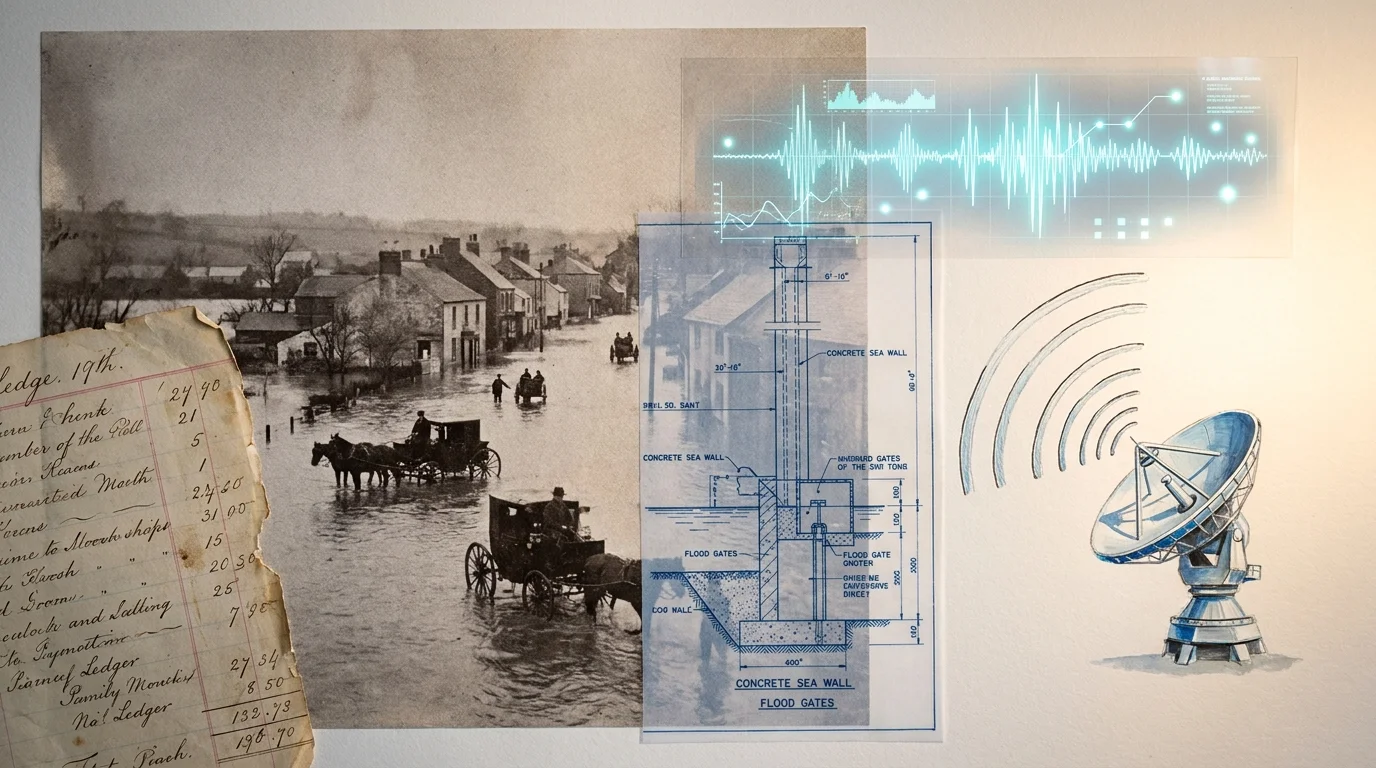
The massive loss of life detailed in weather disaster history catalyzed sweeping reforms in meteorology, engineering, and public policy. Each catastrophic event exposed critical vulnerabilities in how societies prepare for and respond to extreme weather. Modern disaster management shifted away from purely reactive measures toward proactive mitigation and robust community resilience.
One of the most significant lessons learned was the absolute necessity of accurate, real-time meteorological observation. The massive death tolls of the nineteenth and early twentieth centuries occurred because people had no advance warning. Today, an extensive network of geostationary weather satellites and Doppler radar installations constantly monitors atmospheric anomalies. Forecasters can now track a developing tropical cyclone for days, calculating precise wind shear, pressure drops, and projected landfall paths. This technological leap allows emergency managers to initiate evacuations well before the primary impacts strike the coast.
However, the 1970 and 1991 Bangladesh cyclones demonstrated that early warnings mean nothing if the public cannot receive the message or access a safe location. To solve this, the government of Bangladesh implemented the Cyclone Preparedness Programme. This initiative trained tens of thousands of local volunteers to disseminate weather warnings via megaphones and radio systems across remote delta islands. Furthermore, the government constructed thousands of elevated, multi-purpose cyclone shelters. These concrete structures serve as schools during normal conditions but provide fortified refuge during a storm surge. The success of this reform is undeniable: while the 1970 cyclone killed over 300,000 people, storms of similar magnitude striking the same region today typically result in casualties numbering in the dozens. This targeted approach to community resilience represents one of the greatest life-saving achievements in modern emergency management.
Engineering reforms also heavily prioritize survivability. Following systemic infrastructure failures, governments drastically updated commercial and residential building codes. Modern coastal structures now utilize breakaway ground-floor walls that allow storm surges to pass through without compromising the deep-driven foundation pilings. Civil engineers also reassessed reservoir limits globally after the 1975 Typhoon Nina disaster, ensuring modern dams possess redundant, fail-safe spillways capable of handling precipitation models that far exceed historical maximums.
Despite these advancements, significant risks remain. Coastal populations continue to swell globally, placing more infrastructure directly in the path of extreme weather. You must recognize that while forecasting technology provides the crucial gift of time, ultimate survival depends on individuals acting decisively on evacuation orders and communities maintaining robust, updated infrastructure.