Infrastructure & Environmental Effects
When a hurricane strikes your region, the built environment faces extreme dynamic loads, and the environmental equilibrium is violently disrupted. The infrastructure failures associated with these ten historically significant storms completely reshaped American civil engineering. You can track the evolution of building codes and municipal planning directly through the wreckage left behind by these specific events.
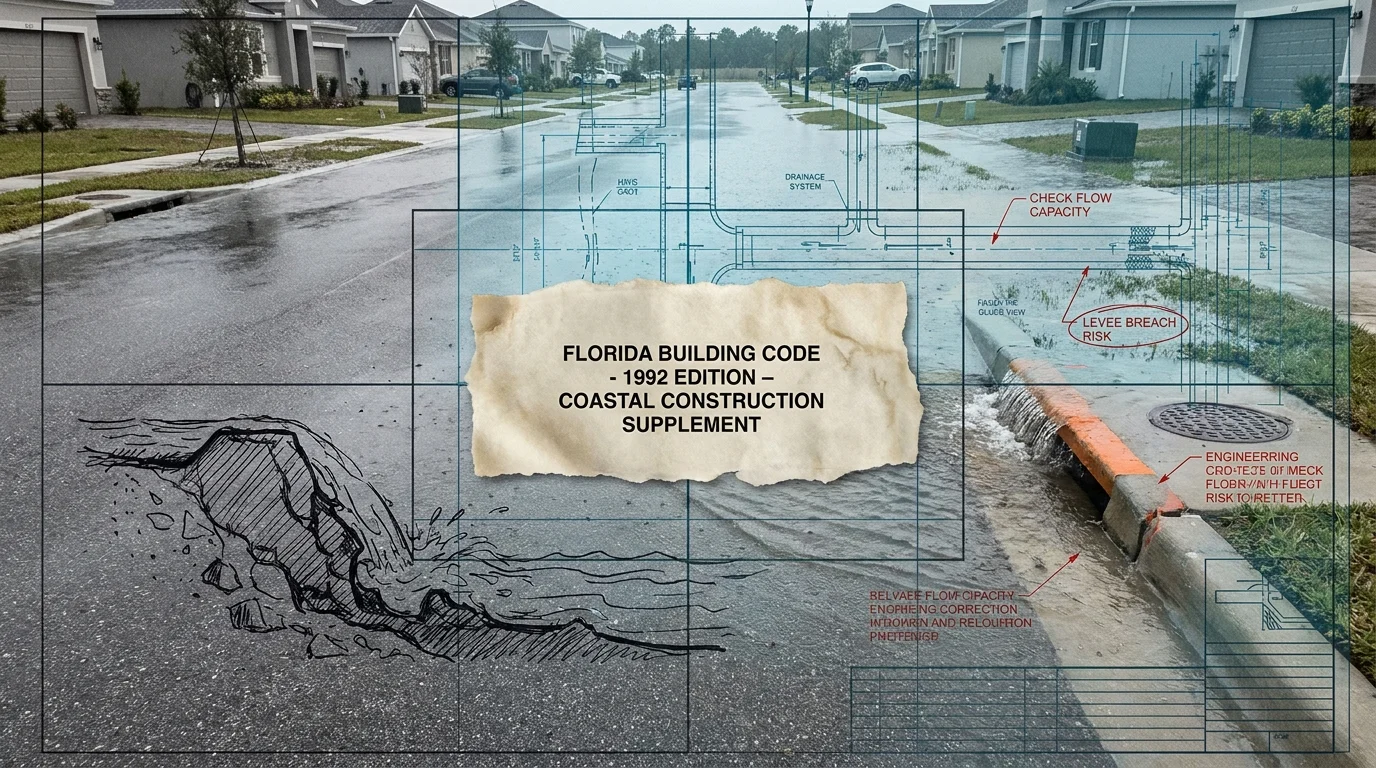
Hurricane Andrew in 1992 serves as the definitive turning point for residential construction in the United States. Before Andrew, building codes in South Florida were inconsistently enforced, and construction quality had degraded during the rapid housing boom of the 1980s. When Andrew’s sustained winds of 165 mph impacted communities like Homestead, entire subdivisions were leveled. Post-storm engineering teams conducted extensive root cause analyses. They discovered that massive structural failures began with seemingly minor details. For example, roof sheathing was often fastened with staples or improperly spaced nails. Once a few sheets of plywood tore away, the wind pressurized the interior of the home, causing the roof to blow off and the exterior walls to collapse outward. This specific forensic discovery led to the implementation of strict nail spacing requirements and the mandatory use of hurricane straps to secure the roof directly to the foundation.
Hurricane Sandy in 2012 demonstrated the vulnerability of subterranean urban infrastructure. New York City, built largely at or near sea level, relies on a vast network of subway tunnels, electrical substations, and telecommunications hubs. Sandy’s 14-foot storm surge poured millions of gallons of corrosive saltwater into the subway system. Saltwater is highly conductive and incredibly destructive to sensitive electrical relays. The inundation caused unprecedented damage to the Metropolitan Transportation Authority grid, requiring years of meticulous remediation to replace corroded wiring and install massive floodgates to seal tunnel entrances against future surges.
The infrastructure failure during Hurricane Katrina was primarily geotechnical. The levee system protecting New Orleans was a patchwork of floodwalls managed by various local and federal entities. Engineering investigations later revealed that the soil profiles beneath the levees were inadequately accounted for in the original designs. When the storm surge pushed against the floodwalls, the water seeped underneath, undermining the foundation and causing the concrete walls to shift and breach long before they were physically overtopped by the water level. This catastrophic engineering failure forced a massive, multi-billion-dollar redesign of the city’s perimeter defense system.
Beyond the built environment, the environmental consequences of these hurricanes are long-lasting and toxic. Hurricane Harvey in 2017 caused immense ecological damage due to its interaction with the heavy petrochemical industry concentrated along the Texas Gulf Coast. The unprecedented rainfall flooded chemical plants, refineries, and Superfund sites. Millions of gallons of contaminated wastewater and volatile organic compounds were released into the floodwaters and the atmosphere. If you live in an industrial watershed, the environmental impact of a hurricane represents a severe, lingering threat to your local drinking water and soil safety.
Coastal erosion and habitat destruction also permanently alter the geography of the impacted regions. The Labor Day Hurricane of 1935 and Hurricane Camille in 1969 fundamentally reshaped barrier islands, scouring away protective dunes and destroying vital coastal wetlands that serve as natural shock absorbers for inland communities. In the aftermath of Hurricane Ian in 2022, barrier islands off the Florida coast were literally sliced in half by the retreating surge. Environmental remediation after such events requires not just clearing debris, but actively rebuilding oyster reefs, replanting mangroves, and dredging waterways to restore the natural hydrological flow.
The failure of modern utility infrastructure was most glaringly exposed by Hurricane Maria. The destruction of Puerto Rico’s centralized, outdated power grid highlighted the systemic risk of relying on long-distance transmission lines strung across mountainous terrain. The complete loss of communications infrastructure hindered early recovery efforts, proving that resilient infrastructure must incorporate decentralized, localized power generation—such as microgrids and solar networks—to survive the extreme conditions of modern natural disasters.