History is shaped by invisible threats that emerge rapidly and cross oceans before communities can react. Understanding the world’s most dangerous infectious diseases equips you to navigate modern global health threats. This analysis examines ten of the deadliest fast-spreading illnesses: smallpox, bubonic plague, influenza, cholera, measles, Ebola, Marburg, severe acute respiratory syndrome, Middle East respiratory syndrome, and COVID-19. You will learn how these pathogens exploit human vulnerabilities, how their transmission mechanisms dictate their speed, and what measures authorities deploy to stop them. By examining the science and history behind these catastrophic outbreaks, you gain practical insights into the public health frameworks that protect communities and the ongoing reforms necessary to prevent future biological disasters.
Overview
When you examine the landscape of global health threats, the most dangerous pathogens share a unique combination of high transmissibility and severe health outcomes. An infectious disease outbreak occurs when cases of an illness exceed what health authorities expect within a specific community or region. If this outbreak crosses international borders and affects multiple continents, officials classify it as a pandemic. Throughout human history, specific pathogens have repeatedly demonstrated the ability to completely overwhelm localized medical resources and disrupt global societies within weeks or months.
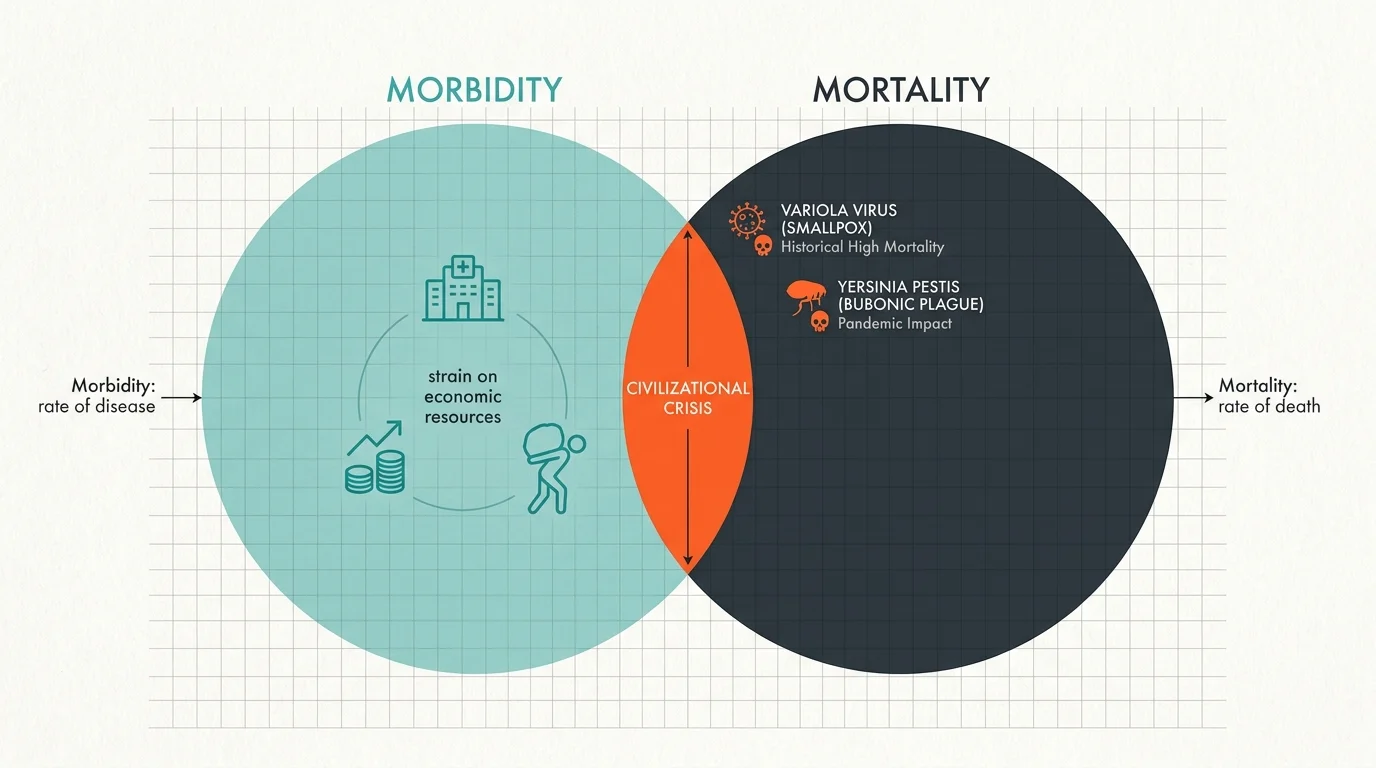
You can categorize the threat level of an infectious disease by analyzing its morbidity and mortality. Morbidity refers to the rate of disease and illness within a population; mortality refers to the rate of death caused by that disease. A pathogen that causes high morbidity but low mortality might strain economic resources, but a pathogen combining high morbidity with high mortality constitutes a civilizational crisis. Biological agents like the variola virus, which causes smallpox, and Yersinia pestis, the bacterium responsible for the bubonic plague, wiped out massive fractions of the global population centuries before modern medicine existed.
Modern fast-spreading diseases present different challenges. Pathogens like the influenza virus and the SARS-CoV-2 virus, which causes COVID-19, spread rapidly across international borders due to global aviation networks. While highly lethal viruses like Ebola and Marburg trigger terrifying localized epidemics, their aggressive symptoms often limit their global spread because patients become incapacitated before they can travel extensively. Conversely, diseases with longer incubation periods—the time between initial infection and the onset of symptoms—allow asymptomatic individuals to unknowingly transport the pathogen across the globe.
Understanding these ten deadliest diseases requires you to look beyond simply the medical symptoms. You must investigate the environmental conditions that allow cholera to thrive in contaminated water, the biological quirks that make measles one of the most contagious viruses on the planet, and the evolutionary mechanisms that allowed severe acute respiratory syndrome and Middle East respiratory syndrome to jump from animals into the human population. Public health authorities constantly monitor these ten diseases because any mutation or breakdown in sanitation infrastructure could trigger a new, fast-moving catastrophic event.