Causes & Mechanisms
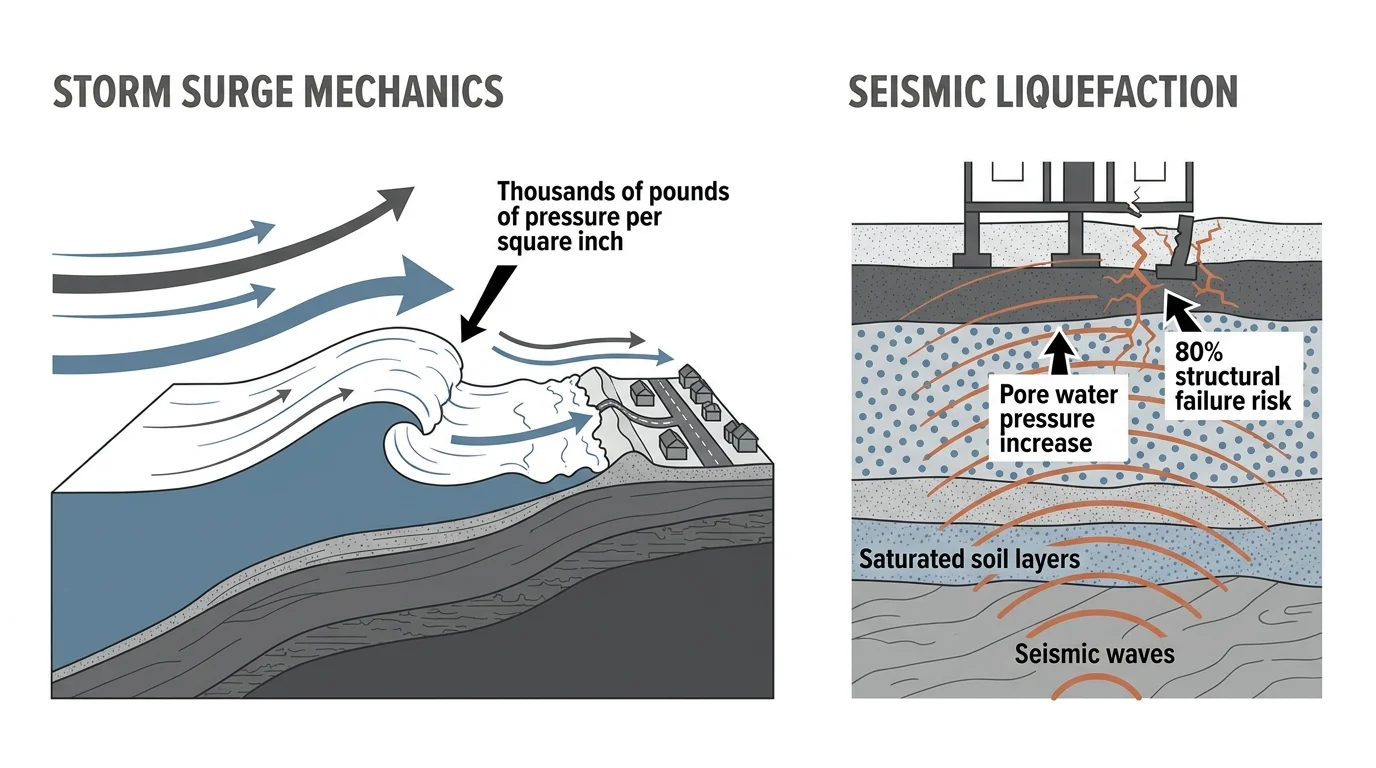
Meteorologists, seismologists, and hydrologists categorize natural hazards based on complex energy transfers within the environment. When you study how these massive forces operate, you understand why certain cities face extreme vulnerability. The study of hurricanes history demonstrates that warm ocean waters fuel immense cyclonic engines. As barometric pressure plummets within a storm center, the resulting pressure gradient drives ferocious sustained winds. These winds physically push the ocean surface, creating a deadly phenomenon known as storm surge. Consider the physical mechanics of this hazard: if a coastal city sits on a shallow continental shelf, the advancing ocean has nowhere to go but inland. The resulting wall of water exerts thousands of pounds of pressure per square inch, shattering timber framing and masonry foundations with mathematical certainty.
Earthquakes unleash their destructive potential through the sudden release of accumulated kinetic energy. Tectonic plates constantly grind against one another, building immense stress along fault lines over centuries. When the subterranean rock finally fractures, it radiates seismic waves that violently shake the ground surface. You must also account for secondary geological impacts. Consider the mechanics of seismic liquefaction observed during severe tremors. When seismic waves travel through saturated, unconsolidated soil, the rapid physical movement increases pore water pressure. The soil particles lose contact with one another, temporarily transforming solid ground into a heavy liquid. Geotechnical engineers conduct a root cause analysis of such failures to ensure developers avoid constructing heavy infrastructure on these highly vulnerable substrates.
Tornadoes generate the most violent wind speeds on the planet through complex atmospheric instability. When warm, moist air collides with cold, dry air aloft, it creates rotating supercell thunderstorms. A strong, centralized updraft tilts the rotating column of air vertically, forming a localized vortex. Understanding hazard metrics requires distinguishing between the Saffir-Simpson Hurricane Wind Scale and the Enhanced Fujita (EF) scale. Meteorologists estimate hurricane categories using sustained wind speeds over a one-minute average. Conversely, structural engineers determine EF ratings long after a tornado by analyzing the physical damage to estimate three-second wind gusts. You cannot accurately compare a Category 5 hurricane directly to an EF5 tornado, because one delivers prolonged structural fatigue over many hours, while the other inflicts instantaneous, catastrophic pressure differentials in mere seconds.
Wildfires require three distinct elements to achieve catastrophic growth: combustible fuel, oxygen, and an ignition source. In drought-stricken regions, accumulated dead vegetation creates a massive, highly flammable fuel load. When high-pressure weather systems drive fierce downslope winds, they supply endless oxygen and carry burning embers miles ahead of the main fire front. This wind-driven ember spotting bypasses traditional firebreaks, igniting homes directly and overwhelming municipal firefighting capabilities long before residents can effectively evacuate.