Timeline
The historical trajectory of wildland fire activity in the United States highlights why climate-safe planning has become crucial for retirement relocation. Throughout the 20th century, national policy focused on total fire suppression, attempting to extinguish every wildland blaze immediately upon detection. While this policy initially protected timber investments, it interrupted natural fire cycles that historically cleared underbrush. Over several decades, this strategy caused massive amounts of biomass and dead wood to accumulate across public and private lands.
By the beginning of the 21st century, the combination of dense fuel accumulation and shifting weather patterns created an era of megafires—wildland blazes that routinely burn over 100,000 acres and exhibit extreme, unpredictable behavior. Federal land agencies recorded a dramatic escalation in annual acreage burned and structural losses starting in the early 2000s, transforming seasonal fire management into a continuous, year-round emergency response effort.
Recent Wildland Fire Trends
Historical statistics published by the National Interagency Fire Center reflect significant year-to-year volatility in wildland fire activity across the nation:
In 2023, national wildland fires burned 2,69 million acres across 56,580 distinct incidents. Moderate temperatures and localized moisture in several Western regions temporarily suppressed overall acreage, offering short-term relief to high-risk areas.
In 2024, extreme summer heatwaves and dry atmospheric conditions drove a massive spike in fire activity. A total of 64,897 fires consumed over 8.92 million acres nationwide, destroying thousands of homes and straining national firefighter resources.
In 2025, wildland fire activity remained elevated above historical 20th-century averages. Federal agencies recorded 77,850 fires that burned more than 5.13 million acres, reinforcing the ongoing threat facing homeowners across susceptible Western and Southern corridors.
Long-Term Projections for Retirees
When you plan for retirement, you must evaluate hazards over a 20- to 30-year timeframe rather than relying on short-term weather conditions. Environmental modeling performed by the First Street Foundation shows that approximately 16 percent of the U.S. population, representing nearly 80 million individual properties, faces significant wildfire risk today. Over a 30-year retirement horizon, shifting weather patterns and persistent vegetation drying will expand that share to 21 percent of all U.S. properties.
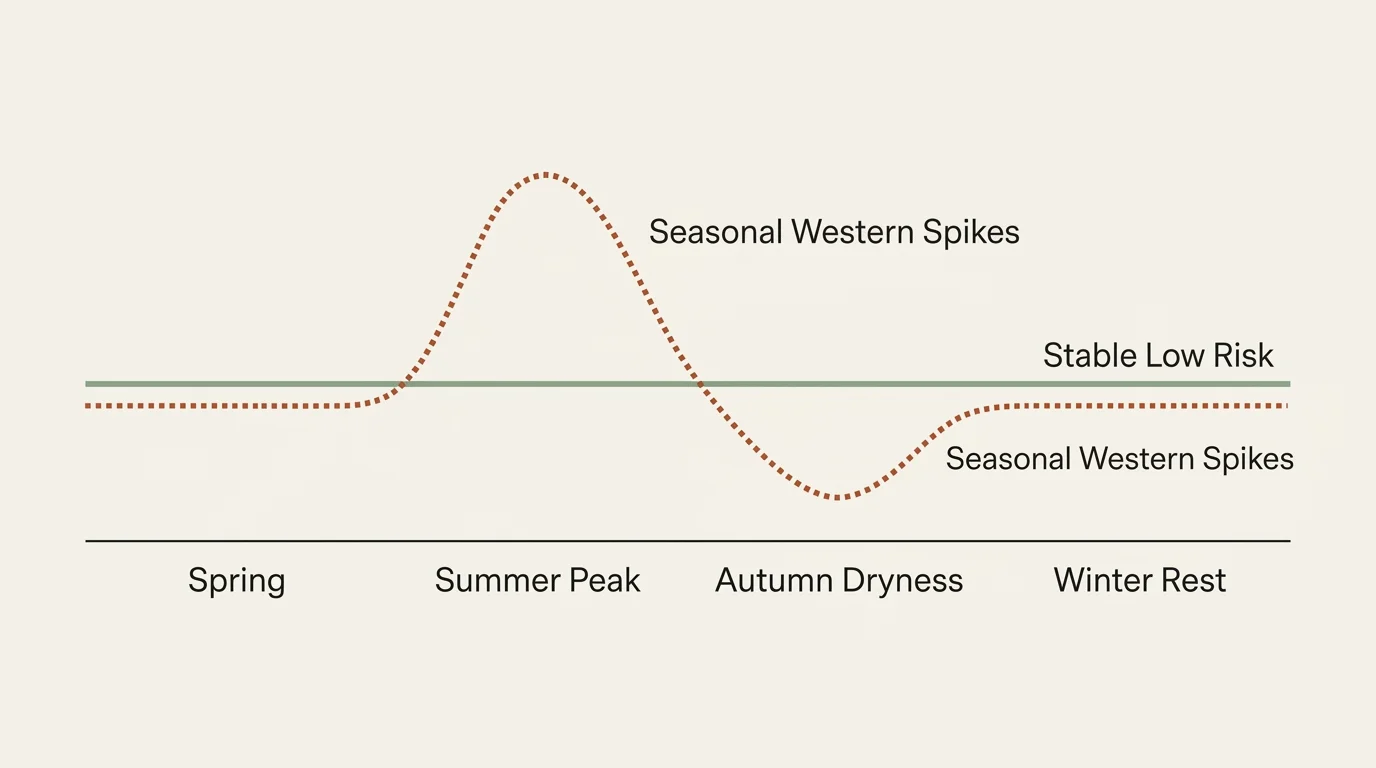
While Western states face growing fire operational challenges and longer drought periods, Upper Midwestern and Northeastern states have maintained stable climate patterns. Historical burn data over the past 50 years demonstrates that states like Michigan, Vermont, New York, and Iowa experience consistent rainfall distribution and moderate summer temperatures. These historical trends confirm that choosing low natural disaster risk states shields your long-term housing investments from the expanding national fire threat.