Lessons & Reforms
Decades of fighting major wildland blazes have driven fundamental shifts in building codes, land planning strategies, and community resilience programs. Disaster management experts now recognize that land planning policies and home construction standards determine whether a community survives a wildfire. Examining these structural reforms provides useful frameworks for evaluating prospective homes in any part of the country.
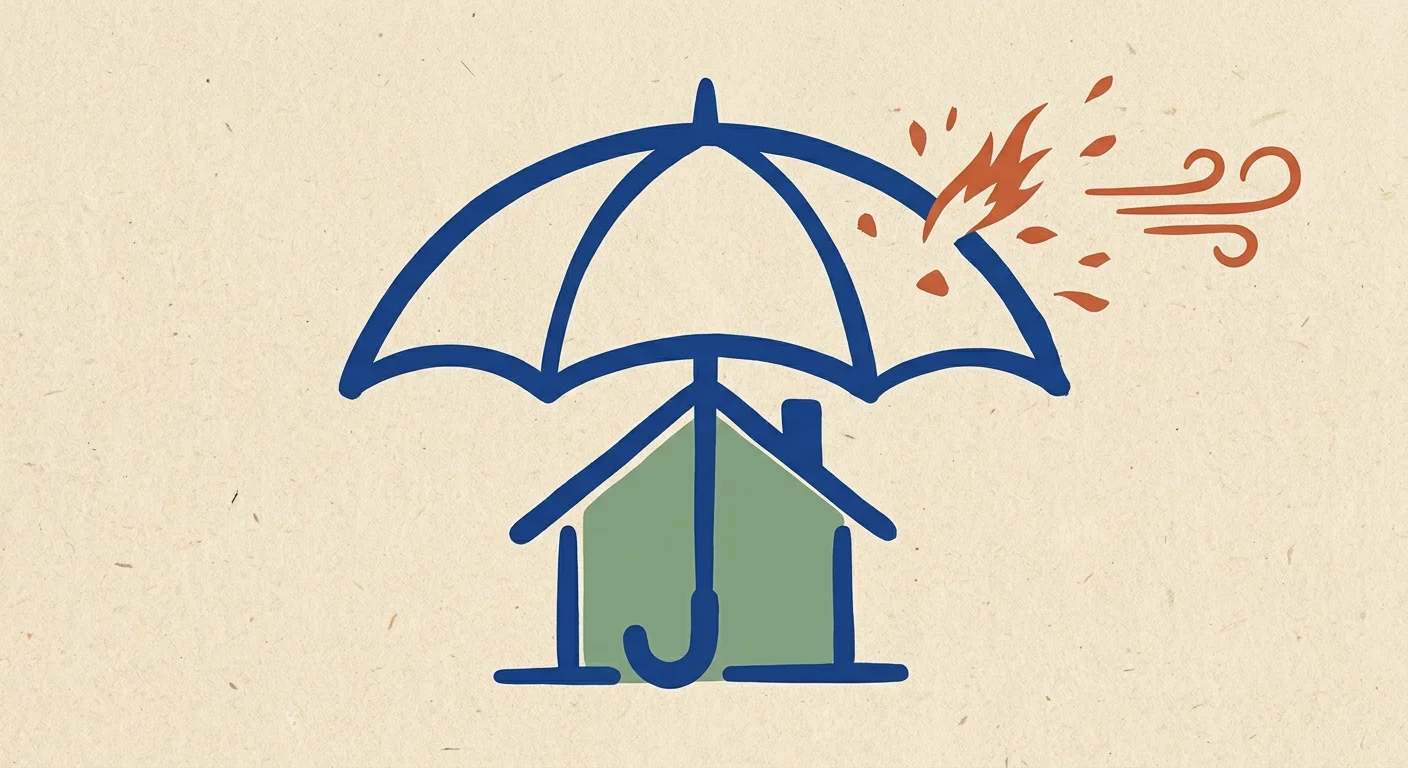
Modern building regulations, such as the International Wildland-Urban Interface Code, focus on structural hardening to prevent ember ignition. Construction requirements mandate non-combustible Class A roofing materials, fiber-cement siding, tempered double-pane windows, and fine wire mesh screening over attic and foundation vents. These structural retrofits create a protective barrier that prevents windborne firebrands from entering home interiors.
Defensible Space and the Home Ignition Zone
Wildfire research demonstrates that managing vegetation around a residential structure significantly improves its chances of surviving a fire. Fire scientists divide the area surrounding a home into distinct defensible space zones:
Zone 0, extending 0 to 5 feet from the structure foundation, requires a non-combustible surface. Homeowners should remove all organic mulch, wooden fences, dried leaf litter, and flammable plants, replacing them with gravel, concrete, or stone pavers.
Zone 1, extending 5 to 30 feet from the structure, focuses on vegetation lean-up and spacing. Homeowners must prune lower tree branches up to 10 feet off the ground, remove dead plant material, and keep lawns mowed short to eliminate ladder fuels that allow surface fires to climb into tree canopies.
Zone 2, extending 30 to 100 feet from the structure, aims to reduce fire intensity. Homeowners should clear dead vegetation, space out tree canopies, and maintain clear separation between shrubs to disrupt horizontal fire paths.
Worked Mini-Example: Structural Hardening and Retrofit Impact
To measure the practical effectiveness of structural hardening, consider two adjacent homes exposed to a severe wildland ember storm with wind speeds reaching 40 miles per hour. Property A featured classic architectural elements: a wood-shake roof, vinyl siding, un-screened open soffit vents, and ornamental evergreen shrubs planted directly against the exterior foundation wall. When windborne embers settled on the wooden roof and drifted through the soffit vents into the attic space, the structure caught fire within 12 minutes, resulting in a total loss.
Property B underwent a complete structural hardening retrofit at a total cost of $18,500. The homeowner replaced the roof with Class A asphalt shingles, installed non-combustible fiber-cement siding, sealed all exterior vents with 1/8-inch corrosion-resistant metal mesh, and cleared all organic vegetation within 5 feet of the exterior walls. During the same 40 mile-per-hour ember shower, firebrands bounced off the non-combustible roof and failed to pass through the fine mesh vents. Property B survived the wildland fire without structural damage, demonstrating the clear real-world value of modern building hardening standards.
Practical Action Steps for Retirees
When searching for a retirement home in low natural disaster risk states, you can take concrete steps to verify your prospective safety and maintain long-term property resilience:
First, review localized risk data using public mapping tools such as the Federal Emergency Management Agency’s National Risk Index and local county emergency management hazard plans.
Second, inspect the property’s immediate surroundings to ensure clear defensible space, verified water supply access, and well-maintained road access for emergency vehicles.
Third, consult local independent insurance agents to secure written insurance quotes before making a formal home purchase offer, ensuring that full hazard coverage remains accessible and affordable.