Human Impact & Response
Every geological anomaly carries a heavy human cost. Natural phenomena do not pause for human settlements, and the creation of these landmarks frequently required massive emergency interventions and tragic sacrifices. When studying these events, you must recognize the resilience of the local populations who faced total environmental upheaval.
The 1959 Madison Canyon landslide that created Quake Lake buried a popular campground in the middle of the night. The immense wall of rock and the hurricane-force winds generated by the falling debris claimed 28 lives. Hundreds of injured and terrified campers found themselves trapped between the blocked river and ruined roads. The United States Forest Service deployed smokejumpers who parachuted into the disaster zone to establish triage centers, while military and civilian helicopters conducted relentless aerial evacuations the following morning.
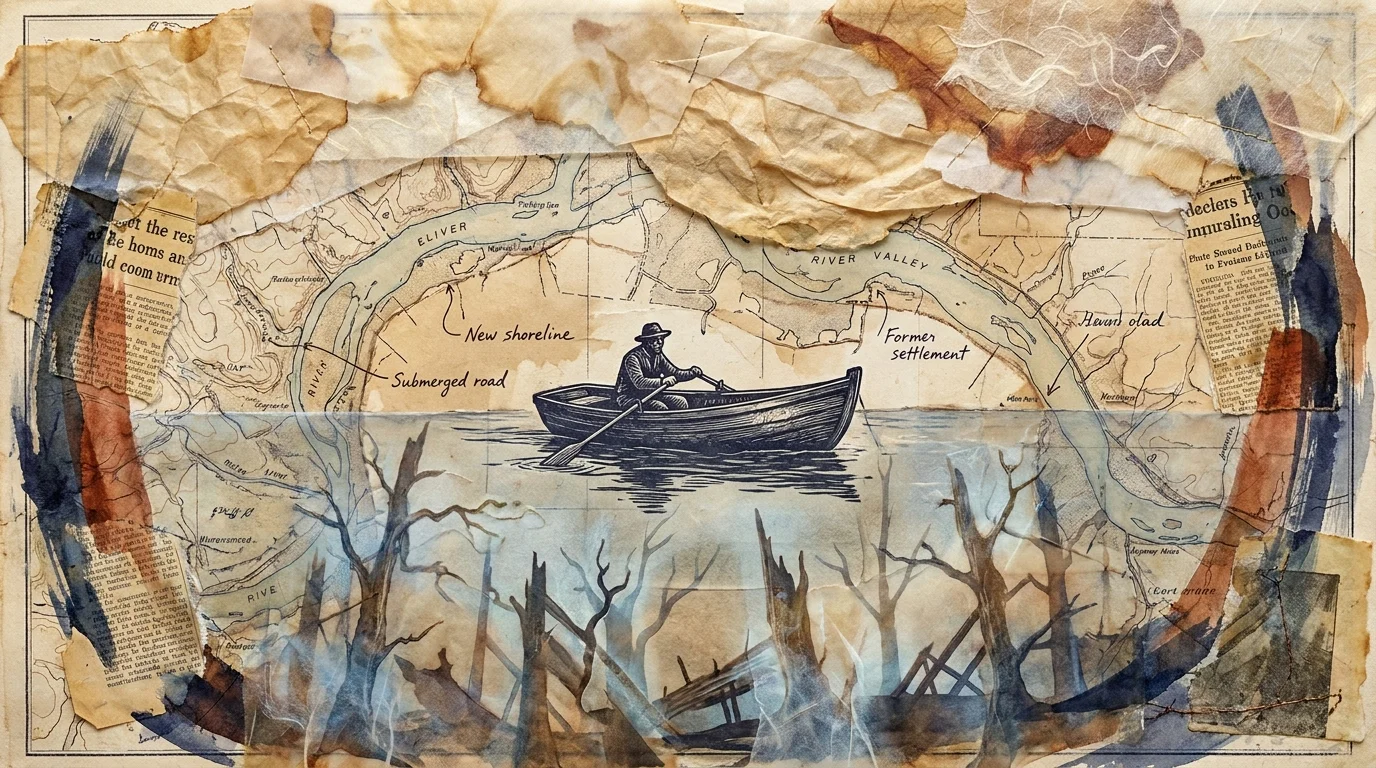
The 2010 formation of Attabad Lake inflicted agonizing displacement on the communities of the Hunza Valley. The initial rockfall killed twenty people, but the real catastrophe unfolded as the trapped river waters slowly rose. Over 6,000 residents had to evacuate as the freezing waters crept into their homes, schools, and orchards. Upstream, the lake severed the only functional road, cutting off 25,000 people from the rest of the country. To survive, locals established makeshift wooden boat ferries, navigating the dangerous, debris-filled lake to transport vital food and medical supplies for several years.
In Alaska, the 1964 Good Friday earthquake struck heavily populated areas. While the resulting tsunamis caused the majority of the 131 fatalities across the state, the ground failure in Anchorage presented a localized nightmare. The affluent Turnagain Heights neighborhood collapsed into the ocean, taking 75 homes with it. Neighbors performed immediate, desperate rescues in the freezing weather, pulling trapped residents from the mangled earth that would later become Earthquake Park.
Volcanic catastrophes require massive, coordinated public health responses. During the 1991 Mount Pinatubo eruption, the Philippine Institute of Volcanology and Seismology, alongside international partners, successfully evacuated over 58,000 people before the catastrophic blast. This decisive action saved tens of thousands of lives. However, hundreds still perished in the aftermath, largely because heavy volcanic ash mixed with typhoon rains caused roofs to collapse on evacuation centers. Decades earlier, the 1886 Mount Tarawera eruption claimed over 100 lives, devastating the local Maori communities of Tuhourangi and Ngati Rangitihi. Entire villages vanished under thick mud and ash, permanently altering the cultural and demographic landscape of the region.
When responding to massive geographical changes, emergency managers must focus on secondary primary impacts. The creation of a new lake often forces health organizations to manage sudden outbreaks of waterborne diseases in displacement camps. Humanitarian operations must transition from rapid search-and-rescue to prolonged housing and infrastructure support, acknowledging that the victims can never return to land that now sits beneath fifty feet of water or a million tons of rock.