Lessons & Reforms
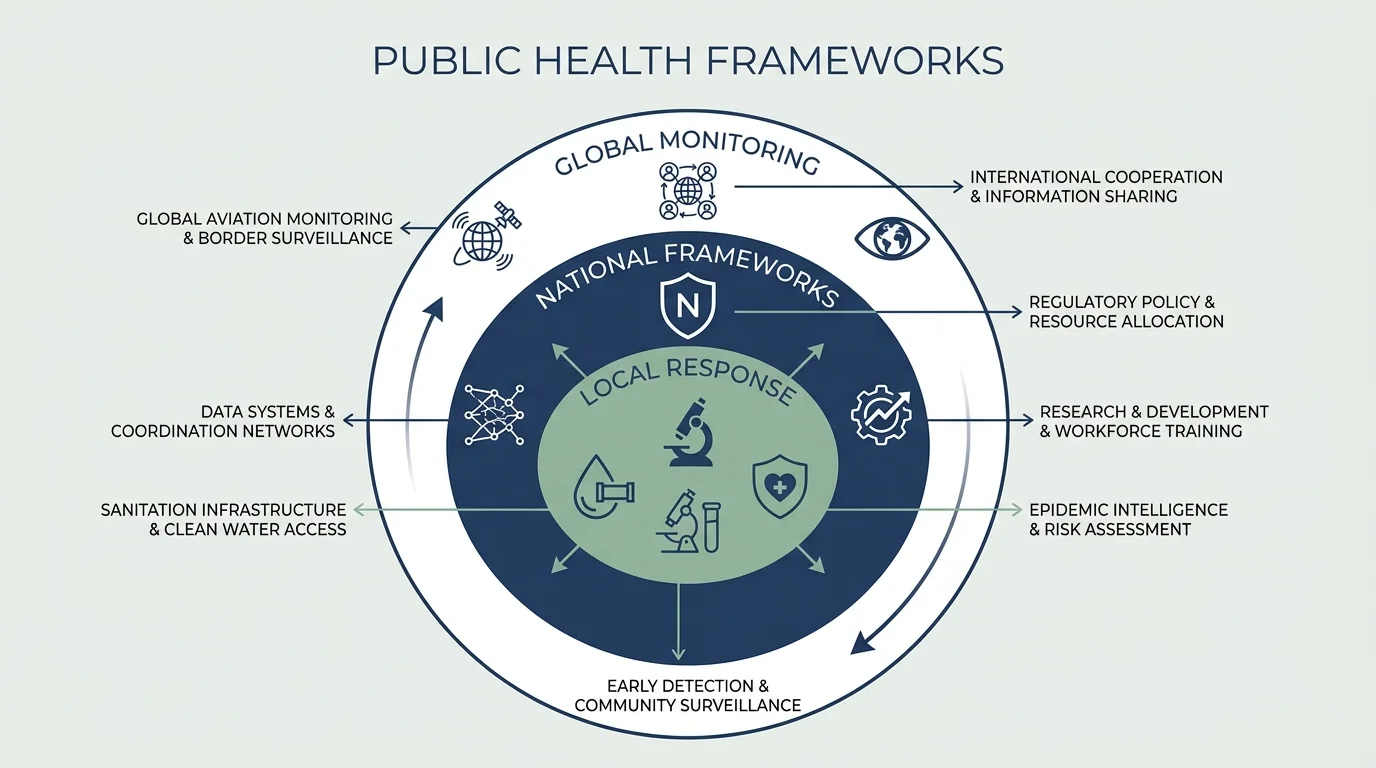
Every major infectious disease outbreak reveals critical vulnerabilities in societal preparedness, forcing governments and health organizations to adapt. The transition from reactive emergency response to proactive surveillance represents the most significant paradigm shift in modern epidemiology. Organizations like the World Health Organization now operate the Global Outbreak Alert and Response Network, which constantly monitors regional health data to detect unusual clusters of pneumonia, hemorrhagic fevers, or severe diarrhea before they cross international borders.
Modern architectural and engineering codes heavily reflect the lessons learned from airborne pathogens. The rapid transmission of SARS and COVID-19 through poorly ventilated office buildings and cruise ships forced the American Society of Heating, Refrigerating and Air-Conditioning Engineers to rewrite their baseline standards. Modern building codes now mandate higher rates of outdoor air exchange, advanced particulate filtration, and the installation of ultraviolet germicidal irradiation systems in commercial HVAC units. By physically altering the environments where you work and live, engineers passively reduce the transmission risk of respiratory viruses.
The speed of pharmaceutical development has also undergone revolutionary reform. Historically, creating a new vaccine took ten to fifteen years of painstaking laboratory cultivation and clinical trials. The pressure of the COVID-19 pandemic catalyzed decades of prior research into messenger RNA technology. Instead of injecting a weakened virus, mRNA vaccines deliver biological instructions that teach your cells to build a harmless protein unique to the target pathogen, triggering an immune response. This platform allows scientists to design and manufacture targeted vaccines against novel viruses in a matter of months, fundamentally changing how humanity defends against emerging biological threats.
Despite these advancements, significant vulnerabilities remain. Climate change alters the geographic range of disease vectors; as global temperatures rise, the insects that carry diseases move into previously untouched latitudes. Furthermore, continuous deforestation and human encroachment into wild habitats increase the probability of zoonotic spillovers, bringing humans into closer contact with animal reservoirs harboring undiscovered strains of Ebola or Marburg. Maintaining robust international health regulations and fully funding local public health departments remain your best defenses against the fast-spreading diseases of the future.