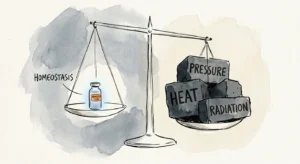
Finding a home in one of the lowest disaster risk states protects your family, safeguards your real estate investment, and reduces long-term financial uncertainty. While no location offers total immunity from nature, data from federal emergency agencies highlights specific regions where major cataclysms remain exceptionally rare. Evaluating natural disaster risk by state requires examining expected annual losses, social vulnerability, and historical event frequencies across eighteen distinct hazard categories. States across the Upper Midwest and interior Mid-Atlantic—such as North Dakota, Nebraska, Delaware, and Vermont—consistently register minimal risk profiles compared to coastal or fault-line strongholds. Understanding these geographical safe havens helps you make informed relocation and retirement choices.

Overview
Natural disasters destabilize communities, destroy housing stocks, and burden local economies with billions of dollars in emergency repairs. When you evaluate the safest states from natural disasters, you must look beyond recent news headlines and analyze decades of standardized hazard metrics. Federal emergency management agencies track natural hazards across every county in the United States to establish objective risk profiles. Their evaluations show that geography, geology, and atmospheric position create vast disparities in disaster exposure across the country.
To assess natural disaster risk by state accurately, analysts evaluate eighteen distinct hazard types categorized by the Federal Emergency Management Agency (FEMA). These hazards include hurricanes, tornadoes, riverine flooding, coastal flooding, wildfires, earthquakes, tsunamis, volcanic activity, avalanches, cold waves, drought, hail, heat waves, ice storms, landslides, lightning, strong winds, and severe winter weather. High-risk states like California and Texas face frequent compound threats, accumulating over 284 and 255 major federal disaster declarations respectively since 1953. Conversely, states with low disaster risk experience far fewer major atmospheric or seismic disruptions.
Data from the FEMA National Risk Index (NRI) demonstrates that inland states in the Upper Midwest and Great Plains secure the lowest composite risk scores nationwide. Based on average county composite NRI scores, North Dakota ranks as the lowest-risk state in the nation with an average risk score of 22.2. Nebraska follows closely at 25.8, South Dakota at 26.8, Kansas at 29.9, and Montana at 33.3. These scores synthesize expected annual financial losses, community resilience, and social vulnerability into a unified metric.
When you examine federal disaster declarations rather than composite hazard models, smaller coastal and Mid-Atlantic states present extraordinary safety records. Delaware holds the record for the lowest number of federally declared natural disasters of any U.S. state, accumulating only 21 total declarations between 1953 and 2026. Rhode Island ranks second overall with approximately 22 declarations over the same multi-decade period. Looking at a 20-year window between 2004 and 2024, Delaware maintained its position with just 13 emergency or disaster declarations, followed by Michigan with 14, Maryland with 18, Wisconsin with 19, and Rhode Island with 20.
For individuals searching for disaster safe retirement locations, urban and suburban areas within these low-risk regions offer remarkable stability. Pittsburgh, Pennsylvania, stands out in federal census-tract risk evaluations as the safest major metropolitan area in the United States. The region contains exclusively “very low” and “relatively low” risk census tracts across all hazard categories. By understanding these spatial patterns, you can select communities that offer security from extreme weather and tectonic shifts.